

Medicated Balm
Relief for muscle aches, headache, nasal congestion, and insect bites
Muscle soreness from work or exercise, tension headaches, a stuffy nose, or itchy insect bites can disrupt daily life. Intimo Life offers easy-to-carry topical rubs for fast relief anywhere.
💊 Choose a cooling formula for headache, congestion, and insect bites, or a warming formula for muscle aches, joint pain, and sprains.
👨⚕️ Consult a pharmacist online instantly — no travel, no queues, completely private and convenient.
🚚 Fast, confidential delivery — plain packaging with no product names on the outside, delivered safely to your door.
Warming or cooling balm — which one should you pick?
Cooling balms are menthol-forward and best for headache, nasal congestion, and insect bites, giving an instant cool sensation. Warming balms add deeper-penetrating heat and suit muscle aches, joint pain, and sprains from exercise. Choose by symptom, and ask a pharmacist if you're unsure.
🛒 Shop the range above · 24-hour dispatch from Intimo Life — consult a pharmacist if unsure.
Medicated balm is a topical rub with volatile terpenes such as menthol and camphor, giving a cooling or warming feel that helps relieve muscle aches, headache, congestion, and insect-bite itching.
📊 Key clinical statistics:
- Menthol acts on skin cold receptors, producing a cooling sensation that masks pain within minutes
- Most balms contain camphor at 3-11% concentration, a level considered safe for adult skin when used as labeled
- Camphor can be toxic if swallowed or over-absorbed through skin, especially in young children, so never use it under age 2
💊 Intimo Life's balm range matches two symptom patterns:
- Cooling formula — menthol-forward, instant cool feel; best for headache, congestion, insect bites
- Warming formula — deeper-penetrating heat; best for muscle aches, joint pain, sprains
⚠️ Do not use in children under 2. Avoid eyes, mucous membranes, nose, and open wounds; stop if burning or irritation occurs. Ask a pharmacist if unsure.

Balms Available
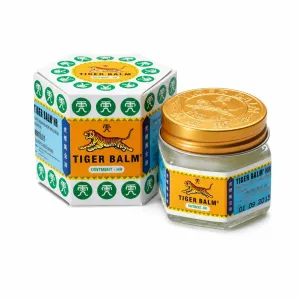 Tiger Balm White
Menthol & Eucalyptus formula for cold & congestion
✓ In stock79.00 ฿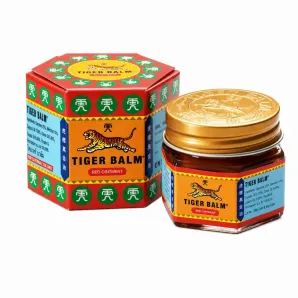 Tiger Balm Red
Warm formula for muscle aches & sprains
✓ In stock79.00 ฿
About Medicated Balm
What can medicated balm help relieve?
Medicated balm is a topical rub used for everyday complaints — muscle soreness from work or exercise, tension headaches, a stuffy nose from a cold or allergies, dizziness, and itching from insect bites. Its cooling or warming action masks pain and relaxes the muscles where it's applied. It's handy to keep at home or carry to work, while traveling, or during exercise — easy to use, fast-acting, no pill needed.
The effect starts within minutes and can last up to a couple of hours, useful for quick relief without waiting on an oral medicine.
What's the difference between white and red balm?
White and red balm differ in intensity and feel. The white formula, White Tiger Balm, leans on menthol and eucalyptus for a gentle cooling feel — good for headache, congestion, dizziness, and insect bites, mild enough to use often. The red formula, Red Tiger Balm, adds cinnamon and clove oil for a deeper warming heat — better for muscle aches, joint pain, and sprains. Simple rule: head/skin symptoms — go white; muscle/joint pain — go red.
Both are over-the-counter topical products, easy to keep on hand for quick use whenever symptoms strike.
How do you use medicated balm for the best results?
Apply a thin layer to the affected area and massage gently until absorbed, about 2-3 minutes. Reapply 3-4 times a day as needed. For headaches, dab lightly on the temples or back of the neck, avoiding the eyes and hairline. For congestion, apply below the nose or on the chest and inhale the vapor. Wash your hands after use to avoid touching your eyes or mouth, and don't wrap the area tightly, as trapped heat can irritate skin.
Avoid applying it right after a hot shower or sun exposure, since open pores absorb it faster and can burn more than usual.
What active ingredients are in medicated balm, and how do they work?
Medicated balm's main actives are terpenoids — menthol, camphor, and oils such as eucalyptus, cinnamon, or clove. Menthol activates cold receptors in the skin, producing a cooling sensation that masks pain. Camphor and cinnamon oil activate warming receptors, improving local blood flow and relaxing muscles. This mechanism, counter-irritation, reduces pain perception without an oral painkiller.
Eucalyptus oil, often blended in, also clears the airway when inhaled, adding a decongestant effect.
What's the difference between balm and liquid balm?
Ointment or cream-style balm is thicker and stays on the skin longer, suited to spot-treating sore muscles or a stuffy nose. Liquid balm is a thin, fast-absorbing oil covering a wider area, often inhaled directly or added to warm water for steam inhalation. Both use the same actives — the difference is concentration and application. Choose based on convenience and the symptom you want to relieve.
Liquid balm usually comes in a dropper bottle, handy for mixing into hot water, but take care the oil doesn't splash into your eyes while opening it.
What side effects or risks does medicated balm carry?
The most common side effect is localized skin irritation — burning, redness, or itching — which usually resolves once you stop using it or wash it off. Some people develop contact dermatitis from the essential oils in the formula, causing a rash or small blisters where it's applied. On thin skin or mucous membranes, burning can be far more severe than usual. The most serious risk is camphor toxicity from swallowing it or over-absorbing it through the skin, which is very rare in adults using it topically as labeled, but the risk is much higher in young children.
People with sensitive skin or a chronic condition such as eczema should patch-test a small area 24 hours before wider use.
Balm or pain-relief patch — which should you choose?
Balm suits symptoms needing fast action and frequent reapplication, such as a headache, congestion, or mild aches during the day. A pain-relief patch suits muscle or joint pain needing steady relief for hours without reapplying — handy overnight or at work when reapplying balm isn't convenient. Many people use both, depending on time of day and activity, but avoid layering both on the same spot at once.
Some patches share the same actives as balm, so don't apply balm over skin that already has a patch, since combined heat can build up too much. If the pain is too severe for topical products alone, an oral pain reliever may help alongside it, on a pharmacist's advice.
⚠️ ข้อจำกัดความรับผิดชอบ
เนื้อหาในบทความนี้มีจุดประสงค์เพื่อให้ความรู้ทั่วไปเท่านั้น ไม่ได้มีเจตนาทดแทนคำแนะนำ การวินิจฉัย หรือการรักษาจากแพทย์หรือเภสัชกรผู้เชี่ยวชาญ หากมีข้อสงสัยเกี่ยวกับอาการหรือการใช้ยา ควรปรึกษาแพทย์หรือเภสัชกรก่อนเสมอ
- Clinical Applications of Camphor- and Menthol-Containing Agents — Research Review — NCBI/PMC
- Camphor Oil Toxicity — Case Report — NCBI/PMC
- Menthol, Camphor Gel — Official Drug Label — DailyMed (FDA)
- Camphor — Poisons Information Monograph (PIM 095) — WHO/IPCS INCHEM
Frequently Asked Questions
Balm containing menthol and camphor must never be used in children under 2, as camphor can be absorbed and is toxic to a young child's nervous system. For children 2 and older, use a small amount, apply thinly, and avoid the face, nose, and mouth. Check with a pharmacist or doctor first.
There isn't enough clear safety data on using balm over large areas or regularly during pregnancy or breastfeeding. If needed, use the smallest amount on a small spot, avoid the abdomen and the chest area while breastfeeding, and consult a doctor or pharmacist first to weigh risks and benefits.
If balm causes severe burning or irritation, rinse the area immediately with clean, cool water. Don't use soap or rub with alcohol — it can worsen irritation. Avoid heat or covering the area with cloth. If it doesn't improve within minutes, or a rash or swelling appears, stop and consult a pharmacist or doctor.
Yes, many balms are designed to be inhaled as a vapor to relieve congestion and dizziness. Apply a thin layer under the nose or on your palm and breathe in deeply. Keep it away from the eyes and nostrils directly, and never let children under 2 inhale it, as it may trigger airway spasm.
Applying balm before exercise isn't recommended, since heat or cold can mask pain signals that would warn you of injury. Apply it after exercise once you feel soreness — a warming formula improves blood flow and relaxes muscles. For fresh, swollen injuries, use a cold compress for the first 24-48 hours before switching to a warming balm.
Never apply it around the eyes, eyelids, lips, inside the nostrils, genitals, open wounds, grazes, or inflamed or sunburned skin — it will burn far more severely than usual. If it gets into your eyes, flush immediately with plenty of clean water and see a doctor if irritation continues. Avoid freshly shaved or thin skin, which absorbs faster.
Store balm in a dry place at room temperature, away from sunlight and high heat. Close the lid tightly after every use so the volatile ingredients don't evaporate and the balm doesn't dry out. Keep it out of children's reach — swallowing can be dangerous. Check the expiry date before use, and discard it if the smell or texture changes.
You can order balm online from Intimo Life, including the cooling White Tiger Balm and the warming Red Tiger Balm . Consult a pharmacist online first if unsure which formula suits you, with fast, discreet delivery.
Become a member of our store to receive news and exclusive discounts.
Recently viewed products