

Contraceptive Pill
The birth control pill is one of the most popular and effective contraceptive methods for women — easy to use, highly reliable, and with added benefits like clearer skin, lighter periods, and reduced menstrual cramps. Intimo Life offers a wide range of contraceptive pill options to suit every need.
💊 Multiple contraceptive pill options available — combined pills, progestogen-only pills, and emergency contraception. Choose the one that fits your body best.
👨⚕️ Consult a pharmacist online instantly — no travel, no queues, completely private and convenient.
🚚 Fast, confidential delivery — plain packaging with no product names on the outside, delivered safely to your door.
Which birth control pill brand is best?
The right birth control pill depends on which hormone group suits your body, split into three main types. Combined hormone pills suit most people and are most popular, progestogen-only pills suit those allergic to estrogen or breastfeeding, and emergency pills are only for after unprotected sex. Taken daily, they prevent pregnancy up to 99 percent of the time.
🛒 Shop the range above · 24-hour dispatch from Intimo Life — consult a pharmacist if unsure.
The contraceptive pill is one of the most effective birth control methods when used correctly.
📊 Key statistics:
- When taken consistently every day, the pill is up to 99% effective at preventing pregnancy
- Over 150 million women worldwide rely on the pill as their primary contraceptive method
- Beyond contraception, the pill also helps treat acne, reduce period pain, and regulate menstrual cycles
💊 Contraceptive pills fall into 3 main categories:
- Combined Pill (COC) — Contains both oestrogen and progestin. The most widely used type.
- Progestogen-only Pill (POP / Mini Pill) — Contains progestin only. Suitable for women who can't take oestrogen or are breastfeeding.
- Emergency Contraception (Morning After Pill) — Used after unprotected sex. Not for regular use.
⚠️ Different pill formulations suit different bodies. Consult a pharmacist to find the best option for you.

Available Treatments
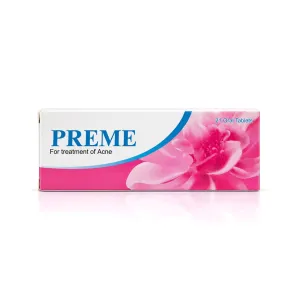 Preme
PremeGentle formula for skin care & less water retention
✓ In stock105.00 ฿(฿4.11/tablet)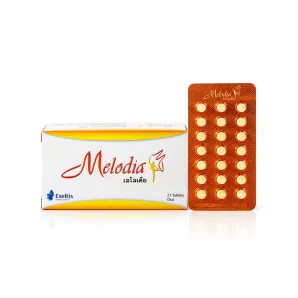 Melodia
Melodia pill: balanced hormones, glowing skin, no bloating
✓ In stock285.00 ฿(฿10.18/tablet)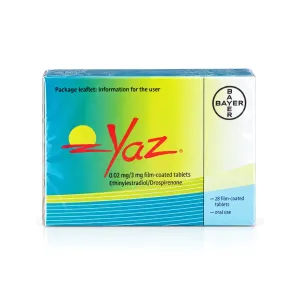 Yaz
YazYaz pill for contraception & clearer skin
✓ In stock450.00 ฿(฿15.18/tablet)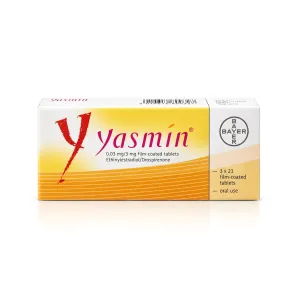 Yasmin
Contraceptive pill with acne & oily skin care
✓ In stock380.00 ฿(฿13.57/tablet)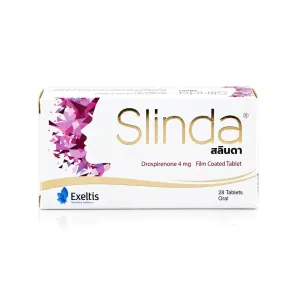 Slinda
Estrogen-free, 24-hr missed-pill window, breastfeeding-safe
✓ In stock380.00 ฿(฿13.04/tablet)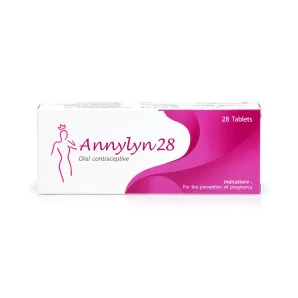 Annylyn
Annylyn birth control pill, simple & easy-to-use
✓ In stock118.00 ฿(฿4.21/tablet)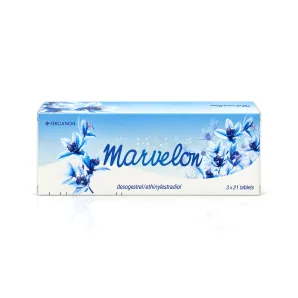 Marvelon
Combined OCP for reliable contraception & clearer skin
✓ In stock125.00 ฿(฿4.46/tablet)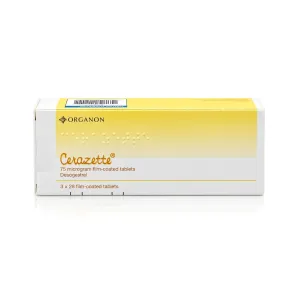 Cerazette
Progestin-only contraceptive pill, 12h flexible window
✓ In stock230.00 ฿(฿8.21/tablet)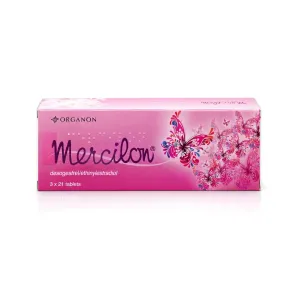 Mercilon
Low-dose OCP gentle on the body with fewer side effects
✓ In stock185.00 ฿(฿6.61/tablet)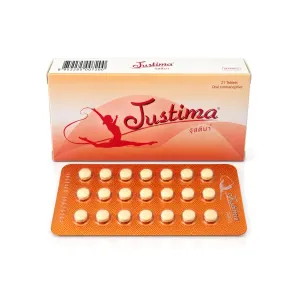 Justima
Combined hormonal pill, same formula as Yasmin, better value
✓ In stock269.00 ฿(฿12.81/tablet)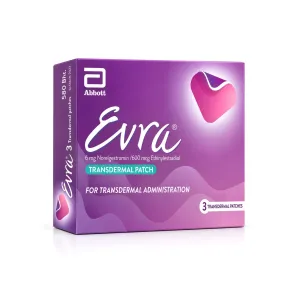 Evra
EvraWeekly contraceptive patch — no daily pill to remember
✓ In stock580.00 ฿(฿183/patch)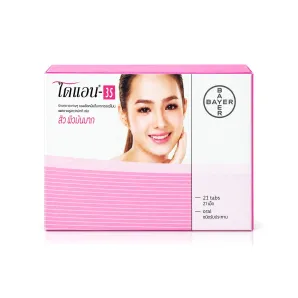 Diane-35
Combined cyproterone pill for hormonal acne and hair growth
✓ In stock205.00 ฿(฿9.76/tablet)
About Contraceptive Pills
What Are Contraceptive Pills? How Do They Work?
Contraceptive pills contain synthetic hormones that prevent pregnancy through three mechanisms: suppressing ovulation, thickening cervical mucus to block sperm, and thinning the uterine lining to prevent implantation.
When taken correctly and consistently, the pill is up to 99% effective — making it one of the most reliable reversible contraceptive methods available.
What Types of Contraceptive Pills Are There?
Contraceptive pills fall into three main categories.
Combined Oral Contraceptive (COC) — Contains both oestrogen and progestin. The most popular type. Benefits include regular periods, reduced menstrual pain, and some formulations help with acne and water retention. At Intimo Life, we offer several brands including Yasmin, Yaz, Melodia, Preme, Marvelon, Mercilon, and Annylyn.
Progestogen-only Pill (POP / Mini Pill) — Contains progestin only, no oestrogen. Suitable for women who have contraindications to oestrogen — such as those with migraine with aura, smokers over 35, or breastfeeding mothers. At Intimo Life, we offer Cerazette, which has the advantage of a 12-hour flexible dosing window.
Emergency Contraception (Morning After Pill) — For emergency use only after unprotected sex. Not intended as a regular contraceptive. See our Morning After Pill collection for details.
How Do Different Brands Compare? Which One Should I Choose?
Each combined pill brand has a different hormone formulation suited to different needs.
Want clearer skin and less oiliness → Yasmin or Yaz — Contains Drospirenone, which has anti-androgenic properties that help reduce hormonal acne and facial oiliness. Yaz has a slightly lower hormone dose than Yasmin, potentially fewer side effects.
Want to reduce water retention → Melodia or Preme — Melodia contains Drospirenone like Yasmin but in a 24+4 regimen. Preme is a gentle formula that helps with skin care and reduces bloating.
Want a well-established, trusted formula → Marvelon — Contains Desogestrel + Ethinylestradiol. A classic formulation used worldwide for decades, with skin-care and hormone-balancing benefits.
Want a low-hormone option → Mercilon — Same formulation as Marvelon but with lower oestrogen content. Ideal for women sensitive to hormones.
Want something simple and affordable → Annylyn — A straightforward combined pill at an accessible price point. Good for beginners.
Can't take oestrogen or breastfeeding → Cerazette — Progestogen-only with a generous 12-hour dosing window.
How to Take the Pill Correctly
Combined pill (21-pill pack) — Take one pill daily at the same time for 21 days, then stop for 7 days (your period will come during this break). Start a new pack after the 7-day break.
Combined pill (28-pill pack) — Take one pill every day without a break. The last 7 pills are either placebo or iron supplement pills, helping you maintain the daily habit.
Progestogen-only pill (Cerazette) — Take every day with no break. If you miss a pill, you have up to 12 hours to take it and still be protected.
Tips to remember — Set a daily alarm / keep the pack next to something you use every day, like your toothbrush / use a pill reminder app.
What to Do If You Miss a Pill
Missed 1 pill (less than 24 hours late) — Take the missed pill as soon as you remember, then take the next pill at the usual time (you may take two in one day). You're still protected.
Missed 2 or more pills — Take the most recently missed pill immediately, then continue as normal. Use condoms for at least the next 7 days, as protection is reduced.
Missed pills in the first week + had unprotected sex — You may need emergency contraception. Consult a pharmacist to assess the risk.
Possible Side Effects
The pill is very safe, but some side effects may occur in the first few months as your body adjusts. These usually resolve within 2-3 months.
Common side effects — Mild nausea (take with food to help) / breast tenderness / headaches / spotting between periods / mood changes
Seek immediate medical attention if — Severe calf pain or swelling (possible blood clot) / unusually severe headache / sudden blurred vision / chest pain or breathing difficulty
If side effects persist beyond 3 months, consult a pharmacist about switching to a different formulation.
Who Should Not Take the Combined Pill?
The combined pill isn't suitable for everyone, especially those with risk factors for blood clots.
Do not use if you have a history of blood clots or stroke / have migraine with aura / smoke and are over 35 / have uncontrolled high blood pressure / have breast cancer / have severe liver problems / are breastfeeding within 6 weeks of delivery
In these cases, a progestogen-only pill like Cerazette may be a safer alternative. Consult a pharmacist to find the right option.
The Pill and Skin Care — Acne, Hormones, and Beyond
Many women choose the pill for its skin benefits, not just contraception.
Reducing hormonal acne — Pills containing Drospirenone or Cyproterone Acetate have anti-androgenic properties that help reduce acne caused by excess male hormones. Best options include Yasmin or Yaz.
Reducing water retention — Drospirenone has mild diuretic properties, helping reduce pre-menstrual bloating.
Regulating periods — All pill types help make periods regular, lighter, and less painful.
Note that skin improvements may take 3-6 months to become noticeable. Don't expect instant results.
The Daily Pill vs Emergency Contraception — What's the Difference?
These serve completely different purposes.
Daily contraceptive pill — Taken every day for continuous pregnancy prevention. 99% effective when used correctly. Designed for regular, ongoing use.
Emergency contraception — Taken only after unprotected sex or contraceptive failure. Must be taken within 72 hours — the sooner the better. Not for regular use, as it contains much higher hormone doses than the daily pill.
At Intimo Life, emergency options include Tansy One (single-dose) and Postinor (two-dose). See our Morning After Pill collection for more details.
Can I Get Pregnant Right After Stopping the Pill?
Yes. After stopping the pill, most women return to their normal ovulation cycle within 1-3 months and can become pregnant as soon as ovulation resumes.
The pill does not affect long-term fertility regardless of how long you've been taking it. Taking the pill for 5-10 years does not make it harder to conceive later.
If your period hasn't returned within 3 months of stopping, consult a doctor to investigate the cause.
⚠️ Disclaimer
The information on this page is for general informational purposes only and is not intended to replace professional medical advice, diagnosis, or treatment from a qualified doctor or pharmacist. If you have any questions about your symptoms or medication, always consult a doctor or pharmacist first.
Frequently Asked Questions
Modern pills contain much lower hormone doses than older formulations. The chance of significant weight gain is very low. Some women may experience mild water retention initially, but this typically resolves on its own. Pills containing Drospirenone (like Yasmin or Yaz) can actually help reduce water retention.
The pill is very safe for healthy women without risk factors. It can be taken continuously for many years. However, regular annual health check-ups and periodic consultations with a doctor are recommended.
Yes. Alcohol doesn't directly reduce the pill's effectiveness. However, if you drink so much that you forget to take your pill, or if you vomit within 2 hours of taking it, the pill may not work properly.
Not dangerous. Some pill formulations, especially low-hormone ones, can make periods lighter or absent entirely. This is normal — the uterine lining becomes thinner, so there's less to shed. It doesn't mean you're pregnant, but if you're worried, take a pregnancy test for peace of mind.
The most common approach is to start on the first day of your period, which provides immediate protection. Alternatively, you can start on the first Sunday after your period begins, but you'll need to use condoms for the first 7 days.
No. The pill only prevents pregnancy. To protect against STIs, you must always use condoms as well.
Related Reads

Getting Pregnant After Birth Control Guide
Getting pregnant after birth control — timelines by pill.

Forgot to Take the Pill: Will I Get Pregnant?
What to do if you forget a birth control pill — every case.

How to Take Birth Control Pills: Easy Guide
How to take birth control pills: 21-day and 28-day packs.

Regular Pill vs Emergency Pill: Differences
Regular pill vs emergency pill — the key differences.

Birth Control Pill Side Effects to Know
Birth control pill side effects — what to watch for.

What Is a Birth Control Pill? Complete Guide
Birth control pills: types, how to take them, side effects.

Taking the 1 Pill Emergency Contraceptive
How to take the 1-pill emergency contraceptive correctly.

Combined Pill: Is It Right for You?
Combined pill: benefits, side effects, who should avoid it.

Mini Pill Pros and Cons: What to Know
Progestogen-only pill: benefits, drawbacks, how to take it.

Emergency Contraceptive Pill: When to Take It
The right time window to take the emergency pill safely.

Best Birth Control Pill Brands 2026
Not sure which pill to pick? 2026 reviews and guidance here.
Recently viewed products