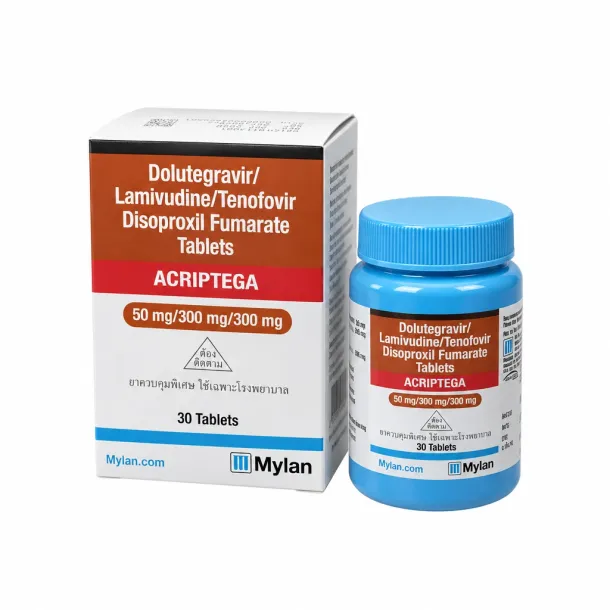
Acriptega — a TLD HIV medicine for people living with HIV, three medicines in one tablet
💊 Active: Dolutegravir, Lamivudine, Tenofovir disoproxil fumarate
⏱️ How to take: 1 tablet once a day, at the same time daily
🍽️ Food: with or without food; swallow whole
📦 Pack: bottle of 30 tablets
⚡ Highlight: one tablet a day instead of several
🌡️ Storage: not above 30°C, original bottle, cap closed tight
Done — we will alert you on LINE when this item is back.
Remind me to reorder
Remind me every
First reminder 4 Nov 2026 · on LINE
Shipping
Discreet shipping within Thailand — packaging does not identify the product. Customers can review shipping and return conditions per our store policy. Contact our team for any questions.
What is Acriptega?
A once-daily combination tablet for HIV-1 treatment in adults, known as TLD. One tablet holds dolutegravir, lamivudine and tenofovir disoproxil fumarate. It keeps the virus in the blood under control but does not remove it, so it must be taken every day, never stopped alone, and followed with kidney and viral load checks by an HIV care team.
🛒 Bottle of 30 tablets · authentic · 24-hour dispatch from Intimo Life — consult a doctor or pharmacist before use.
Product Description
Acriptega, the TLD HIV medicine, is a combination tablet from Mylan (Viatris) used to treat HIV-1 infection in adults. The medicines keep the amount of virus in the blood under control but do not remove it from the body, so people living with HIV must take it every day under an HIV care team. Three medicines in one tablet is easier than taking them one by one.
📊 Key facts
Dolutegravir has a half-life of about 14 hours in the body (Tivicay label).
Antacids with magnesium or aluminium lower dolutegravir levels by about 74%, so doses must be spaced apart.
WHO documents do not recommend this fixed tablet when kidney filtration is below 50 mL/min.
Missing doses raise the risk of resistance, per the WHO document.
🏭 Maker: Mylan (Viatris). This page relies on the South African label and the WHO document for the same formula. For the TAF-based alternative, see Kocitaf.
⚠️ Never stop it on your own, especially with hepatitis B as well. Consult a doctor or pharmacist before use.
Medically reviewed by
Supatcheree A., Pharmacist | Sources: WHO, Tivicay, ฉบับแอฟริกาใต้
Last reviewed: 2026-10-04
About Acriptega
What is Acriptega?
TLD is the regimen's short name, taken from its three medicines in one tablet: tenofovir disoproxil fumarate (TDF) 300 mg, lamivudine 300 mg and dolutegravir (DTG) 50 mg. Per the South African label it is a white to off-white film-coated tablet marked M and LTD.
Each medicine acts at a different point. DTG is an integrase inhibitor that blocks the virus from inserting its genetic material into the cell. Lamivudine and TDF are NRTIs that block the reverse transcriptase enzyme. Together they stop it multiplying.
What is this medicine used for?
It treats HIV-1 infection in adults. The WHO document says adolescents weighing at least 30 kg can use it too, while the South African label states 18 years and older. It treats people who already have HIV; no pre-exposure prevention (PrEP) use is given.
The dose of each medicine in a fixed tablet cannot be changed, so people under 30 kg, or whose kidneys need a dose adjustment, are given separate tablets instead.
How to take Acriptega
Usual dose. One tablet once a day for people whose virus is not resistant to integrase inhibitors, at the same time daily, swallowed whole with water.
Food. The South African label says with or without food. Food raises DTG levels (a high-fat meal by about 66%), so WHO advises a meal when integrase inhibitor resistance is known or suspected.
Integrase inhibitor resistance. WHO adds a second DTG 50 mg dose daily, with a meal, as a separate tablet since the fixed tablet cannot be adjusted. Leave this to the care team.
Side effects of Acriptega
Frequencies follow WHO (very common = 1 in 10 or more; common = 1 in 100 to 1 in 10).
For the DTG part, WHO reports diarrhoea 18%, nausea 13%, headache 13%. Blood creatinine can rise about 10 micromol/L in the first week and then stay steady, because the medicine reduces creatinine secretion in the tubules, not kidney filtration. Rare serious effects are in the FAQ on signs needing urgent care.
Warnings and precautions
Hepatitis B: test before starting. Lamivudine and TDF also act on hepatitis B, but the label does not give it as a treatment for that disease.
Kidneys: TDF can reduce kidney function and lower blood phosphate. Check kidney filtration before and during use; not recommended below 50 mL/min.
Bones: TDF reduced bone density in trials up to 144 weeks, usually improving after stopping, with no rise in fractures in the trials cited.
Liver: WHO needs no dose change in mild to moderate impairment (Child-Pugh A, B), but the South African label rules out moderate and severe impairment. The documents differ, so the care team should assess.
Mental health: depression and anxiety are common, suicidal thoughts less so, mainly with prior depression. Report marked mood changes.
Immune recovery: in the first weeks to months, a recovering immune system can unmask a hidden infection.
Acriptega compared with Kocitaf
Both are once-daily Mylan HIV combination tablets in a bottle of 30 with the same DTG 50 mg. They differ in the NRTI pair.
TLD formula (this page): lamivudine + TDF. Not recommended below 50 mL/min kidney filtration. With rifampicin it works by raising DTG to twice daily.
For bones and kidneys, in the DISCOVER trial of FTC/TAF (Descovy) against FTC/TDF (Truvada) in people without HIV, bone density rose 0.5% at the lower spine on TAF and fell 1.1% on TDF, and abnormal urine protein occurred in 0.7% against 1.5%. This is not a head-to-head test of these two tablets.
In short: if rifampicin is needed and kidneys are normal, the TLD formula can be adjusted. If kidney filtration sits between 30 and 49, or bones and kidneys are a concern, Kocitaf allows a wider kidney range but cannot be used with rifampicin. The care team chooses from test results.
Can Acriptega be taken with other medicines?
These medicines must not be combined with HIV treatment, or need adjusting first. Tell the care team and pharmacist whenever a new medicine or supplement starts. Data come from each medicine, as no study covers the fixed tablet.
Dofetilide: must not be combined, because DTG can raise its level (WHO also names fampridine).
Rifampicin: lowers DTG by about 54%; DTG 50 mg twice daily is needed.
Carbamazepine, phenytoin, phenobarbital, oxcarbazepine, St. John's wort, efavirenz: lower DTG. The South African label says to avoid some; the care team may add DTG or switch medicines.
Metformin: DTG raises metformin by about 79%; WHO advises considering a metformin dose change.
Products already containing lamivudine, emtricitabine, tenofovir or adefovir: do not double up.
Kidney-harming medicines: high-dose or multiple NSAIDs and aminoglycosides; avoid, or check the kidneys more often.
Antacids, calcium, iron: space the doses; see the FAQ.
Hormonal contraceptives and methadone need no dose change.
How fast does it work?
The sources used here do not say how many days the virus takes to fall below detection, which differs between people; the care team follows it with viral load tests. They do give how each medicine is absorbed and how long it stays.
DTG: peaks about 2 hours after a dose on an empty stomach, 3 to 5 hours with food; half-life about 14 hours.
Lamivudine: half-life in blood 5 to 7 hours, but the active form inside cells lasts about 22 hours.
TDF: stays in the blood for 12 to 18 hours.
These numbers are why one dose a day is enough, and why skipping several days lets levels fall.
Where to buy Acriptega?
Where to buy Acriptega?
Order online at Intimo Life. Delivery across Thailand takes 1-3 working days, packed discreetly for privacy, with no product name on the parcel.
Yes, but with spacing. Antacids and laxatives with magnesium or aluminium lower the level a lot. Take Acriptega 2 hours before the antacid or 6 hours after it. Calcium and iron supplements follow the same rule, or can be taken together with a meal.
Choose the time you can keep most reliably, since food does not matter. Insomnia and abnormal dreams are common. If bedtime dosing makes sleep harder, ask the care team about moving the time rather than skipping doses.
Per the WHO document, if the dose is under 12 hours late take it right away; if over 12 hours late, skip it and take the next one on time. Never double up. If you vomit within 1 hour of a dose, take one more tablet; after 1 hour, no extra tablet.
No. Missing treatment lets the virus multiply and risks resistance. With hepatitis B as well, a severe flare can follow stopping, with deaths reported, so check the liver for at least 6 months. If stopping is needed for side effects, the care team picks a new regimen that keeps tenofovir and lamivudine.
Yes. The South African label states that current antiretroviral treatment, this medicine included, does not remove the risk of passing HIV on through sex or blood contact, so precautions should continue.
WHO says it can be used to treat HIV in pregnancy, with benefits likely to outweigh risks. The latest data show neural tube defects in 0.11% of babies in both the DTG group and the comparison group. The 2023 South African label, however, still rules out pregnancy and breastfeeding. If planning or expecting a pregnancy, do not stop alone; speak to the HIV care team at once.
Severe rash, rash with fever, blisters, mouth sores, facial swelling, trouble breathing, yellow skin or eyes, fast breathing with unusual tiredness, severe abdominal pain, new bone or joint pain, or sharply reduced urine. Stop the medicine and go to hospital at once; a delayed response to a drug allergy can be life-threatening.
The documents call for hepatitis B testing before starting, and kidney filtration checks (with phosphate where available) before and during use. People with hepatitis B or C should have the liver checked. The care team also follows viral load and CD4 count on a schedule, as a related Mylan label states.
Store below 30°C in the original bottle, cap tightly closed and away from moisture. The WHO document for the same formula says to discard what is left 90 days after first opening; the South African label gives a shelf life of 36 months. Rely mainly on the expiry date on your bottle.
Related Products
Products with the same active ingredient or treating the similar condition.


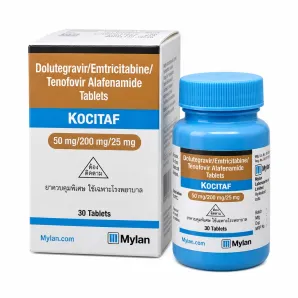 Kocitaf
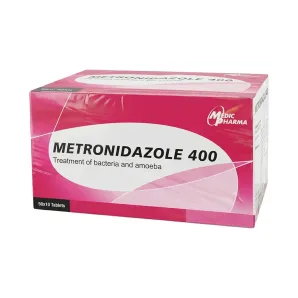 Metronidazole
 Vilerm
 Firide
 Gofen
Gofen