Many people search for cystic acne causes before choosing a treatment. Inflammatory acne is treated by choosing the right topical medication for the severity level, combined with proper skin care. Never squeeze or pick — this worsens inflammation and greatly increases the chance of scarring.
3-step treatment principle
Step 1: Reduce inflammation — apply BP or Clindamycin spot treatment directly on the acne immediately
Step 2: Speed healing — overnight hydrocolloid patch for pustules (acne with a head)
Step 3: Prevent marks — SPF + niacinamide after the acne clears to prevent dark spots
What Is Inflammatory Acne? How Many Grades?
Inflammatory acne is acne accompanied by inflammation — swelling, redness, and tenderness — caused by Cutibacterium acnes (C. acnes) bacteria multiplying inside a clogged pore and triggering an immune response. This differs from non-inflammatory acne (blackheads/whiteheads) which has no inflammation.
Grade
Type
Appearance
Depth
Primary Treatment
Grade 1
Papule
Red, firm, tender bump — no pus
Superficial
BP 2.5–5% or Clindamycin
Grade 2
Pustule
Red bump with white/yellow pus head
Superficial–mid
Acne patch + BP/Clindamycin
Grade 3
Nodule (deep acne)
Hard lump >5 mm, very painful, no head
Deep
Adapalene / Tretinoin / Azelaic
Grade 4
Cyst
Large soft lump, pus-filled under skin
Very deep
Isotretinoin / doctor injection
What Causes Inflammatory Acne?
Inflammatory acne results from 3 primary factors working together:
1. C. acnes bacteria
Cutibacterium acnes bacteria normally living on the skin multiply rapidly when pores become clogged with sebum. The immune system sends white blood cells to fight the bacteria → causing the swelling, redness, and tenderness we call inflammatory acne.
2. Androgen hormones
Androgens (especially during puberty, menstruation, or stress periods) stimulate sebaceous glands to produce more oil → pores clog more easily → C. acnes multiplies → inflammatory acne appears in clusters.
3. Squeezing and picking
Squeezing or picking spreads bacteria to surrounding pores and pushes inflammation deeper into the skin, making inflammatory acne worse and significantly increasing the risk of permanent scarring.
What Is Nodular Acne and How Is It Different?
Nodular acne (deep acne) is Grade 3 inflammatory acne that inflames deep into the dermis — presenting as a hard, painful lump over 5 mm in diameter with no visible head. It differs clearly from regular acne.
Nodular acne vs regular inflammatory acne
Size: nodule >5 mm / regular inflammatory acne (papule) <5 mm
Depth: nodule reaches dermis / regular acne stays in epidermis
Head: nodule has no head / pustule has a visible pus head
Scarring risk: nodule carries much higher risk of ice-pick scarring
What causes nodular acne?
Nodular acne forms when regular inflammatory acne spreads into deeper skin layers — caused by squeezing, high androgen levels, or an abnormally strong immune response. Treat with topical retinoids as the primary approach; never attempt to squeeze.
Match the topical medication to the inflammatory acne grade for fastest, mark-free results:
Benzoyl Peroxide (BP) — for Grade 1-2 inflammatory acne
BP kills C. acnes directly, reducing inflammation within 3–5 days. Use 2.5–5% concentration as a spot treatment, 1–2 times daily — ideal for papule and pustule inflammatory acne. Benzac is an available option.
Clindamycin — antibiotic topical treatment
Clindamycin inhibits C. acnes growth and effectively reduces inflammatory acne. Often paired with BP to prevent antibiotic resistance. Clinda-M is a commonly used choice.
Retinoid (Adapalene / Tretinoin) — for Grade 3-4
Retinoids stimulate cell turnover, prevent clogging, and reduce chronic inflammatory acne. Requires continuous use for 8–12 weeks to see results. Differin Gel (Adapalene 0.1%) suits sensitive skin; Acnetin-A (Tretinoin) suits more resilient skin.
Azelaic Acid — reduces inflammation and dark marks simultaneously
Azelaic Acid reduces inflammatory acne while inhibiting melanin at the same time — ideal when acne and post-acne marks coexist. Skinoren (Azelaic Acid 20%) is a popular choice.
Acne patch — for pustules with a head
Hydrocolloid acne patches absorb pus from pustules overnight, prevent squeezing, reduce inflammation, and help inflammatory acne heal faster.
The healing timeline for inflammatory acne depends on the severity grade and proper care:
Papule — 5–10 days
With correct use of BP or Clindamycin spot treatment, papule-grade inflammatory acne typically resolves within 5–10 days — provided you don't squeeze and follow proper skin care.
Pustule — 3–7 days
Pustules treated with a hydrocolloid acne patch combined with topical gel often flatten faster, within 3–7 days, as the hydrocolloid efficiently draws out the pus.
Nodule (deep acne) — 4–8 weeks
Nodular acne inflames deeply and requires continuous retinoid use for 4–8 weeks to resolve. Never squeeze — it extends healing time and significantly increases the risk of ice-pick scarring.
Cyst — 4–12 weeks or requires physician
Cystic acne is the deepest grade and often requires isotretinoin or doctor-administered injections. Treating cysts with topical products alone is usually insufficient.
Tips to speed up healing
Cold compress 5–10 minutes to temporarily reduce swelling
Never squeeze, pick, or scrub
Wash face gently twice daily with a mild cleanser
Apply spot treatment only to the inflamed spot — not the entire face
What to Avoid with Inflamed Acne?
What you must NOT do when you have inflammatory acne directly affects severity and risk of scarring:
❌ Squeezing or picking — pushes bacteria deeper, worsens inflammatory acne, and risks permanent ice-pick scars
❌ Scrubbing the face — increases irritation and triggers more inflammation
❌ Applying thick foundation/powder over inflamed spots — clogs pores further and worsens inflammatory acne
❌ Using multiple products simultaneously — stacking BP + retinoid + Clindamycin at the same time causes excessive dryness and irritation
❌ Washing face more than twice daily — damages skin barrier and triggers more sebum production
❌ Rubbing face vigorously with a towel — irritates and inflames inflammatory acne further
How to Prevent Dark Marks and Scarring?
Post-inflammatory hyperpigmentation (PIH) and atrophic scars from inflammatory acne can be prevented with proper care from the moment the acne appears:
SPF 30+ every morning
UV light stimulates melanin, darkening and prolonging post-acne dark marks from inflammatory acne. Daily SPF 30+ prevents marks from deepening and accelerates fading.
Use Niacinamide after the acne clears
Niacinamide (Vitamin B3) inhibits melanin transfer to skin cells, helping fade dark marks left after inflammatory acne heals. Use daily — apply after cleansing before sunscreen.
Retinoid to accelerate cell turnover
Adapalene or Tretinoin speeds up shedding of old skin cells, helping dark marks from inflammatory acne fade faster, while also preventing new breakouts.
Never squeeze — the most important rule
Squeezing inflammatory acne is the primary cause of permanent scarring (atrophic/ice-pick scars), which is far harder to treat than dark marks and may require laser or microneedling from a doctor.
When Should You See a Doctor?
While many cases of inflammatory acne can be self-managed, certain signs call for prompt consultation with a dermatologist or pharmacist:
❗ Nodular or cystic acne appearing in multiple spots simultaneously — topical treatment alone is insufficient
❗ Inflammatory acne not improving after 8 weeks of topical treatment — medication type or additional oral treatment may be needed
❗ Inflammatory acne appearing alongside irregular periods or hormonal symptoms — may be hormonal acne requiring different treatment
❗ Burning, increased swelling, or redness after applying medication — may indicate an ingredient allergy; stop and consult
❗ Ice-pick or atrophic scars have already formed — requires physician treatment (laser, chemical peel, microneedling)
Act immediately: apply a hydrocolloid acne patch before bed to draw out pus overnight + BP 2.5–5% or Clindamycin spot treatment during the day. Most pustules resolve within 3–7 days. Never squeeze — bacteria spreads and dark marks form.
Cold compress for inflammatory acne — ice wrapped in cloth or a cold damp towel, applied 5–10 minutes, reduces swelling and pain temporarily. Never apply heat to inflamed acne as it worsens redness, swelling, and risks spreading the inflammation.
1–2 times daily is sufficient for most spot treatments — applying more often does not speed results but causes dryness and irritation. For BP: once in the evening / Clindamycin: morning and evening / Retinoid: once at night, start every other day for sensitive skin.
Helpful: antioxidant-rich vegetables and fruits (omega-3 from fish, zinc from legumes) help reduce inflammation. Avoid: high-sugar foods and dairy — research shows these can trigger inflammatory acne in some people (varies individually). Observe whether certain foods cause your acne to flare.
Works best on pustules that already have a head — hydrocolloid patches draw out pus, reduce inflammation, and prevent squeezing. For nodular acne without a head, patches provide some protection from irritation but retinoids must be the primary treatment.
Temporary post-inflammatory erythema after inflammatory acne heals typically fades within 2–6 weeks with daily SPF and sun protection. Dark marks (PIH) can persist up to 3–6 months — niacinamide and retinoids help accelerate fading.
Hormonal acne is a subtype of inflammatory acne — the difference is the breakout pattern: it tends to appear along the jawline, chin, and lower cheeks, cycling with menstruation. Treatment is similar, but severe hormonal acne may also require oral contraceptives or spironolactone from a physician.
Not recommended simultaneously — stacking BP + Retinoid + Clindamycin at the same time causes severe dryness, peeling, and irritation. Alternate instead: e.g., BP in the morning, Retinoid at night. Ask a pharmacist which combination suits your skin.
⚠️ Disclaimer
The information on this page is for general informational purposes only and is not intended to replace professional medical advice, diagnosis, or treatment from a qualified doctor or pharmacist. If you have any questions about your symptoms or medication, always consult a doctor or pharmacist first.



 Metronidazole
 Vilerm
 Firide
 Gofen
Gofen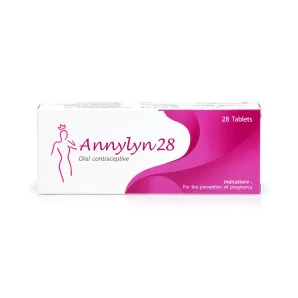 Annylyn
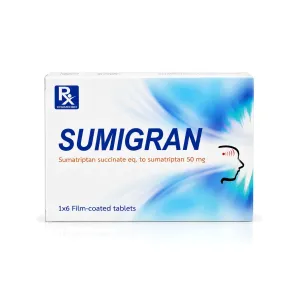 Sumigran
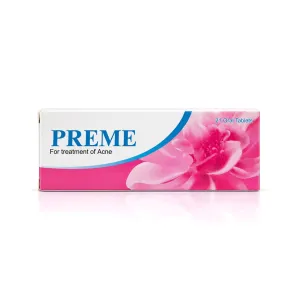 Preme
Preme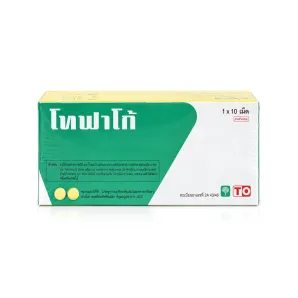 Tofago
 B-Ciprofloxacin
 Tansy One
 Enaril
 Nasonex