
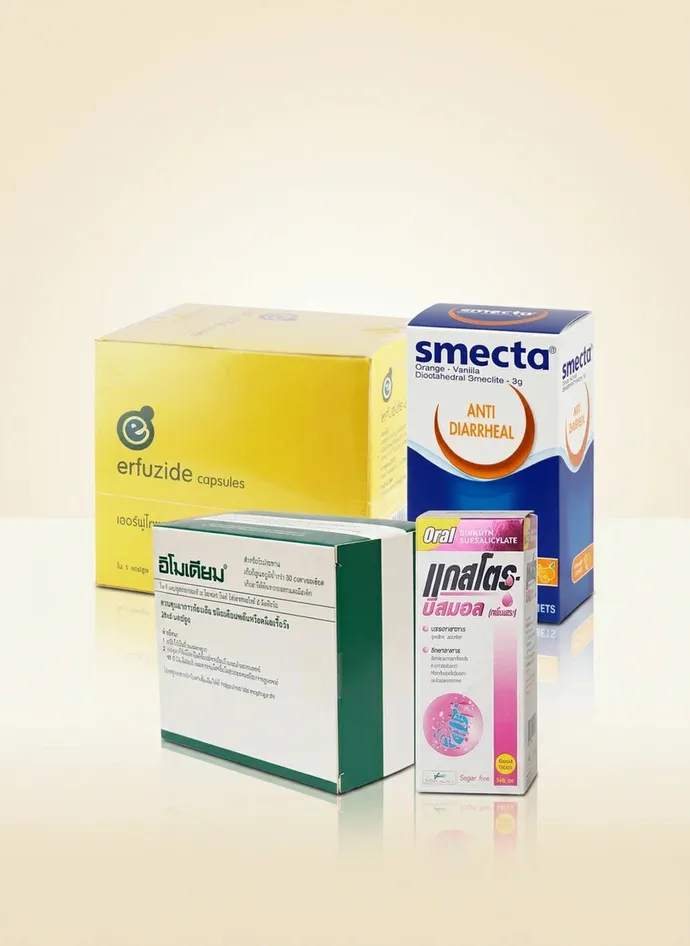
Antidiarrheal Medicine
Stop watery stools and cramps, feel normal again fast
Acute diarrhea brings frequent loose stools, cramping pain, and fast dehydration that disrupt work and daily life. Intimo Life curates antidiarrheal medicines with different mechanisms, matched to your cause and severity.
💊 Choose anti-motility agents, adsorbents, or gut protectants based on what's causing your symptoms.
👨⚕️ Consult a pharmacist online instantly — no travel, no queues, completely private and convenient.
🚚 Fast, confidential delivery — plain packaging with no product names on the outside, delivered safely to your door.
What antidiarrheal medicine should you take, and how do you choose the right one?
For diarrhea without fever or bloody stools, an anti-motility agent like loperamide, or adsorbents like bismuth subsalicylate and diosmectite, can help alongside oral rehydration salts to prevent dehydration. See a doctor instead of self-treating if you have a high fever, bloody stools, or no improvement within two days.
🛒 Shop the range above · 24-hour dispatch from Intimo Life — consult a pharmacist if unsure.
Antidiarrheal medicines relieve frequent loose stools and cramping pain, most often caused by food poisoning, viral or bacterial gastroenteritis, or a temporary flare of irritable bowel. They work through different mechanisms — slowing intestinal movement, adsorbing toxins, or protecting an irritated gut lining.
📊 Key clinical facts:
- Most acute diarrhea in adults resolves within 3-5 days without antibiotics.
- WHO reports oral rehydration salts cut dehydration deaths in children by over 90% when used correctly.
- About 10-20% of adults with acute diarrhea also have cramping pain.
💊 At Intimo Life, antidiarrheal medicine covers 3 main mechanisms:
- Anti-motility agents — slow intestinal movement so the body reabsorbs more water.
- Adsorbents — bind toxins and pathogens in the gut, reducing how often you go.
- Intestinal protectants — coat an irritated gut lining, shortening symptom duration.
⚠️ If you have a high fever, bloody stools, or diarrhea lasting more than 2 days, stop anti-motility medicine and see a doctor immediately.

Antidiarrheal Products Available
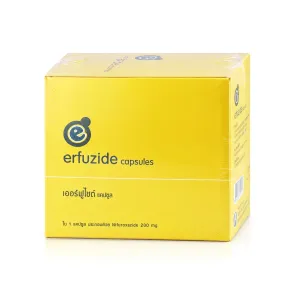 Erfuzide
Kills gut bacteria directly, not absorbed into the blood
✓ In stockFrom 40.00 ฿(฿2.38/capsule)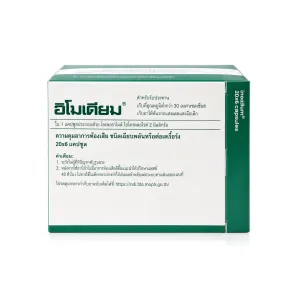 Imodium
Relieves acute diarrhoea, fewer bowel movements fast
✓ In stock55.00 ฿(฿9.17/capsule)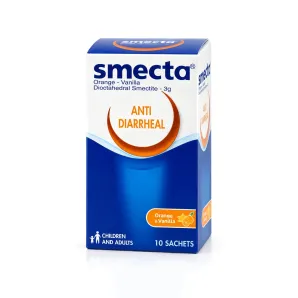 Smecta
Adsorbs toxins, coats intestinal wall, reduces diarrhea
✓ In stock190.00 ฿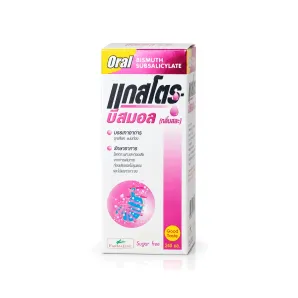 Gastro Bismol
Antibacterial relief for travel diarrhea or food poisoning
✓ In stock148.00 ฿
About Antidiarrheal Medicine
What causes diarrhea?
Acute diarrhea is most often caused by a viral infection in the digestive tract, followed by bacteria or parasites from contaminated food or water, food poisoning, certain food intolerances, or side effects from medicines such as antibiotics. Stress and irritable bowel syndrome can also cause occasional loose stools. Watching for accompanying symptoms — fever, vomiting, or severe pain — helps narrow down the likely cause. If nausea and vomiting are part of the picture, see antiemetic medicine as well.
How many types of antidiarrheal medicine are there?
Antidiarrheal medicines fall into four main mechanism groups, each suited to a different situation.
- Anti-motility agents, such as Imodium (Loperamide 2mg), slow intestinal movement so the body reabsorbs more water — suited to typical acute diarrhea without fever or bloody stools.
- Adsorbents, such as Gastro Bismol (liquid Bismuth subsalicylate), bind toxins and pathogens in the gut and also help with associated bloating.
- Intestinal protectants, such as Smecta (powdered Diosmectite), coat and strengthen an irritated gut lining, shortening how long loose stools last.
- Intestinal antibacterials, such as Erfuzide (Nifuroxazide), are used when diarrhea is suspected to be caused by a bacterial gut infection.
If bloating is your main complaint without much loose stool, see bloating relief instead.
How long does diarrhea last? Do you always need antidiarrheal medicine?
Acute diarrhea from a virus or food poisoning usually improves on its own within 2-4 days as the body clears the infection or irritant. If symptoms are mild and you're sipping enough oral rehydration salts, antidiarrheal medicine may not be necessary at all. But if frequent trips to the bathroom are disrupting your day, cramping is bothersome, or you simply want symptoms to settle faster, a medicine matched to the cause — alongside rehydration — helps you recover sooner.
Cramping pain with diarrhea — which antidiarrheal medicine helps?
Cramping pain that comes in waves alongside loose stools usually means the intestine is contracting more than normal. Anti-motility agents like Loperamide reduce both how often you go and the cramping itself. Adsorbents like Bismuth subsalicylate also have a mild anti-inflammatory effect that can ease abdominal discomfort. Choose based on how severe the cramping is and what your stools look like. If cramping persists after loose stools have stopped, see antispasmodic medicine.
What should you avoid eating during diarrhea?
During diarrhea, avoid fatty or heavily spiced food, fried food, milk and most dairy (some yogurts are fine), caffeine, alcohol, and high-sugar drinks — all of these can stimulate the gut and worsen loose stools. High-fiber or naturally laxative fruits, such as ripe papaya or pomelo, are also best avoided temporarily until symptoms settle.
What can you eat during diarrhea to recover faster?
Stick to easily digestible, mild food such as rice porridge, congee, ripe bananas, plain crackers, and clear soup, while sipping ORS or water frequently to replace lost fluids and electrolytes. Avoid large meals — smaller, more frequent portions are easier on the gut. Once symptoms improve, gradually reintroduce your normal diet.
Anti-motility vs adsorbent antidiarrheal medicine — what's the difference?
Anti-motility medicine, such as Loperamide, works by directly slowing intestinal contractions, stopping diarrhea quickly — but it's not suitable when an invasive infection is suspected. Adsorbents, such as Bismuth subsalicylate or Diosmectite, work by binding toxins and pathogens in the gut and clearing them out, without directly halting intestinal movement, making them a safer choice when the cause of symptoms isn't yet clear.
What causes recurring diarrhea? Should you be worried?
Diarrhea that comes and goes over several weeks may be caused by irritable bowel syndrome, a food intolerance such as lactose, a side effect of a regular medication, or in some cases a sign of chronic inflammatory bowel disease. If loose stools last more than 2-4 weeks, come with unexplained weight loss, or include blood, see a doctor to identify the underlying cause rather than continuing to self-treat.
⚠️ ข้อจำกัดความรับผิดชอบ
เนื้อหาในบทความนี้มีจุดประสงค์เพื่อให้ความรู้ทั่วไปเท่านั้น ไม่ได้มีเจตนาทดแทนคำแนะนำ การวินิจฉัย หรือการรักษาจากแพทย์หรือเภสัชกรผู้เชี่ยวชาญ หากมีข้อสงสัยเกี่ยวกับอาการหรือการใช้ยา ควรปรึกษาแพทย์หรือเภสัชกรก่อนเสมอ
- Loperamide: a medicine used to treat diarrhoea — NHS
- Bismuth Subsalicylate — NCBI StatPearls
- Efficacy of Diosmectite (Smecta) in Acute Watery Diarrhoea in Adults — NCBI PMC
- Oral Rehydration Salts — WHO
- Diarrhoea and vomiting — NHS
Frequently Asked Questions
A simple rule: pick Loperamide to stop quickly for work or travel, if there's no fever or bloody stools. Pick Bismuth subsalicylate for bloating or suspected contaminated food. Pick Diosmectite for a gentler option when the cause isn't clear. Never use an anti-motility medicine with a high fever or bloody stools — use ORS and see a doctor instead.
Never use an anti-motility medicine like Loperamide with a high fever, bloody or mucus-streaked stools, or a suspected invasive bacterial infection. Slowing the gut traps pathogens longer, worsening symptoms. Use ORS instead and see a doctor for proper diagnosis.
Young children, especially under 6, shouldn't be given anti-motility medicine like Loperamide on their own — side-effect risk is higher than in adults. Some adsorbents can be used per label and pharmacist guidance, but the priority is ORS, since dehydration is more dangerous in children. Always ask a pharmacist first.
Pregnant women should consult a doctor or pharmacist before taking any antidiarrheal medicine, since some aren't recommended in certain trimesters. Some adsorbents may be used short-term under guidance, but the safest priority is drinking enough oral rehydration salts, since dehydration can affect both mother and baby.
Yes — oral rehydration salts are always the primary treatment for diarrhea, whether or not you also take medicine. Dehydration is the real danger; medicine only reduces how often and how severe symptoms are. WHO recommends sipping ORS steadily all day alongside whatever medicine you choose.
Milk and most dairy are best avoided temporarily during diarrhea, since you may digest lactose less well, which can worsen symptoms. Some probiotic yogurts, however, may help restore gut bacteria balance. If it doesn't worsen symptoms, choose a low-sugar variety and start with a small amount.
See a doctor immediately for a fever above 38.5°C, bloody or mucus-streaked stools, severe vomiting, clear dehydration signs (dry mouth, little urination, dizziness on standing), or loose stools lasting more than 2 days in adults (24 hours in young children) without improving. These may need IV fluids or further diagnosis.
Antidiarrheal medicines at Intimo Life can be bought without a doctor prescribing them, but it is best to consult a pharmacist first — especially with an existing condition, other medication, or an unclear cause. Order online through Intimo Life and chat with a pharmacist for guidance.
Recently viewed products