
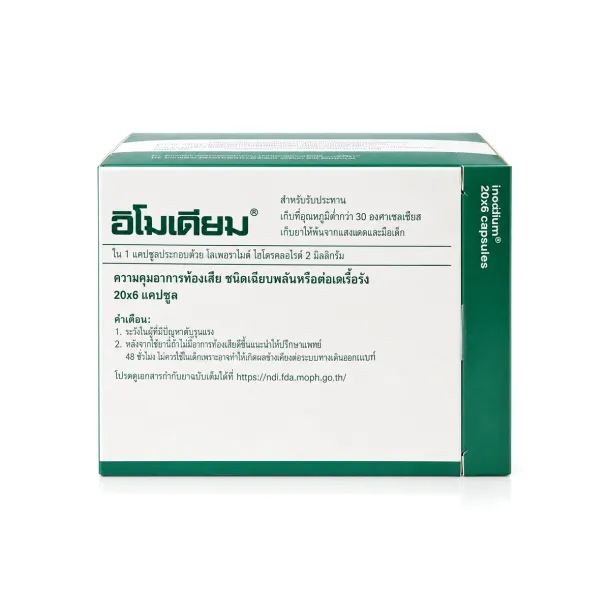
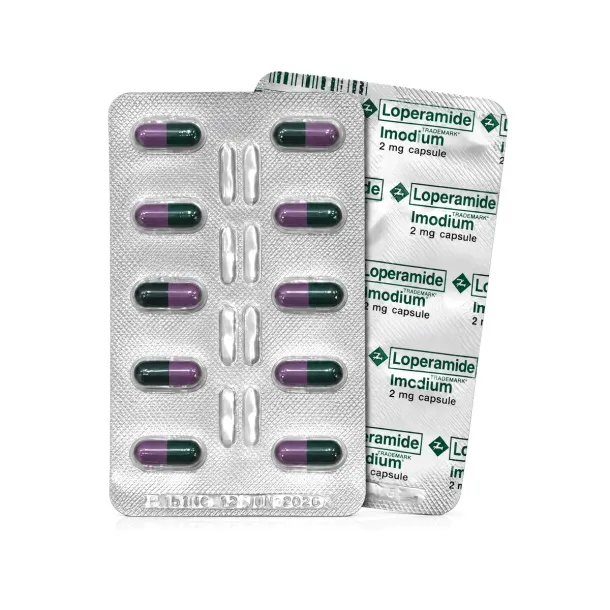
Loperamide Hydrochloride 2 mg
Imodium (Loperamide) — loperamide 2 mg anti-diarrhoeal for fast relief of acute diarrhoea, reducing stool frequency.
💊 Active: Loperamide HCl 2 mg
⏱️ Dose: 2 capsules first, then 1 after each loose stool
🍽️ Note: Max 8 capsules/day, take oral rehydration salts
📦 Pack: 6 capsules per strip
⚡ Benefit: Fast-acting and travel-friendly
🌡️ Store: Below 30°C, away from light and moisture
Done — we will alert you on LINE when this item is back.
Remind me to reorder
Remind me every
First reminder 22 Nov 2026 · on LINE
Shipping
Discreet shipping within Thailand — packaging does not identify the product. Customers can review shipping and return conditions per our store policy. Contact our team for any questions.
What is Imodium?
Imodium treats acute non-infectious diarrhea with Loperamide HCl 2 mg, which slows intestinal movement to reduce how often you go and firm up stools. It works quickly and is convenient to carry while traveling. Take 2 capsules initially, then 1 capsule after each loose stool, up to 8 capsules per day, alongside oral rehydration salts.
🛒 6 capsules/strip · Authentic · Fast shipping 24 hrs Intimo Life — Consult a doctor or pharmacist before use
Product Description
Anti-diarrhoeal Imodium (Loperamide) is loperamide hydrochloride 2 mg in capsule form, used to relieve acute non-infectious diarrhoea. Loperamide slows gut motility, giving the bowel more time to absorb water and salts, so stools firm up and movements become less frequent. See more in our anti-diarrhoeal collection.
- 📊 The WHO notes diarrhoeal disease is a common global health problem, and oral rehydration salts (ORS) are central to care alongside symptom relief (WHO, 2024)
- 📊 Loperamide effectively reduces the frequency and duration of acute diarrhoea, a popular household and travel remedy (NHS, 2024)
- 📊 It works locally in the gut and barely crosses into the brain at normal doses, so it does not cause drowsiness or dependence (MedlinePlus, 2024)
- 📊 In Thailand, acute diarrhoea is common, especially from food poisoning (Dept. of Disease Control, 2024)
🏭 Active ingredient: Loperamide HCl 2 mg per capsule
⚠️ Warning: Do not use in children under 12, or when diarrhoea comes with high fever or bloody stools (possible dysentery). If no improvement within 48 hours, stop and see a doctor.

About Imodium
What is Imodium?
Imodium is the brand name for loperamide hydrochloride 2 mg capsules, a widely used anti-diarrhoeal, sold in strips of 6 capsules for easy carrying.
How it works: Loperamide binds to opioid receptors in the intestinal wall, slowing peristalsis. Food and fluids stay in the gut longer, allowing more water and salts to be reabsorbed, so stools firm up and bowel movements become less frequent.
A key advantage is that loperamide acts locally in the gut and barely crosses into the brain at normal doses, so it does not cause drowsiness or dependence, unlike opioid painkillers. Imodium relieves symptoms — it is not an antibiotic.
What Does Imodium Treat?
Imodium is mainly used to relieve acute non-infectious diarrhoea:
- Acute diarrhoea: frequent loose stools from indigestion, stress, or a change in diet
- Traveller's diarrhoea: helps control symptoms while travelling
- Fewer bowel movements: firms up stools and reduces fluid loss
Imodium relieves symptoms so you can carry on with daily life while your body recovers. Always take oral rehydration salts (ORS) to prevent dehydration. For other options, see our anti-diarrhoeal collection. If diarrhoea comes with fever or bloody stools, see a doctor, as it may be an infection needing different treatment.
How to Take Imodium — Dosage
Taking Imodium correctly helps control symptoms safely:
Adult dosage:
- Start: 2 capsules (4 mg) straight away
- Then: 1 capsule (2 mg) after each loose stool
- Maximum: no more than 8 capsules (16 mg) per day
How to take: Swallow with water at any time — no need to take with food. Stop as soon as your stools return to normal.
Important: Take oral rehydration salts (ORS) to replace lost fluids. Do not exceed the recommended dose, as overdose may cause heart-rhythm problems. Not for children under 12.
Imodium Side Effects
Imodium is generally well-tolerated at recommended doses, but some people may experience side effects:
Common (usually mild):
- Constipation — the most common, as the drug slows gut motility
- Abdominal pain, bloating, or fullness
- Nausea or dry mouth
- Dizziness or mild drowsiness — infrequent
Seek medical care — stop use:
- Severe constipation, intense abdominal pain, or a swollen abdomen
- Palpitations or irregular heartbeat (seen with overdose)
Allergic reaction — stop immediately:
- Itchy rash, hives, swelling of tongue, lips, or face, or difficulty breathing
Contraindications and Precautions
Contraindications:
- Children under 12 — do not use unless prescribed
- Diarrhoea with high fever or bloody/mucoid stools — possible dysentery; slowing the bowel traps the infection and can worsen illness
- Severe colitis or suspected bowel obstruction — do not use
- Loperamide allergy — do not use
Precautions:
- Dehydration: always take ORS, especially the elderly
- Pregnancy and breastfeeding: consult a doctor first
- Liver disease: use with caution
- Never overdose: excessive doses can cause serious heart-rhythm problems
How Fast Does Imodium Work?
Imodium acts relatively quickly:
- Within 1 hour: it begins slowing gut motility; many people feel less cramping and fewer urges to go
- After each stool: take 1 more capsule to keep symptoms controlled
- Within 24–48 hours: most acute diarrhoea improves noticeably
When to stop: Stop as soon as your stools return to normal — no need to continue.
⚠️ If symptoms do not improve within 48 hours, or there is fever or blood in the stool, stop and see a doctor, as it may be an infection needing specific treatment. Keep taking ORS to prevent dehydration.
Imodium for Traveller's Diarrhoea
Traveller's diarrhoea is common when you change location, food, or water, so many people keep Imodium in their travel bag.
Why Imodium suits travel:
- Small strips, easy to carry, no refrigeration needed
- Fast-acting — helps control symptoms on a bus, plane, or where toilets are hard to find
- Reduces bowel movements so you can keep travelling more comfortably
Travel tips:
- Always carry oral rehydration salts (ORS) to replace fluids
- Drink clean water; avoid ice and raw food in high-risk areas
- If you have fever or bloody stools, see a doctor rather than relying on Imodium alone
Packing Imodium and ORS helps you handle acute diarrhoea promptly while travelling.
Imodium With Other Medicines or Food
Imodium can be taken with most medicines and food, but a few things are worth knowing:
Food and drink:
- Take at any time — no need to take with food
- Drink plenty of water and ORS to replace lost fluids
- Avoid alcohol while you have diarrhoea
Medicines needing caution:
- Drugs that affect heart rhythm — risk rises with high-dose loperamide
- Some drugs such as quinidine or ritonavir may raise loperamide blood levels
If you take regular medication or have a chronic condition, consult a pharmacist before using Imodium.
Where to Buy Imodium?
Where to Buy Imodium?
Imodium (Loperamide) 2 mg anti-diarrhoeal, 6 capsules per strip, is available at Intimo Life online. Easy to order with delivery across Thailand within 1–3 business days, discreetly packaged for your privacy.
⚠️ ข้อจำกัดความรับผิดชอบ
เนื้อหาในบทความนี้มีจุดประสงค์เพื่อให้ความรู้ทั่วไปเท่านั้น ไม่ได้มีเจตนาทดแทนคำแนะนำ การวินิจฉัย หรือการรักษาจากแพทย์หรือเภสัชกรผู้เชี่ยวชาญ หากมีข้อสงสัยเกี่ยวกับอาการหรือการใช้ยา ควรปรึกษาแพทย์หรือเภสัชกรก่อนเสมอ
References
- NHS UK. Loperamide — uses, dosage and side effects. National Health Service; 2024.
- MedlinePlus. Loperamide. U.S. National Library of Medicine; 2024.
- WHO. Diarrhoeal disease — Fact Sheet. World Health Organization; 2024.
- Department of Disease Control, Ministry of Public Health Thailand. Acute diarrhoeal disease. DDC; 2024.

Frequently Asked Questions
Imodium can be taken at any time — no need to take with food. Take 2 capsules as soon as symptoms start, then 1 more after each loose stool, swallowed with water. Also drink oral rehydration salts (ORS) to replace lost fluids.
Convenience stores like 7-Eleven usually do not stock Imodium, as it is sold in pharmacies. Imodium (Loperamide) can be conveniently ordered at Intimo Life online, with delivery across Thailand in 1–3 business days, discreetly packaged for your privacy.
Imodium is not recommended for children under 12 unless prescribed, as children are more prone to side effects and dehydration. For a child with diarrhoea, focus on oral rehydration salts (ORS) and see a doctor or pharmacist for an age-appropriate option.
Pregnant and breastfeeding women should consult a doctor or pharmacist before using Imodium, as suitability is assessed individually. Diarrhoea care in pregnancy usually focuses first on rehydration and rest; if symptoms are severe or there is fever, see a doctor.
There is no difference in the active drug — Imodium is the brand name and loperamide is the generic name for the same medicine. Both contain loperamide hydrochloride 2 mg. Imodium is the well-known brand, while generic loperamide is often cheaper but works the same way.
Constipation is a common side effect because Imodium slows the gut. If it starts, stop the medicine as soon as your stools are normal — do not keep taking it. Drink plenty of water and eat fibre; constipation usually clears in 1–2 days. If it is severe or painful, see a doctor.
No — if diarrhoea comes with high fever or bloody/mucoid stools, it may be dysentery or a gut infection. Imodium slows the bowel and traps the infection, worsening illness. See a doctor to find the cause and get proper treatment rather than self-medicating with anti-motility drugs.
Imodium is for short-term symptom relief — stop as soon as stools are normal. If diarrhoea does not improve within 48 hours, or there is fever, severe weakness, or reduced urination (signs of dehydration), stop and see a doctor. Keep taking ORS to prevent dehydration.
Generally Imodium does not cause drowsiness, as loperamide acts locally in the gut and barely reaches the brain at normal doses, so you can usually drive normally. However, some people may feel mild dizziness or drowsiness — if so, avoid driving or operating machinery until you feel normal.
Related Products
Products with the same active ingredient or treating the similar condition.
 Smecta
Adsorbs toxins, coats intestinal wall, reduces diarrhea
✓ In stock190.00 ฿ Erfuzide
Kills gut bacteria directly, not absorbed into the blood
✓ In stockFrom 40.00 ฿(฿2.38/capsule)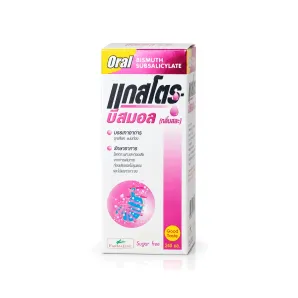 Gastro Bismol
Antibacterial relief for travel diarrhea or food poisoning
✓ In stock148.00 ฿