
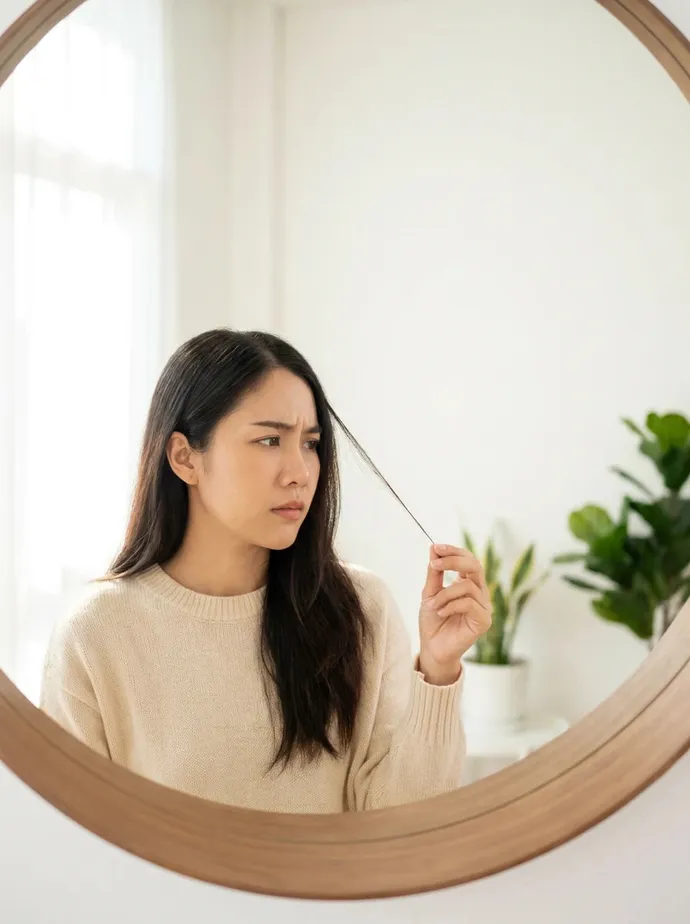
Female Hair Loss — Care & Treatment
Thinning hair, excessive shedding — understand the cause, treat it right
Female hair loss is more common than many realise and affects confidence and quality of life. Whether caused by hormonal changes, stress, nutritional deficiency, or genetics — each cause calls for a different approach.
💊 Intimo Life brings together hair loss care products for women: topical minoxidil, hair vitamins and supplements, and scalp care — all Thai FDA-approved.
👩⚕️ Consult a pharmacist online instantly — no travel needed. Get personalised advice suited to your specific concern.
🚚 Fast, discreet delivery — plain packaging, no product names on the outside, delivered safely to your door.
What causes hair loss in women?
Female hair loss has many causes, ranging from temporary postpartum shedding to chronic conditions. Understanding the true underlying cause matters before starting any treatment, since the right approach depends on it — for example, iron or certain vitamin deficiencies can often be corrected directly. Consult a pharmacist or dermatologist to plan the care that suits your situation.
🛒 Shop the range above · 24-hour dispatch from Intimo Life — consult a pharmacist if unsure.
Female hair loss refers to shedding significantly more than normal over a sustained period, causing visibly thinner hair, a more exposed scalp, or a wider parting. Causes range from temporary conditions like post-partum telogen effluvium to chronic conditions like female-pattern androgenetic alopecia.
📊 Key facts about female hair loss:
- Normal daily shedding is 50–100 strands — consistently more for over 3 months may indicate a problem
- 1 in 3 women experience significant hair loss at some point in their lives
- Minoxidil 2% and 5% for women is FDA-approved — it stimulates hair follicles through the growth cycle
- Deficiencies in iron, vitamin D, and biotin are common, correctable causes
💡 Before starting any product, identify the root cause — effective treatment depends on what's driving the loss. Consult a pharmacist or dermatologist for a plan tailored to you.

Female Hair Loss Treatment Products
About Female Hair Loss Treatment
What Is Female Hair Loss? How Much Shedding Is Normal?
Hair grows in 3 cycles: anagen (growth, 2–6 years), catagen (transition, 2–3 weeks), and telogen (resting and shedding, 2–3 months). Normally 85–90% of hairs are in anagen and shedding 50–100 strands daily is considered normal.
- Abnormal hair loss: more than 100 strands per day for over 3 months; visible scalp; wider centre parting; noticeably thinner ponytail
- Thinning vs loss: thinning means each strand is finer and weaker; hair loss means fewer follicles producing hair — both can occur together
- Simple Pull Test: gently pull 40–60 strands — if more than 6 come out easily, shedding may be above normal
What Causes Hair Loss in Women?
Female hair loss is often multi-factorial. Common causes include:
- Hormonal imbalance: elevated androgens, thyroid dysfunction, or hormonal changes from contraceptives shrink follicles, leading to finer and fewer hairs
- Postpartum hair loss: after childbirth, oestrogen drops sharply and many follicles enter telogen simultaneously — shedding typically starts 2–4 months post-birth and usually resolves in 6–12 months
- Chronic stress: sustained high cortisol pushes follicles into premature resting phase (stress-induced telogen effluvium) — shedding appears 2–3 months after the stressful event
- Nutritional deficiency: low iron (ferritin), vitamin D, biotin, zinc, or insufficient protein all weaken hair structure and growth
- Genetics (female-pattern hair loss): androgenetic alopecia in women causes thinning at the crown and a widened centre part — often begins in the 30s–40s
Which Types of Hair Loss Are Abnormal and Need Attention?
Some hair loss resolves on its own; other types need professional evaluation:
- Alopecia areata: circular or oval patches of bare scalp — the immune system attacks follicles; requires dermatologist evaluation
- Traction alopecia: hairline recession from tight hairstyles — braids, tight ponytails; reversible by changing habits
- Cicatricial alopecia: scalp inflammation that permanently destroys follicles — rare but needs urgent diagnosis
- See a doctor promptly if: rapid, sudden loss; scalp redness, itching, pain, or scaling; hair loss combined with other symptoms such as weight change, fatigue, or unusual dryness
Treatment Approaches for Female Hair Loss
The right treatment depends on the diagnosed cause. Key approaches include:
- Topical minoxidil: the approved active ingredient for female hair loss — dilates blood vessels around follicles and extends the anagen (growth) phase. Available in 2% or 5% formulas, applied to the scalp 1–2 times daily; visible results in 3–6 months
- Hair growth supplements: targeted vitamins and minerals — biotin, iron, vitamin D, zinc, and collagen — support hair structure from within
- Lifestyle and nutrition adjustments: adequate protein intake, stress management, sufficient sleep, and reducing heat styling all help slow shedding
- Scalp care products: shampoos and serums that create an optimal environment for hair follicle health and growth
- Dermatologist consultation: for severe or non-responsive hair loss, a specialist may consider additional treatment options
Hair & Scalp Care to Reduce Shedding
A healthy scalp is the foundation of healthy hair. Proper care reduces shedding caused by external factors:
- Wash with moderately warm water: excessively hot water damages the cuticle and dries the scalp — rinse warm then finish with cool water to close the hair shaft
- Limit high heat styling: blow-drying too close, straightening, curling — heat damages hair proteins and increases breakage
- Brush gently: use a wide-toothed comb on wet hair, starting from ends and working upwards — never yank or force through tangles
- Scalp massage: gentle circular massage for 5–10 minutes daily stimulates blood circulation to follicles
- Choose the right shampoo: mild, low-sulfate formulas; for oily scalp or dandruff, treat the scalp condition first as chronic scalp inflammation affects follicle health
Foods and Vitamins That Support Hair Growth and Reduce Loss
Nutrition directly affects hair health — hair is made primarily of the protein keratin:
- Protein: eggs, fish, lean meat, legumes — inadequate protein leads to finer, weaker hair; aim for 1.2–1.6 g per kg body weight daily
- Iron: red meat, liver, spinach, kidney beans — ferritin below 30 ng/mL correlates with increased shedding; test before supplementing
- Vitamin D: sardines, salmon, egg yolk — deficiency is common in people who spend most time indoors; affects follicle cycling
- Biotin (Vitamin B7): eggs, avocado, nuts — supports keratin synthesis; supplementation helps when genuine deficiency is present
- Zinc: meat, seafood, pumpkin seeds — aids tissue repair and maintains normal scalp sebaceous gland function
- Omega-3 fatty acids: deep-sea fish, flaxseed, walnuts — reduce scalp inflammation and support hair moisture
Postpartum Hair Loss — How to Support Recovery
Postpartum alopecia is a common, temporary condition in new mothers caused by rapid hormonal changes after birth:
- Mechanism: during pregnancy, high oestrogen keeps more hair in the anagen phase; after birth, oestrogen drops sharply and all those retained hairs enter telogen simultaneously, causing a large shed 2–4 months postpartum
- Timeline: usually resolves on its own within 6–12 months as the hair gradually regrows to normal density
- Supportive care: adequate protein and iron intake (especially important post-birth), sufficient rest, stress management, and clean scalp hygiene
- When to see a doctor: shedding continuing beyond 12 months, or severe enough to significantly impact confidence — check thyroid hormones and ferritin levels
- Products while breastfeeding: consult a pharmacist before using any hair loss products including minoxidil during the breastfeeding period
When Should You See a Dermatologist for Hair Loss?
Self-care is appropriate for mild to moderate hair loss with a clear cause. However, see a dermatologist when:
- Unusually rapid shedding: losing large amounts quickly, or visible scalp exposure within weeks
- Patchy hair loss: distinct bald circles on scalp, eyebrows, or lashes — may indicate alopecia areata
- Scalp symptoms: itching, redness, pain, scaling, or inflammation
- No response to treatment: 6 months of proper product use with no visible improvement
- Accompanying systemic symptoms: significant weight change, fatigue, abnormal temperature sensitivity, severe dryness — may indicate thyroid or other medical conditions
- A dermatologist can: diagnose the root cause, perform a scalp biopsy, prescribe targeted treatment, and monitor progress
⚠️ Disclaimer
The information on this page is for general informational purposes only and is not intended to replace professional medical advice, diagnosis, or treatment from a qualified doctor or pharmacist. If you have any questions about your symptoms or medication, always consult a doctor or pharmacist first.
- Hair Loss (Alopecia): Causes and Treatment — NHS
- Female Pattern Hair Loss: Diagnosis and Treatment — American Academy of Dermatology
- Hair Loss: MedlinePlus Medical Encyclopedia — NIH MedlinePlus
- Minoxidil — Pharmacology, Use in Hair Loss — NCBI StatPearls
- Nutritional Deficiencies and Hair Loss: A Systematic Review — NCBI PMC
Frequently Asked Questions About Hair Loss
Losing 50–100 strands daily is within the normal range, as hair naturally cycles through growth and shedding phases. If you notice significantly more hair on your pillow, in the shower, or on your brush — and this continues for more than 3 months — it's worth investigating. A pharmacist or dermatologist can help assess whether it's cause for concern.
Common causes in women include hormonal changes (postpartum, perimenopause, or thyroid disorders), chronic stress, nutritional deficiencies — particularly iron and vitamin D — unbalanced diet, and genetics (female-pattern hair loss). Identifying the underlying cause leads to more targeted and effective treatment.
If you're experiencing heavy, persistent shedding, start by observing the pattern — diffuse shedding all over, or patchy loss? Consider blood tests to check ferritin, iron, vitamin D, and thyroid hormones. Meanwhile, optimise nutrition and reduce stress. If there's no improvement within 3 months, or you have other symptoms, see a dermatologist for a proper diagnosis and treatment plan.
Minoxidil 2% is an approved treatment for female-pattern hair loss. Applied to the scalp 1–2 times daily, it works by boosting blood flow around follicles and extending the hair growth phase. Results are typically visible in 3–6 months, and continued use is needed to maintain the effect. Avoid during pregnancy; consult a pharmacist or doctor before use while breastfeeding.
Yes, postpartum hair loss is a temporary condition that typically resolves on its own within 6–12 months after birth. It's caused by a sharp drop in oestrogen, which pushes many follicles into the resting phase simultaneously. Supportive measures include adequate nutrition — especially protein and iron — sufficient sleep, and keeping the scalp clean. If hair hasn't recovered by 12 months postpartum, see a doctor to rule out other causes.
It depends on the cause and how long the problem has been present. Hair loss from temporary causes — stress, nutritional deficiency, or postpartum — typically recovers well once the root cause is addressed. For female-pattern hair loss (genetic), treatments like minoxidil help slow further loss and encourage miniaturised follicles to produce thicker hair again. However, follicles that have been dormant for a long time may not fully recover — so the sooner you start, the better the outcome.
Key nutrients for reducing hair loss include: adequate protein from eggs, fish, and lean meat; iron from red meat, liver, and spinach; vitamin D from fatty fish and morning sunlight; biotin from eggs and nuts; zinc from seafood and pumpkin seeds; and omega-3 fatty acids from deep-sea fish. For those with incomplete diets, targeted supplementation may help — but a blood test first helps identify exactly what you're deficient in.
See a dermatologist promptly if: hair loss is patchy with clearly defined bald circles; the scalp is itchy, red, painful, or scaly; you're losing hair very rapidly within just a few weeks; there are other accompanying symptoms such as fatigue, weight change, or thinning eyebrows and lashes; or you've been managing self-care for 6 months with no improvement. These signs may indicate conditions requiring specialist diagnosis and targeted treatment.
Recently viewed products