

Artificial Tears
Artificial Tears for Dry, Irritated Eyes
Dry, stinging, itchy eyes or a gritty feeling are increasingly common — from screen time, air-conditioning, or wearing contacts all day. Intimo Life offers artificial tears to lubricate the eye surface, chosen by symptom severity.
💊 Preservative-free daily drops for frequent use, plus a long-acting gel for severe dryness.
👨⚕️ Consult a pharmacist online instantly — no travel, no queues, completely private and convenient.
🚚 Fast, confidential delivery — plain packaging with no product names on the outside, delivered safely to your door.
Which artificial tears should I choose?
Choose by symptom severity: frequent use or preservative sensitivity — daily preservative-free drops; moderate-to-severe dryness or contact lens wear — hyaluronate drops; severe dryness or nighttime use — gel. Ask a pharmacist if you're unsure which to pick.
🛒 Shop the range above · 24-hour dispatch from Intimo Life — consult a pharmacist if unsure.
Artificial tears are lubricating eye drops that replace or supplement the natural tear film when the eyes don't produce enough tears or tears evaporate too quickly. They relieve dryness, stinging, itchiness, eye fatigue, and a gritty feeling in the eyes.
📊 Key clinical statistics:
- Dry eye disease affects an estimated 5-50% of the population worldwide, depending on the diagnostic criteria used
- Women carry a higher risk of dry eye, with prevalence of 12-22% reported in this group
- People with heavy screen or device use may have dry eye prevalence as high as 70%
💊 At Intimo Life, artificial tears come in 3 main formats based on how you use them:
- Preservative-free daily drops (Carmellose Sodium) — for frequent use or preservative sensitivity
- Multidose hyaluronate (Sodium Hyaluronate) — long-lasting moisture for moderate-to-severe dryness
- Gel (Carbomer) — clings to the eye surface longer, ideal for nighttime or severe dryness
⚠️ If you need artificial tears more than 4 times a day, switch to a preservative-free formula, and consult a pharmacist or ophthalmologist if symptoms don't improve.

Artificial Tears
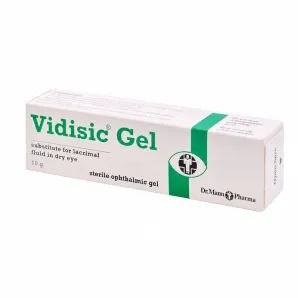 Vidisic Eye Gel (Carbomer Ophthalmic Gel) 10g
Carbomer gel relieves dry & irritated eyes
✓ In stock165.00 ฿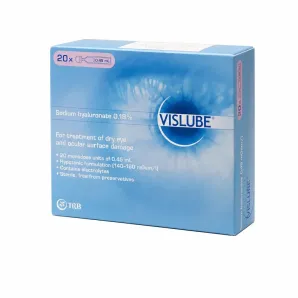 Vislube 0.45ml 20 Vials
Sodium Hyaluronate 0.18% unit-dose eye drops
✓ In stock435.00 ฿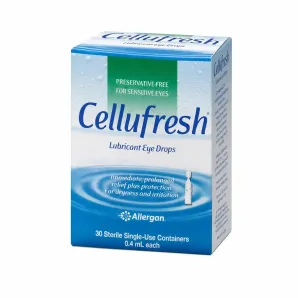 Cellufresh Artificial Tears 30 Vials
Carmellose 0.5% preservative-free eye drops, dry eye
✓ In stock338.00 ฿
About Artificial Tears
What Are Artificial Tears and How Do They Help?
Artificial tears are lubricating eye drops that replace or supplement the natural tear film when the eyes don't make enough tears or tears evaporate too fast. They coat the eye surface with moisture, reducing friction each time you blink.
Common causes of dry eye include long hours staring at a screen, sitting in air-conditioned rooms, wearing contact lenses all day, aging, and side effects from certain medications such as antihistamines and blood pressure drugs. Artificial tears relieve stinging, itchiness, eye fatigue, and a gritty feeling — but they don't treat the underlying cause of dry eye.
Which Artificial Tears Brand Is Best? How to Choose?
The market has many artificial tears brands, such as Systane, Hialid, Opsil, Natear, or Mutear, each with a different active ingredient and concentration. The best way to choose is by active ingredient, not brand name alone.
At Intimo Life you'll find Cellufresh (Carmellose Sodium) as preservative-free daily drops, Vislube (Sodium Hyaluronate) as long-lasting multidose drops, and Vidisic Eye Gel (Carbomer) as a long-acting gel — choose based on how severe your dryness is and how often you need to use it.
Preservative-Free vs Preserved Artificial Tears — What's the Difference?
Preserved artificial tears last longer on the shelf and cost less, but if you use them more than 4 times a day, the preservative can build up and irritate the eye surface further. The American Academy of Ophthalmology recommends switching to a preservative-free formula if you need frequent drops.
At Intimo Life, Cellufresh is a preservative-free daily drop in single-use vials, while Vislube uses a COMOD bottle system that filters out bacteria, so it stays preservative-free even as a multidose bottle — ideal if you're sensitive to preservatives or have easily irritated eyes.
Drops vs Gel Artificial Tears — What's the Difference?
Drop-form artificial tears (clear liquid) spread quickly and don't blur vision for long, making them suitable for use during work hours or while driving. Gel-form artificial tears are thicker and cling to the eye surface longer, providing longer-lasting moisture, but they often cause temporary blurred vision right after application.
Vidisic Eye Gel (Carbomer) is best used before bedtime, since it lubricates the eye through the night while your eyes are closed, or for severe dryness that isn't fully relieved by frequent liquid drops alone.
How to Use Artificial Tears Correctly?
Wash your hands before every use. Tilt your head back slightly and gently pull down the lower eyelid, then place one drop into the lower pocket. Avoid letting the bottle tip touch your eye or eyelashes to prevent contamination. If you're using another eye drop, wait at least 5-10 minutes between different products.
Single-use (unit-dose) vials should be used once and discarded immediately — never saved for reuse. Multidose bottles should be capped tightly after every use, and checked against the labeled expiry after opening. Ask a pharmacist first if you're unsure how to use them.
Which Artificial Tears Are Best for Contact Lens Wearers?
Contact lens wearers tend to develop dry eye more easily, since the lens draws moisture away from the eye surface. Choose a preservative-free formula, since some preservatives can accumulate in the lens material and cause further irritation.
Vislube (Sodium Hyaluronate) is a preservative-free multidose drop with long-lasting moisture, suitable for lens wearers who need to use drops frequently during the day. Cellufresh daily drops work well too. If you remove your lenses before using drops, ask a pharmacist about the right timing for your specific lens type.
Where to Buy Artificial Tears?
Order artificial tears online at Intimo Life — choose Cellufresh preservative-free daily drops, Vislube hyaluronate multidose drops, or Vidisic Eye Gel. Browse more eye care products in the eye drops & eye care collection.
Not sure which artificial tears fit your dry eye symptoms? Consult a pharmacist free via LINE before you order. Fast nationwide delivery in plain packaging with no product names visible outside.
⚠️ ข้อจำกัดความรับผิดชอบ
เนื้อหาในบทความนี้มีจุดประสงค์เพื่อให้ความรู้ทั่วไปเท่านั้น ไม่ได้มีเจตนาทดแทนคำแนะนำ การวินิจฉัย หรือการรักษาจากแพทย์หรือเภสัชกรผู้เชี่ยวชาญ หากมีข้อสงสัยเกี่ยวกับอาการหรือการใช้ยา ควรปรึกษาแพทย์หรือเภสัชกรก่อนเสมอ
- Dry Eyes — Symptoms — NHS
- Dry Eye Syndrome — Medical Encyclopedia — MedlinePlus
- Lubricating Eye Drops for Dry Eyes — American Academy of Ophthalmology
- Choosing the Best Lubricant Eye Drops for Dry Eyes — American Academy of Ophthalmology
- Dry Eye Syndrome — NCBI StatPearls
Frequently Asked Questions
Generally 3-4 times a day, or whenever your eyes feel dry or irritated. Preservative-free formulas can be used more often since there's no preservative buildup. If you find yourself needing drops very frequently and it's disrupting daily life, see a pharmacist or ophthalmologist to find the underlying cause.
Preservative-free tears are fairly safe even with frequent use, but preserved formulas used more than 4 times a day for a long period may irritate the eye surface further. If you rely on drops often and symptoms don't improve, see an ophthalmologist for the underlying cause instead of relying on drops long-term.
Artificial tears aren't absorbed into the bloodstream in any meaningful amount, so they're generally safe for pregnant women, breastfeeding mothers, and children. Choose a preservative-free formula for young children, and check with a pharmacist or doctor first for children under 2 or if redness comes with the dryness.
Yes. Artificial tears add moisture and can be used long-term for dry eye. Redness-relief drops usually contain a vasoconstrictor that whitens the eye temporarily, but continued use can make redness rebound worse once you stop. They aren't a substitute for artificial tears in long-term dry eye care.
Single-use (unit-dose) vials must be discarded immediately after one use — never save them for reuse. Preservative-free multidose bottles (such as COMOD systems) are typically good for about 3 months after opening, while preserved formulas may last longer. Always follow the specific in-use shelf life printed on the label or box.
If symptoms don't improve after 1-2 weeks of regular artificial tears use, or you have significant redness, eye pain, blurred vision, or unusual discharge, see an ophthalmologist to check for an underlying cause such as blocked meibomian glands or an autoimmune condition, which may need treatment beyond artificial tears alone.
Pricing varies by formula and packaging. Single-use preservative-free daily vials are usually the most affordable per box, while multidose hyaluronate drops and long-acting gels cost more due to their packaging technology and active ingredient. Check each product page on the website for exact current pricing.
If you've had stinging, redness, or irritation after using preserved artificial tears, switch to a dedicated preservative-free formula — single-use daily vials or a filtered multidose bottle system. If irritation continues after switching, consult a pharmacist or see an ophthalmologist.
Become a member of our store to receive news and exclusive discounts.
Recently viewed products