

Azithromycin
Short-course Macrolide Antibiotic — 3 to 5 Days
Sinusitis, tonsillitis, bronchitis, and skin infections need an antibiotic with reliable coverage. Azithromycin's long half-life enables once-daily dosing and a short 3–5 day course — easy to complete and effective at reducing resistance risk.
💊 Available in 250 mg and 500 mg tablets and capsules — once-daily dosing, no split doses required.
👨⚕️ Consult a pharmacist online instantly — no travel, no queues, completely private and convenient.
🚚 Fast, confidential delivery — plain packaging with no product names on the outside, delivered safely to your door.
What is Azithromycin?
Azithromycin is a Macrolide antibiotic that covers many bacteria types, including atypical ones like Mycoplasma and Chlamydia. It suits people with respiratory infections such as sinusitis, tonsillitis, and bronchitis, as well as sexually transmitted infections like chlamydia treated with a single dose. Always finish the full course, even after symptoms improve, to lower the risk of antibiotic resistance.
🛒 Shop the range above · 24-hour dispatch from Intimo Life — consult a pharmacist if unsure.
Azithromycin is a macrolide antibiotic that inhibits bacterial protein synthesis by binding to the 50S ribosomal subunit. It covers both Gram-positive and Gram-negative bacteria as well as atypical pathogens such as Mycoplasma pneumoniae and Chlamydia trachomatis — organisms commonly missed by Penicillin-class antibiotics.
📊 Key clinical statistics:
- Azithromycin achieves bacterial eradication rates of 85–90% in acute sinusitis and tonsillitis within a 3–5 day course
- Its long 68–72 hour half-life sustains high tissue concentrations well above MIC even after the final dose
- GI side effects occur in only 5–10% of patients — significantly lower than Penicillin-class antibiotics
💊 At Intimo Life, Azithromycin treats several categories of bacterial infection:
- Respiratory infections — sinusitis, tonsillitis, bronchitis, community-acquired pneumonia (CAP)
- Skin and STIs — bacterial skin infections, and Chlamydia trachomatis via single-dose regimen
⚠️ Always complete the full antibiotic course — stopping early increases resistance risk. Stop and consult a pharmacist immediately if you experience irregular heartbeat or allergic reaction symptoms.

Azithromycin
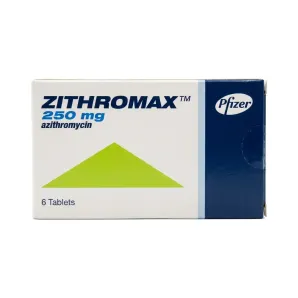 Zithromax Azithromycin 250mg Antibiotic 6 Tablets
Azithromycin antibiotic, short course, once daily
✓ In stock515.00 ฿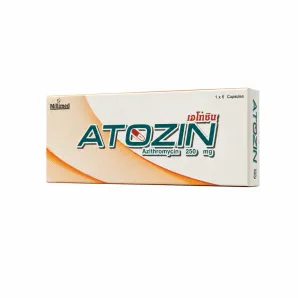 Atozin Azithromycin 250 mg Antibiotic 6 Capsules
Macrolide antibiotic for bacterial infections
✓ In stock80.00 ฿(฿13.33/capsule)
About Azithromycin
What is Azithromycin? How does it work?
Azithromycin is a macrolide antibiotic that works by binding to the 50S ribosomal subunit of bacteria, blocking protein synthesis and halting bacterial replication.
Key advantage: its long half-life (68–72 hours) allows once-daily dosing, with tissue concentrations in lungs and sinuses many times higher than blood plasma — enabling short 3–5 day treatment courses.
What does Azithromycin treat? What are the main indications?
Azithromycin treats bacterial infections across multiple systems:
- Upper respiratory — acute bacterial sinusitis, streptococcal pharyngitis/tonsillitis
- Lower respiratory — acute bronchitis, community-acquired pneumonia from Mycoplasma, Chlamydophila
- Skin and soft tissue — infected wounds, mild-to-moderate cellulitis
- STIs — Chlamydia trachomatis via single 1g dose
Do NOT use for viral infections (cold, flu, COVID-19) — antibiotics have no antiviral activity and unnecessary use promotes resistance.
How to take Azithromycin correctly? Before or after meals?
Azithromycin can be taken with or without food — food does not significantly affect absorption. Taking it after a meal may reduce stomach discomfort in sensitive individuals.
- Standard adult dose (respiratory) — 500 mg on day 1, then 250 mg once daily for 4 days (5-day course)
- 3-day course — 500 mg once daily for 3 days for select indications
- Complete the full course — even if symptoms improve before finishing
- Same time daily — consistent timing maintains steady tissue drug levels
If you miss a dose, take it as soon as you remember — unless it is nearly time for the next dose. Never double up doses.
What are the side effects of Azithromycin? Is it dangerous?
Azithromycin has a favorable safety profile, but key side effects include:
- Common (5–10%) — nausea, abdominal discomfort, mild diarrhea; usually self-resolving within 1–2 days
- Cardiac caution — QT interval prolongation (arrhythmia risk); significant in patients with pre-existing heart disease or those taking QT-prolonging drugs
- Allergic reactions — rash, facial swelling, breathing difficulty (rare; stop immediately if these occur)
- Hearing changes — tinnitus or mild hearing reduction; rare, more common in elderly
Overall well-tolerated at standard doses. Inform your pharmacist of any cardiac, liver, or kidney conditions before use.
How many days until Azithromycin works? Why complete the full course?
Azithromycin typically shows effect within 24–48 hours, but treatment is only complete when the full course finishes.
- Sinusitis / tonsillitis — improvement in 2–3 days; complete the 5-day course
- Chlamydia — single 1g dose clears infection within 7 days
- Community-acquired pneumonia — may take 5–7 days; rest and monitor closely
Stopping early allows surviving bacteria to persist, risking relapse and the development of azithromycin-resistant strains. Completing the course protects both personal and community antibiotic stewardship.
Azithromycin vs Amoxicillin — which one to choose? What are the differences?
Azithromycin and Amoxicillin differ in drug class, spectrum, and course length:
- Class — Azithromycin: Macrolide / Amoxicillin: Penicillin
- Coverage — Azithromycin: better for atypical bacteria (Mycoplasma, Chlamydia) / Amoxicillin: better for Streptococcal infections and H. pylori
- Penicillin allergy — Azithromycin is a safe alternative with no cross-reactivity
- Course — Azithromycin: 3–5 days once daily / Amoxicillin: 7–10 days, 2–3 times daily
Always consult a pharmacist to match the right antibiotic to the actual infecting organism.
Who should not take Azithromycin? Key contraindications and precautions?
While Azithromycin is well-tolerated by most people, specific groups require caution or must avoid it:
- Allergy to Azithromycin or other Macrolides (Erythromycin, Clarithromycin) — absolute contraindication
- Cardiac QT prolongation — consult a physician first; Azithromycin may further extend the QT interval
- Severe hepatic impairment — dose adjustment or avoidance required
- Drug interactions — caution with Warfarin (enhanced anticoagulant effect), Cyclosporine, and antifungal Fluconazole
- Pregnancy / breastfeeding — may be used when benefits outweigh risks; consult a pharmacist before use
Azithromycin is available in syrup form for children, dosed at 10 mg/kg/day calculated by body weight — always use under pharmacist guidance for pediatric patients.
⚠️ ข้อจำกัดความรับผิดชอบ
เนื้อหาในบทความนี้มีจุดประสงค์เพื่อให้ความรู้ทั่วไปเท่านั้น ไม่ได้มีเจตนาทดแทนคำแนะนำ การวินิจฉัย หรือการรักษาจากแพทย์หรือเภสัชกรผู้เชี่ยวชาญ หากมีข้อสงสัยเกี่ยวกับอาการหรือการใช้ยา ควรปรึกษาแพทย์หรือเภสัชกรก่อนเสมอ
- Azithromycin — Patient Information Leaflet — NHS
- Azithromycin — Drug Information — MedlinePlus (NIH)
- Azithromycin — StatPearls Review — NCBI StatPearls
- Azithromycin — Drug Label Database — DailyMed (NIH)
- Chlamydia trachomatis — STI Treatment Guidelines — CDC (US Centers for Disease Control)
Frequently Asked Questions
Azithromycin is available online at Intimo Life. Simply consult our pharmacist via LINE before ordering — they assess your symptoms, recommend the right strength and dosage, and process your delivery. The process is fast and discreet: plain packaging with no product names visible, delivered to your door. Ideal for those who need antibiotic treatment quickly without visiting a clinic.
Azithromycin 250 mg is typically used in the classic 5-day course (500 mg on day 1, then 250 mg for 4 days), suitable for respiratory and skin infections. The 500 mg strength is used in 3-day courses or for more serious infections such as community-acquired pneumonia. Strength selection should always be guided by a pharmacist based on your specific condition.
Azithromycin is classified as FDA Pregnancy Category B — animal studies show no risk, but controlled human studies are limited. It may be used in pregnancy when benefits outweigh risks, particularly for penicillin-allergic patients requiring Chlamydia treatment. The drug passes into breast milk in small amounts — consult a pharmacist or obstetrician before use during pregnancy or breastfeeding.
Diarrhea is the most common side effect of Azithromycin (~5–10%), caused by the drug's motilin receptor agonist effect that stimulates intestinal motility. Recommendations: stay well hydrated and take the medication after food. If diarrhea is severe (more than 5 episodes per day) or contains blood, stop the medication and consult a pharmacist immediately — this may signal Clostridioides difficile-associated diarrhea.
Yes — bacteria can develop resistance to Azithromycin, particularly from incomplete courses or overuse. In Thailand, Macrolide resistance rates among Streptococcus pneumoniae have reached 30–50%. This is why antibiotics should never be self-purchased repeatedly without pharmacist assessment — and why completing the full course every time is not optional. Antibiotic stewardship protects your future treatment options.
Yes — Azithromycin is the primary recommended treatment for Chlamydia trachomatis (non-gonococcal urethritis) under WHO STI Treatment Guidelines. The regimen is a single 1g oral dose (four 250 mg tablets taken together at once). Abstain from sexual activity for 7 days after the dose, and ensure sexual partners receive simultaneous treatment to prevent reinfection.
There is no strict pharmacological interaction between Azithromycin and alcohol, but drinking during antibiotic treatment is not recommended because: (1) alcohol can worsen GI side effects such as nausea and stomach pain; (2) it impairs immune function, slowing recovery from bacterial infection. Avoid alcohol until the infection has fully resolved.
Azithromycin is approved for children aged 6 months and older in oral suspension (syrup) form. The standard pediatric dose is 10 mg/kg/day once daily for 3–5 days depending on the infection type. Children should always be assessed and dosed by a pharmacist or pediatrician — never self-purchase antibiotics for children without professional guidance.
Become a member of our store to receive news and exclusive discounts.
Recently viewed products