

Bacterial Vaginosis
Unusual vaginal discharge is something many women experience but few feel comfortable talking about. At Intimo Life, we understand — that's why we offer effective, pharmacy-grade BV treatment that you can access privately and conveniently.
💊 Metronidazole medications available — both trusted brands and affordable quality options to choose from.
👨⚕️ Consult a pharmacist online instantly — no travel, no queues, completely private and convenient.
🚚 Fast, confidential delivery — plain packaging with no product names on the outside, delivered safely to your door.
How is vaginal discharge treated?
Metronidazole is the medication used to treat bacterial vaginosis, directly killing the anaerobic bacteria responsible. This common women's health issue affects nearly 1 in 3 women of reproductive age at least once. It isn't a sexually transmitted infection, though sexual activity can trigger it. Consult a pharmacist first to confirm the symptoms are actually BV.
🛒 Shop the range above · 24-hour dispatch from Intimo Life — consult a pharmacist if unsure.
Bacterial Vaginosis (BV) is one of the most common vaginal health issues, yet many women feel unsure about whether they should seek treatment.
📊 Key statistics:
- Approximately 1 in 3 women of reproductive age will experience BV at least once in their lifetime
- BV is the number one cause of abnormal vaginal discharge seen in gynaecology clinics
- BV is not a sexually transmitted infection (STI), though sexual activity can be a contributing factor
💊 The most effective treatment for BV is Metronidazole, an antibiotic that specifically targets the anaerobic bacteria responsible for the condition.
⚠️ Consult a pharmacist before using medication to make sure your symptoms are actually caused by BV, as abnormal discharge can have other causes.

Available Treatments
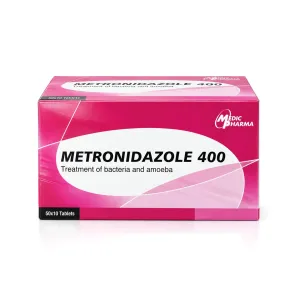 Metronidazole
Treats bacterial vaginosis & abnormal vaginal discharge
✓ In stock40.00 ฿(฿4/tablet)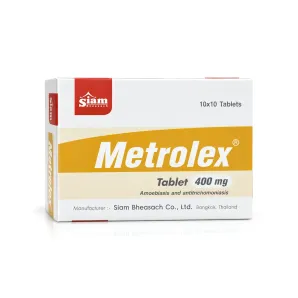 Metrolex
Treats bacterial vaginosis & abnormal vaginal discharge
✓ In stock40.00 ฿(฿4/tablet)
About Bacterial Vaginosis
What Is Bacterial Vaginosis (BV)?
Bacterial Vaginosis is a condition caused by an imbalance in the natural bacteria of the vagina. Normally, the vagina maintains a mildly acidic environment thanks to beneficial bacteria called Lactobacillus. When harmful bacteria overgrow and outnumber the good ones, the balance is disrupted — resulting in abnormal discharge, odour, and discomfort.
It's important to know that BV is not a sexually transmitted infection. Women who have never had sex can develop it too, because it's about the internal bacterial balance rather than catching something from someone else.
Normal Discharge vs Abnormal Discharge — How to Tell the Difference
Every woman has vaginal discharge, and that's completely normal. The key is knowing when something has changed.
✅ Normal discharge — Clear or slightly milky white / no unpleasant odour / amount may vary with your menstrual cycle (more and clearer around ovulation) / no itching, burning, or irritation
❌ Abnormal discharge that may indicate BV — Greyish-white or dull in colour / fishy odour, especially after sex or during your period / thin and watery consistency / mild irritation possible
⚠️ Discharge that may indicate something else — Green or dark yellow + foul smell → could be Trichomonas infection / Thick white clumps like cottage cheese + intense itching → could be a yeast infection (Candida) / Blood-tinged discharge outside of your period → see a doctor for further investigation
What Causes BV?
The exact cause isn't 100% known, but several risk factors are well established.
🧼 Douching — One of the top risk factors. Douching destroys the good bacteria that maintain vaginal balance. The vagina is self-cleaning — internal washing is unnecessary.
🧴 Fragranced soaps and products — Scented soaps, feminine washes, and some intimate care products can disrupt the natural balance.
🔄 Multiple or new sexual partners — Having multiple partners or a new partner increases risk, as outside bacteria can disturb the existing balance.
🚬 Smoking — Research shows that women who smoke have a higher risk of developing BV.
💊 Antibiotics — Some antibiotics can kill beneficial vaginal bacteria along with the targeted infection, allowing harmful bacteria to take over.
Is BV Dangerous? What Happens If Left Untreated?
BV itself isn't seriously dangerous, but leaving it untreated can lead to other problems.
😟 Risks of not treating BV — Increased susceptibility to other STIs, including HIV, due to the disrupted vaginal environment / higher risk of urinary tract infections (cystitis) / during pregnancy, BV may increase the risk of premature birth / increased risk of infection after gynaecological procedures
Even if symptoms seem mild, it's worth treating BV properly to prevent longer-term complications.
How Does Metronidazole Treat BV?
Metronidazole is the first-line antibiotic for BV treatment. It works by targeting and killing the anaerobic bacteria responsible for the condition, while largely sparing the beneficial bacteria.
At Intimo Life, we offer two Metronidazole options:
- Metronidazole — Quality generic medication at an affordable price
- Metrolex — A popular trusted brand
Typical dosage — Metronidazole 400 mg twice daily (morning and evening) for 7 days, or Metronidazole 2 g as a single dose, depending on the pharmacist's recommendation.
Important Rules When Taking Metronidazole
The most critical rule is: absolutely no alcohol while taking Metronidazole and for at least 48 hours after finishing the course. Combining the two causes a Disulfiram-like reaction — severe nausea, vomiting, headache, facial flushing, and rapid heartbeat.
Other important points — Take with or after food to reduce nausea / swallow whole with water / complete the full course even if symptoms improve — stopping early can lead to antibiotic resistance and recurrence.
Possible side effects — Nausea, metallic or bitter taste in the mouth, diarrhoea. These are usually mild.
BV Keeps Coming Back — What Can I Do?
BV is known for its high recurrence rate. Around 50% of women experience a recurrence within a year, especially within 3-6 months after treatment.
Ways to reduce recurrence — Avoid douching entirely / use mild, fragrance-free soap for the external area only / wear cotton underwear that breathes well / change underwear daily / avoid excessively tight trousers / use condoms during sex / if you're on a hormonal contraceptive pill, ask your pharmacist whether it may be contributing
If BV recurs more than 3 times per year, a doctor may recommend a different treatment approach or preventive medication.
BV vs Yeast Infection — What's the Difference?
Both are common causes of abnormal discharge, but they're caused by different organisms and require different treatments.
BV (Bacterial Vaginosis) — Caused by bacteria / greyish-white, thin, watery discharge / fishy odour / usually no itching / treated with Metronidazole antibiotic
Yeast Infection (Candidiasis) — Caused by Candida fungus / thick white clumpy discharge like cottage cheese / usually no strong odour / intense itching, burning, and redness / treated with antifungal medication
Getting the right diagnosis matters because the treatments are completely different. If you're unsure, consult a pharmacist before self-medicating.
Can Pregnant Women Be Treated for BV?
Yes — and it's actually important to treat it. BV during pregnancy can increase the risk of premature birth and premature rupture of membranes.
Metronidazole can be used during pregnancy under medical supervision. The doctor will determine the appropriate dosage and duration. However, always inform your pharmacist if you are pregnant or planning to become pregnant.
When Should You See a Doctor?
While BV is straightforward to treat, see a doctor if you experience any of the following:
🚨 Abnormal discharge for the first time and unsure if it's BV / fever, lower abdominal pain, or pain during sex / blood-tinged discharge outside your period / symptoms don't improve after completing medication / recurrences more than 3 times per year / currently pregnant
These could indicate a different type of infection or a condition requiring further investigation.
⚠️ Disclaimer
The information on this page is for general informational purposes only and is not intended to replace professional medical advice, diagnosis, or treatment from a qualified doctor or pharmacist. If you have any questions about your symptoms or medication, always consult a doctor or pharmacist first.
Frequently Asked Questions
BV is not classified as a sexually transmitted infection (STI), though sexual activity can be a contributing factor. Male partners don't need treatment, but female partners (in same-sex relationships) may need to be treated simultaneously.
It's not medically prohibited, but using condoms is recommended to reduce irritation and lower the chance of recurrence. Ideally, wait until treatment is complete.
No — it actually makes things worse. Douching destroys the beneficial bacteria that maintain vaginal balance. The vagina is self-cleaning; washing the external area with clean water is sufficient.
Yes, you can take it with food or after meals without issue. However, you must absolutely avoid alcohol both during treatment and for at least 48 hours after finishing the course.
That's quite likely. The hallmark of BV is fishy-smelling discharge without significant itching — which is different from yeast infections, which typically cause intense itching but little odour. If you're unsure, consult a pharmacist before choosing a treatment.
Both are similarly effective. Oral medication is more convenient but may cause nausea. Vaginal suppositories have fewer systemic side effects but some women find them less convenient. Consult a pharmacist to choose the format that works best for you.
Recently viewed products