

Betahistine
Vertigo & Meniere’s Disease Treatment
Spinning dizziness, tinnitus, and ear fullness from Meniere’s Disease or inner-ear vertigo can severely disrupt daily life.
💊 Betahistine is a vestibular medication that increases blood flow to the inner ear, reducing endolymph pressure, vertigo episodes, and tinnitus. Available in 6 mg, 12 mg, and 24 mg.
👨⚕️ Consult a pharmacist online instantly — no travel, no queues, completely private and convenient.
🚚 Fast, confidential delivery — plain packaging with no product names on the outside, delivered safely to your door.
What is Betahistine Mesilate?
Betahistine helps relieve vertigo and Meniere's disease by improving blood flow in the inner ear and reducing inner-ear fluid pressure. It suits people experiencing dizziness, ringing ears, or spinning sensations linked to inner-ear disorders. Anyone with a history of asthma or stomach ulcers should tell their pharmacist before starting this medication.
🛒 Shop the range above · 24-hour dispatch from Intimo Life — consult a pharmacist if unsure.
Betahistine is a vestibular medication for vertigo and Meniere's Disease. It stimulates H1 histamine receptors and blocks H3 receptors in the inner ear, increasing labyrinthine microcirculation and reducing endolymph (inner-ear fluid) pressure — relieving spinning dizziness, tinnitus, and balance disturbance.
📊 Key clinical statistics:
- Patients with Meniere's Disease on continuous Betahistine for 6–12 months showed a 60–70% reduction in vertigo attack frequency
- Betahistine acts as a Vestibular Suppressant — not an antibiotic, not an antihistamine — targeting only the inner-ear balance system
- Meniere's Disease affects up to 1 in 1,000 people, most commonly aged 40–60 years
💊 At Intimo Life, Betahistine treats 2 main condition groups:
- Meniere's Disease — reduces vertigo attack frequency, tinnitus, and aural pressure
- Peripheral Vertigo — relieves dizziness from inner-ear balance dysfunction
⚠️ Patients with asthma or peptic ulcer disease should inform their pharmacist before use, as Betahistine may affect breathing and gastric acid secretion.

Betahistine
 Merislon – Vertigo Relief Medicine 6mg
Relieves vertigo & dizziness from inner-ear imbalance
✓ In stock90.00 ฿(฿3/tablet)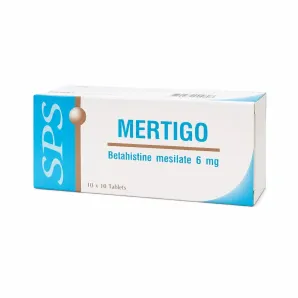 Mertigo (Betahistine Mesilate 6mg)
Betahistine for Vertigo, Dizziness & Meniere s Disease
✓ In stock40.00 ฿(฿4/tablet)
About Betahistine
What is Betahistine? What does it treat?
Betahistine is a Vestibular Suppressant acting directly on the inner ear — not an antibiotic, not an antihistamine, not a sedative.
It stimulates H1 receptors and blocks H3 receptors in the inner ear, causing vasodilation of labyrinthine vessels, improving microcirculation, and reducing endolymph (inner-ear fluid) pressure — the core mechanism behind Meniere's Disease attacks.
Primary indications:
- Meniere's Disease — relieves vertigo, ear fullness, and tinnitus
- Peripheral Vertigo — dizziness from inner-ear dysfunction
- Long-term prevention of Meniere's recurrence
How to take Betahistine? Dosage and timing?
Standard Betahistine dosage as recommended by healthcare providers:
- 6 mg — 1–2 tablets, 3 times daily with food; used for mild symptoms or initiation
- 12 mg — 1 tablet, 3 times daily with food — the most commonly prescribed dose
- 24 mg — 1 tablet, 2–3 times daily for more severe symptoms or as directed
Always take with or immediately after food to reduce nausea. Do not take on an empty stomach.
Duration: Betahistine is usually taken continuously for 3–6 months or longer. Noticeable improvement typically appears after 2–4 weeks of consistent use. Do not stop without consulting your pharmacist or doctor.
What are the side effects of Betahistine?
Betahistine is generally well-tolerated with a good safety profile compared to other vestibular medications. Reported side effects:
- Common (not dangerous): nausea, mild stomach discomfort — take with food to minimize
- Uncommon: headache, mild skin rash, itching
- Stop and seek medical attention: breathing difficulty (especially in asthma patients) or severe allergic reaction
Betahistine is non-sedating and does not cause drowsiness, making it suitable for driving and work requiring concentration — unlike some sedating antihistamines.
Betahistine contraindications — who should avoid it?
Important precautions before using Betahistine:
- Asthma: Betahistine stimulates H1 receptors which may cause bronchospasm — consult a doctor before use and monitor closely
- Peptic Ulcer Disease: may stimulate gastric acid secretion — inform your pharmacist or doctor
- Pheochromocytoma: strictly contraindicated
- Pregnancy and breastfeeding: insufficient safety data — avoid or consult a doctor
- Children under 18: not recommended
What is Meniere's Disease? How does Betahistine help?
Meniere's Disease results from abnormal fluid (endolymph) pressure in the inner ear, causing swelling of the labyrinth. It presents as a classic triad of four symptoms:
- Rotational Vertigo — severe spinning episodes lasting minutes to hours
- Fluctuating Hearing Loss
- Tinnitus (ringing or roaring in the ear)
- Aural Fullness (pressure sensation in the ear)
Betahistine addresses the root cause by improving inner-ear blood flow, reducing endolymph pressure buildup, and decreasing the frequency of acute attacks. It is widely regarded as a first-line pharmacological treatment for Meniere's Disease internationally.
Betahistine vs Cinnarizine — which is better for vertigo?
The two most commonly used vertigo medications in Thailand:
- Betahistine: Chosen when the cause is inner-ear related (Meniere's Disease, peripheral vertigo) — acts selectively on the inner ear, non-sedating, suitable for long-term preventive use
- Cinnarizine: A Calcium Channel Blocker with broader vestibular suppression — more sedating, not ideal for driving or concentration-demanding work
If vertigo is caused by Meniere's Disease or inner-ear dysfunction, Betahistine is preferred. If dizziness has other causes such as motion sickness or low blood pressure, a doctor may recommend Cinnarizine. Consult your pharmacist before choosing.
Where to buy Betahistine? Should you get pharmacist advice first?
Betahistine is a controlled medication in Thailand and should be dispensed by a certified pharmacist or doctor to ensure correct dosing and screen for contraindications.
At Intimo Life you can:
- Consult an online pharmacist via LINE — immediate, no travel required
- Receive symptom assessment and appropriate dosage guidance
- Order with discreet delivery in sealed, unlabelled packaging
If experiencing severe vertigo for the first time, or with neurological symptoms such as one-sided weakness or severe headache, see a doctor first to rule out stroke or serious causes.
⚠️ ข้อจำกัดความรับผิดชอบ
เนื้อหาในบทความนี้มีจุดประสงค์เพื่อให้ความรู้ทั่วไปเท่านั้น ไม่ได้มีเจตนาทดแทนคำแนะนำ การวินิจฉัย หรือการรักษาจากแพทย์หรือเภสัชกรผู้เชี่ยวชาญ หากมีข้อสงสัยเกี่ยวกับอาการหรือการใช้ยา ควรปรึกษาแพทย์หรือเภสัชกรก่อนเสมอ
- Betahistine — Patient Information — NHS (National Health Service, UK)
- Meniere's Disease — Symptoms and Treatment — NHS
- Betahistine — Product Labels — DailyMed / FDA
- Betahistine — Essential Medicines List — WHO
- Betahistine — Compound Summary — PubChem / NLM
Frequently Asked Questions
No. Betahistine is not an antibiotic and does not kill bacteria. It is a Vestibular Suppressant that acts on H1 and H3 histamine receptors in the inner ear to improve blood flow, reduce endolymph pressure, and relieve vertigo and Meniere's Disease symptoms.
Generally, no. Betahistine is a non-sedating vestibular agent, unlike some antihistamines or sedating vertigo medications. This makes it suitable for use by people who need to drive or operate machinery during treatment.
Caution is required — consult a doctor first. Betahistine stimulates H1 receptors, which may cause bronchoconstriction in asthma or COPD patients. Anyone with a history of asthma must have a medical assessment before starting Betahistine, with close monitoring throughout treatment.
Not recommended. Betahistine should be taken with or immediately after food. Taking it on an empty stomach increases the risk of nausea and gastric irritation. Food intake also helps maintain consistent drug absorption and reduces gastrointestinal side effects.
It depends on the cause. Benign Paroxysmal Positional Vertigo (BPPV) may resolve spontaneously or with the Epley maneuver — no medication needed. However, Meniere's Disease typically requires ongoing pharmacological treatment such as Betahistine to reduce attack frequency and severity. See an ENT specialist for accurate diagnosis.
Betahistine can help with tinnitus and ear fullness caused by Meniere's Disease, as it reduces inner-ear fluid pressure. However, if tinnitus has other causes — such as noise-induced hearing loss or drug side effects — Betahistine may not be appropriate. Consult an ENT specialist to identify the underlying cause before starting treatment.
Betahistine is safe for long-term use. Most clinical studies use it continuously for 6–12 months, and some Meniere's patients may require it for years to prevent recurrence. Regular follow-up with a doctor or pharmacist is recommended to monitor efficacy and review ongoing need.
There is insufficient safety data for Betahistine use during pregnancy. Doctors generally avoid prescribing it during pregnancy, particularly in the first trimester, and it is not recommended during breastfeeding. Always consult an obstetrician or pharmacist for safer alternatives during pregnancy.
Become a member of our store to receive news and exclusive discounts.
Recently viewed products