Left-sided headache has multiple possible causes — it is not always migraine. Pain quality, location, and how long it lasts all help differentiate the underlying condition.
Throbbing one-sided + nausea = Migraine
Dull bilateral tightness = Tension headache
Sharp severe around one eye, recurring = Cluster headache
Electric-shock-like pain = Trigeminal Neuralgia
Pain at base of skull spreading up = Cervicogenic (neck-origin)
Sudden severe pain or one-sided weakness are warning signs — go to the ER immediately for urgent evaluation.
Medically reviewed by
Supatcheree A., Pharmacist | Sources: NHS, Mayo Clinic, NCBI, Cleveland Clinic, NICE
📚 Common search queries this article addresses: left-sided headache relief, sharp left-sided pain, left occipital pain, left temple pain, what left-sided pain means.
What Causes Left-Sided Headache?
Left side headache is a frequent complaint, but it is not always migraine. The cause depends on pain quality, location, duration, and associated symptoms.
Main Causes of Left-Sided Headache
Migraine — one-sided throbbing, with nausea and light sensitivity, 4-72 hours
Tension headache — usually bilateral but may feel more on one side
Cluster headache — severe pain around one eye in cyclic episodes lasting 15-180 minutes
Trigeminal Neuralgia — sharp electric-shock pain, triggered even by light touch
Cervicogenic headache — starts at base of skull, spreads forward, related to neck movement
Medication Overuse Headache (MOH) — from taking pain relievers more than 10 days/month
Sinus headache — forehead or around the nose, with mucus, congestion, fever
Warning groups: new-onset headache after age 50, headache with weakness or slurred speech, sudden severe pain — possible signs of stroke.
Identifying by Pain Quality
Pain quality strongly suggests the underlying condition — describing your symptoms accurately helps clinicians diagnose faster and more reliably:
Pain Quality
Likely Cause
Associated Symptoms
Throbbing
Migraine
Nausea, light/sound sensitivity
Dull, tight band
Tension headache
Neck / shoulder tension, stress
Sharp, stabbing
Cluster or Trigeminal
Watery eye, blocked nostril (one side)
Electric-shock
Trigeminal Neuralgia
Triggered by light touch
Heavy / dull pressure
Sinus / blood pressure
Congestion or stress
Identifying by Location
Pain location offers important clues — each region maps to specific nerves, vessels, or muscles:
Left Temple Pain
Pain at the left temple is often migraine or tension headache. If accompanied by a visible swollen artery and you are over 50, consider Temporal Arteritis — a vasculitis requiring prompt treatment.
Pain Around the Left Eye
Severe pain around the left eye socket with watery eye and blocked nostril → Cluster headache — differs from migraine in that patients are restless and pace around (migraine sufferers prefer to lie still).
Left Occipital (Back of Head) Pain
Starts at the base of skull, spreads up or forward — typically cervicogenic headache from neck muscle tension, common in desk workers or those who slept in awkward positions.
Left Behind-the-Ear Pain
Pain behind the left ear may be Greater Occipital Neuralgia or neck muscle tension — sometimes related to sudden head movements or neck injury.
Left Forehead Throbbing
Often early migraine or sinus inflammation — sinus pain worsens when bending forward and is accompanied by thick mucus.
Most left-sided headaches are not dangerous, but certain features are red flags requiring immediate hospital visit:
🚨 Go to the ER Immediately
❗ Sudden severe headache (Thunderclap) — feels like a strike
❗ Headache with one-sided weakness, slurred speech, facial droop
❗ Headache with high fever and stiff neck
❗ Headache with seizure or loss of consciousness
❗ Headache with double vision or partial vision loss
❗ Headache after head injury
See a Doctor Within 1-2 Weeks
Increasing frequency or pattern change
Recurrent one-sided pain not responding to medication
Pain that wakes you at night
New-onset headache after age 50
Pain with weight loss or fatigue
Pain interfering with work or sleep
Frequently Asked Questions
Not always — left-sided headaches can be tension headache, cluster headache, cervicogenic headache, or trigeminal neuralgia. Pain quality (throbbing vs dull vs sharp) and associated symptoms (nausea, watery eye, blocked nose) help differentiate.
Throbbing pain on the left side is the classic feature of migraine, often with nausea and light/sound sensitivity, lasting 4-72 hours. If recurrent ≥5 times with these features, this fits the ICHD-3 migraine criteria.
Sharp left-sided pain may be Cluster headache (15-180 min around one eye, with watery eye and blocked nostril) or Trigeminal Neuralgia (electric-shock pain triggered by light touch). Both require specific medications — they do not respond to standard painkillers.
Severe pain around the left eye with watery eye and blocked nose, recurring in cycles — typically Cluster headache, one of the most severe headache types. Patients are restless (unlike migraine) and require injectable Sumatriptan or 100% oxygen for relief.
Most left occipital pain is cervicogenic headache from neck muscle tension — caused by prolonged sitting, awkward sleeping positions, or sudden head movements. It is related to neck movement and responds well to physiotherapy and stretching.
Morning headaches have multiple causes: teeth grinding, sleep apnea, high blood pressure, or poor sleeping posture. If recurrent, see a doctor to identify the specific cause.
Most one-sided pain is not dangerous — migraine itself is typically one-sided. However, beware of sudden severe pain, headache with one-sided weakness, new-onset after age 50, or pain that has changed character — these may indicate stroke, tumor, or vasculitis and require immediate medical attention.
Depends on type: Tension → Paracetamol 1000 mg or Ibuprofen 400 mg; Migraine → Triptans (Sumigran, Tofago) at onset; Cluster → injectable Sumatriptan + 100% oxygen (under medical supervision); Trigeminal Neuralgia → Carbamazepine. Do not exceed 10 days/month of painkillers — risk of MOH.
⚠️ Disclaimer
The information on this page is for general informational purposes only and is not intended to replace professional medical advice, diagnosis, or treatment from a qualified doctor or pharmacist. If you have any questions about your symptoms or medication, always consult a doctor or pharmacist first.



 Metronidazole
 Vilerm
 Firide
 Gofen
Gofen Annylyn
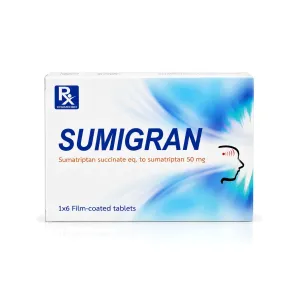 Sumigran
 Preme
Preme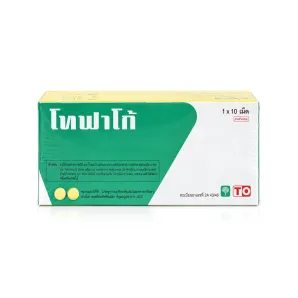 Tofago
 B-Ciprofloxacin
 Tansy One
 Enaril
 Nasonex