
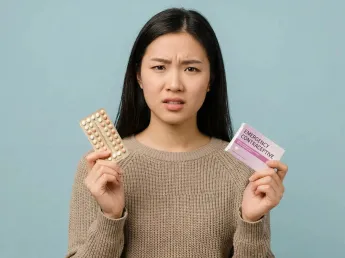
Clear comparison of regular birth control pills vs emergency contraceptive pills.
What's the difference between the regular pill and the emergency pill?
- The regular pill is taken every day to prevent pregnancy in advance, with effectiveness up to 99% when taken correctly.
- The emergency pill is taken after unprotected sex and must be taken as soon as possible, within 72–120 hours, with effectiveness of about 85–95%.
- The emergency pill is not a regular contraceptive and should not be used in its place.
- Regular pills come in combined-hormone and progestogen-only forms, while emergency pills are usually Levonorgestrel or Ulipristal acetate.
- Regular pills can also help regulate your cycle, reduce acne and ease period pain, while the emergency pill is for emergencies only.

Regular Pill vs Emergency Pill: What's the Difference? Which Should You Use
Regular pill vs emergency pill — what's the real difference? Many people still wonder whether "the regular birth control pill" and "the emergency contraceptive pill" are the same medicine, whether they can be used interchangeably, or whether taking the emergency pill often can replace a regular pill. The short answer is — no, they are different, and one should not be used in place of the other.
This article compares the two side by side: what makes them different, which situation each one suits, and how to choose the safer option.
📖 Read more: If you are not yet sure what the regular birth control pill is, we recommend reading What Is the Birth Control Pill? Everything Women Should Know, All in One Place first.
Key Statistics
- 💊 Regular birth control pills prevent pregnancy up to 99% of the time with perfect use (about 91% with typical use)
- ⚡ Levonorgestrel emergency pills prevent about 85% of pregnancies overall, but effectiveness rises to 94% when taken within the first 24 hours
- 📊 CDC data shows that 1 in 9 women of reproductive age in the United States has used emergency contraception at least once
- 🔍 The main reasons for using emergency contraception: 49% had unprotected sex, and 45% feared their regular method had failed
What Is the Regular Pill?
The regular birth control pill (Birth Control Pills) is a hormonal medicine designed to be taken every day to prevent pregnancy in advance. It works by stopping ovulation, thickening cervical mucus, and thinning the uterine lining.
Regular birth control pills come in several types, including the combined hormone pill, the progestogen-only pill, and the emergency pill — each type serves a different purpose.
What Is the Emergency Pill?
The emergency contraceptive pill (Emergency Contraceptive Pills) is taken after unprotected sex, or when your regular contraceptive method has failed (such as a broken condom or a missed pill). It must be taken as soon as possible, within 72–120 hours.
📖 Read more: Emergency Pill: How Many Hours Do You Have to Take It? and How to Take the Single-Dose Emergency Pill Safely
Comparing the Regular Pill
| Aspect | Regular Pill (Birth Control Pills) | Emergency Contraception |
|---|---|---|
| Purpose | Prevents pregnancy in advance | Prevents pregnancy after unprotected sex |
| How to take | Every day, one pill a day | A single dose (1–2 pills) after sex |
| Effectiveness | Up to 99% (correct use) | About 85–95% (depends on timing) |
| Active ingredient | Ethinyl Estradiol + Progestin, or Progestin alone | Levonorgestrel or Ulipristal Acetate |
| Frequency of use | Continuous, every day | Emergency situations only |
| Side effects | Mild nausea or breast tenderness possible at first | Nausea, irregular periods, fatigue |
| Added benefits | Can reduce acne, ease period pain, regulate cycles | No added benefits |
| Prescription required? | Usually yes (in Thailand) | Available over the counter at pharmacies |
How Do the Mechanisms Differ?
How the Regular Pill Works
The regular pill works by preventing pregnancy in advance, through three main mechanisms:
- Stopping ovulation — hormones in the pill signal the body not to release an egg
- Thickening cervical mucus — making it harder for sperm to pass through
- Thinning the uterine lining — reducing the chance a fertilised egg can implant
How the Emergency Pill Works
The emergency pill works by acting after the fact:
- Delaying or stopping ovulation — if ovulation has not yet happened, the pill halts the process
- It does not cause abortion — if an egg has already been fertilised and implanted, the emergency pill has no effect
Importantly, the emergency pill works better the sooner it is taken after sex — the longer you wait, the lower its effectiveness.
Can You Use the Emergency Pill Instead of the Regular Pill?
Strongly not recommended, and here is why:
Effectiveness Varies Significantly
| Contraceptive Method | Pregnancy Prevention Rate |
|---|---|
| Regular pill (perfect use) | 99% |
| Regular pill (typical use) | 91% |
| Levonorgestrel emergency pill (within 24 hrs) | ~94% |
| Levonorgestrel emergency pill (within 72 hrs) | ~85% |
| Ulipristal Acetate emergency pill (within 120 hrs) | ~95% |
The numbers may look close, but keep in mind that a regular pill protects all month long, while the emergency pill protects for only one act of unprotected sex.
Side Effects of Repeated Use
Taking the emergency pill often can cause:
- Irregular or disrupted periods
- Frequent nausea and vomiting
- The body receiving too high a dose of hormones
- No reduction in unintended pregnancy rates over the long term
According to the WHO, repeated use of emergency contraception may increase side effects such as irregular periods. While it carries no serious health danger, it is not a suitable method for regular use.
When Should You Use the Emergency Pill?
The emergency pill is suited to situations such as:
- A condom breaking or slipping off
- Missing several regular pills in a row (read more: what to do if you miss a pill)
- Having unprotected sex
- Sexual assault
It should not be used when:
- Used as your main method of contraception
- You are already pregnant (the emergency pill does not cause abortion)
What to Do After Taking the Emergency Pill
When Can You Go Back to Your Regular Pill?
Depends on which type of emergency pill you used:
| Emergency Pill Type | When to Restart Your Regular Pill |
|---|---|
| Levonorgestrel | Restart your regular pill immediately + use condoms for 7 more days |
| Ulipristal Acetate | Wait at least 5 days before restarting your regular pill + use condoms for 7 more days |
The CDC recommends using condoms or avoiding sex for at least 7 days after taking the emergency pill, and taking a pregnancy test if no bleeding occurs within 3 weeks.
Summary: Which Should You Choose?
| Situation | Use |
|---|---|
| Need contraception regularly | ✅ Regular pill |
| Condom broke / missed a pill | ✅ Emergency pill |
| Want added benefits (less acne, less period pain) | ✅ Regular pill |
| Had unprotected sex | ✅ Emergency pill (take as soon as possible) |
| Need long-term contraception | ✅ Regular pill (or another method such as an IUD) |
In short: the regular pill is your "main plan," while the emergency pill is your "backup plan." Each has a different role, and one should not replace the other.
📖 Related articles:
- Which Birth Control Brand Is Best in 2026 — a review of popular birth control pills
- Birth Control Pill Side Effects — what can happen and how to manage it
- How to Take the Pill Correctly — how to get the best results
Frequently Asked Questions
No — the emergency pill is designed for emergency use only, because it delivers a much larger dose of hormones in a single sitting than a regular pill does. Relying on it repeatedly instead of a regular pill can disrupt your cycle and does not protect against pregnancy as reliably as taking a regular pill consistently every day. If you keep forgetting your regular pill often enough to need repeated emergency doses, ask a pharmacist about a contraceptive method that fits your routine better.
The sooner, the better. Levonorgestrel should generally be taken within 72 hours of sex, and Ulipristal acetate within 120 hours, but effectiveness drops the longer you wait. Taking it within the first 24 hours gives better protection than waiting until close to the cutoff. If you are unsure which type to choose or the recommended window has already passed, ask a pharmacist right away.
No, it does not cause abortion. The emergency pill works by delaying or stopping ovulation to prevent fertilisation in the first place. If an egg has already been fertilised and implanted, the emergency pill has no effect on an existing pregnancy — it is entirely different from an abortion pill. If you suspect you may already be pregnant, take a pregnancy test and see a doctor instead of taking the emergency pill.
Common side effects include nausea, headache, dizziness, breast tenderness, and periods that come irregularly or later than expected. These are usually mild and resolve within a few days on their own. If you vomit within two to three hours of taking the dose, you may need to take another one, since the pill may not have been absorbed — ask a pharmacist whether a repeat dose is needed.
No — neither the emergency pill nor any regular contraceptive pill protects against sexually transmitted infections such as HIV, gonorrhoea, or herpes; they only prevent pregnancy. If you want protection against both pregnancy and STIs at the same time, you still need to use condoms as well.
It depends on how many pills you missed and where you are in the pack. Missing several pills in a row early or mid-pack, combined with sex during that time, raises the risk of pregnancy and may call for an emergency pill as well. Missing just one pill and catching up promptly as directed usually does not require one, since the details depend on which regular pill you take. Ask a pharmacist, telling them how many pills you missed and when you had sex, so they can assess your risk accurately.
There is no fixed limit on how many times a month it can be used, but the emergency pill is not designed for frequent use because each dose delivers a high amount of hormones. Using it repeatedly within the same cycle can disrupt your period further, and it is less reliable overall at preventing pregnancy than using a regular pill consistently. If you find you need the emergency pill more than once in the same cycle on a regular basis, ask a pharmacist about a more suitable long-term contraceptive plan.
There is no need to worry right away. The emergency pill can make your period arrive earlier or later than usual — a common effect of the temporary hormonal change it causes. Your cycle generally returns to normal the following month. However, if your period is more than a week later than expected, take a pregnancy test to be sure, and if you also have other unusual symptoms such as severe abdominal pain or heavy bleeding, see a pharmacist or doctor.
⚠️ Disclaimer
The information on this page is for general informational purposes only and is not intended to replace professional medical advice, diagnosis, or treatment from a qualified doctor or pharmacist. If you have any questions about your symptoms or medication, always consult a doctor or pharmacist first.
References
- World Health Organization — Emergency Contraception Fact Sheet
- CDC — Emergency Contraception: U.S. Selected Practice Recommendations 2024
- NHS — How Effective Is Contraception?
- PMC/NIH — Emergency Contraception Review: Evidence-Based Recommendations for Clinicians
- CDC/NCHS — Use of Emergency Contraception Among Women Aged 15–44
- Cleveland Clinic — Birth Control Pill: Types, Side Effects & Effectiveness
- Cleveland Clinic — Can Your Birth Control Double as Emergency Contraception?
- CDC — Contraception and Birth Control Methods