
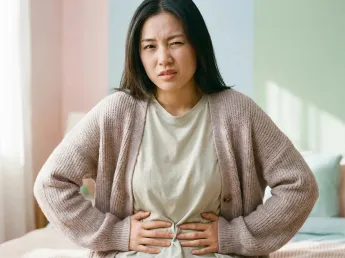
Took the pill incorrectly? Here are the birth control pill side effects you should watch for.
What are birth control pill side effects? They are mostly mild and usually settle on their own within the first two to three months. Common ones include:
- Nausea, especially when you first start taking it
- Spotting between periods
- Breast tenderness
- Headaches and mood swings
- Slight weight changes (usually fluid, not fat)
- Rare but serious: blood clots (roughly 1 in 3,000 per year)
See a doctor right away if you notice unusual leg pain or swelling, chest pain, or sudden difficulty breathing.

Why does the pill cause side effects?
Many people wonder what causes birth control pill side effects. The answer: birth control pills work by adding synthetic hormones to the body. These hormones don't affect the reproductive system alone — they also influence other systems, including blood circulation, the nervous system, mood, and skin.
The combined pill contains both an oestrogen and a progestin; the oestrogen is usually the one that causes more side effects. The progestin-only pill contains only a progestin, so it tends to cause fewer side effects.
Importantly, most side effects are a normal part of your body adjusting, and they usually improve within the first two to three months.
📖 Not sure about the different types of birth control pills yet? Read this first: What is the contraceptive pill? Everything you need to know
Common side effects (that usually go away on their own)
Nausea
This is the most common symptom in the first weeks of taking the pill, especially with combined hormonal pills, because the body has not yet adjusted to the increased oestrogen level.
How to cope:
- Take the pill with food or before bed
- Avoid taking it on an empty stomach
- If nausea is severe or does not improve after 3 months, ask a pharmacist or doctor about switching to a different formula
Breakthrough bleeding
Light bleeding between periods is common, especially in the first one to three months, as the body adjusts to the new hormone level and the womb lining becomes thinner.
How to cope:
- Take the pill at the same time every day (irregular timing is a main cause of breakthrough bleeding)
- Don't stop the pack partway through
- See a doctor if bleeding is heavy or does not stop after 3 months
Breast tenderness
The hormones in the pill can make the breasts feel tender or sore, especially at first. This usually improves once the body has adjusted.
How to cope:
- Wear a well-supporting bra
- Cut back on caffeine and salt
- See a doctor if you notice an unusual lump or the tenderness does not improve
Headache
Changes in oestrogen and progesterone levels can trigger headaches or migraines, especially during the placebo week when hormone levels drop suddenly.
How to cope:
- Drink enough water and get enough rest
- Tell a doctor immediately if you have a severe headache or a migraine with aura (visual warning signs), as you may need to switch to a pill without oestrogen
Mood swings
Hormones play an important role in mood. Adding synthetic hormones can make some people feel more irritable, low, or emotionally up and down than usual.
A 2022 study found that both oestrogen and progesterone affect brain function, which may explain the mood changes and low mood some pill users report.
How to cope:
- Track your mood over the first 2-3 months
- See a doctor if symptoms are severe or don't improve, to consider a different formula
- Some formulas, such as those containing drospirenone, may affect mood less than others
Lower sex drive
Some pill formulas can lower libido, because the hormones suppress testosterone, which plays a role in sexual desire.
On the other hand, some women report a higher libido, simply because they no longer worry about pregnancy.
Does the birth control pill really cause weight gain?
This is the question that worries women the most. The answer from most research is — the birth control pill does not cause a significant increase in weight.
What actually happens early on is usually water retention, which can make you feel puffier or 1-2 kilograms heavier, but it is not an actual increase in fat. This usually goes away within 2-3 months.
The exception is the injectable contraceptive (Depo-Provera), which contains a high dose of progestin and can genuinely increase appetite and weight in some people, by an average of about 2-3 kilograms in the first year.
📖 Read the full facts: Does the birth control pill really cause weight gain?
Rare but serious side effects (worth knowing)
Although very rare, birth control pills — especially combined hormonal pills containing oestrogen — may raise the risk of some serious conditions.
Blood clots (VTE)
The oestrogen in the pill raises the level of proteins involved in blood clotting, which can lead to a blood clot forming in a vein, especially in the leg (deep vein thrombosis, or DVT). If a clot breaks loose and travels to the lungs it is called a pulmonary embolism, which can be life-threatening.
| Status | Blood clot risk per year |
|---|---|
| Women not taking the pill | ~1-2 in 10,000 |
| Women taking a combined hormonal pill | ~3-9 in 10,000 |
| Pregnant women | ~5-20 in 10,000 |
Sources: Women and Blood Clots and News-Medical
Groups at higher risk:
- Over 35 years old and smoking
- A family history of blood clots
- Thrombophilia (such as Factor V Leiden)
- Being overweight (BMI > 30)
- Long periods of bed rest or recent surgery
The progestin-only pill does not raise blood clot risk, making it a better option for women at higher risk.
📖 Read more: What is the progestin-only pill? Pros and cons
Heart disease and stroke
Pills containing oestrogen may slightly raise the risk of stroke and heart attack, especially in women who smoke or have high blood pressure, diabetes, or high blood lipids.
This risk rises with the amount of oestrogen in the pill. Newer, low-oestrogen pills (20-35 micrograms) carry a lower risk than older, high-oestrogen pills.
Cancer risk
The birth control pill is linked to both an increase and a decrease in certain cancer risks:
| Cancer type | Effect of the pill |
|---|---|
| Breast cancer | Slightly increased (risk returns to normal after stopping) |
| Cervical cancer | Slightly increased (with use longer than 5 years) |
| Ovarian cancer | Decreased |
| Endometrial cancer | Decreased |
| Colorectal cancer | Decreased |
Source: National Cancer Institute (NCI)
Migraine with aura
Women who get migraines with aura (flashing lights, dark spots, or numbness before the headache) should not use pills containing oestrogen, because it significantly raises the risk of stroke. The World Health Organization (WHO) recommends that these women use a progestin-only pill instead.
Positive side effects many people don't know about
The birth control pill isn't only about downsides — combined hormonal pills also offer several extra benefits:
- Reduces hormonal acne — some pill formulas with anti-androgen effects can reduce oiliness and acne
- Regular periods — helps keep your cycle predictable and eases period pain
- Lower risk of ovarian and endometrial cancer — the longer you use it, the lower the risk
- Reduced PMS symptoms — helps ease symptoms before your period
- Lower risk of ovarian cysts — helps prevent cysts from forming
📖 Read more: Can the birth control pill really treat acne?
When to see a doctor right away
See a doctor as soon as possible if you experience any of these while taking the pill:
- 🦵 Unusual leg pain or swelling (especially in one leg) — may signal a blood clot in the leg
- 💨 Chest pain or difficulty breathing — may signal a blood clot in the lung
- 🧠 A sudden, severe headache, or numbness or weakness on one side of the body — may signal a stroke
- 👁️ Blurred or abnormal vision
- 🟡 Yellowing of the skin or eyes — may signal a liver problem
An easy way to remember these is the word "ACHES":
| Letter | Symptom |
|---|---|
| A — Abdominal pain | Severe abdominal pain |
| C — Chest pain | Chest pain |
| H — Headache (severe) | Severe headache |
| E — Eye problems | Vision problems |
| S — Swelling (leg) | Leg swelling |
Summary: birth control pill side effects to know
| Type | Symptoms | Duration |
|---|---|---|
| Common (not dangerous) | Nausea, breakthrough bleeding, breast tenderness, headache, mood swings | Usually resolves in 2-3 months |
| Sometimes seen | Weight changes (fluid), lower sex drive, changes in discharge | May persist; try a different formula |
| Very rare (serious) | Blood clots, stroke, heart attack | See a doctor immediately |
Most side effects are a normal part of your body adjusting. If symptoms don't improve after 3 months, you don't have to put up with them — ask a pharmacist or doctor about switching to a pill formula that suits your body better.
Frequently Asked Questions
Most side effects of the birth control pill — such as nausea, headaches, and breast tenderness — usually go away on their own within the first two to three months as your body adjusts to the new hormone level. If symptoms don't improve after 3 months, or get worse, ask a pharmacist or doctor about switching to a pill formula that suits your body better.
Most research does not find that the birth control pill causes a significant increase in weight. Feeling puffier early on is usually water retention rather than actual fat gain, and it typically settles within two to three months. The exception is the injectable contraceptive, which contains a high dose of progestin and can genuinely increase weight in some people.
See a doctor immediately if you have unusual leg pain or swelling, chest pain or difficulty breathing, a sudden severe headache with numbness or weakness on one side of the body, blurred vision, or yellowing of the skin or eyes. These can signal a blood clot, stroke, or liver problem — very rare, but potentially life-threatening.
Nausea is the most common symptom in the first weeks of taking the birth control pill. It helps to take the pill with food or before bed, and to avoid taking it on an empty stomach. If nausea is severe or doesn't improve after 3 months, ask a pharmacist about switching to a different formula.
Breakthrough bleeding between periods is normal in the first one to three months as your body adjusts to the new hormone level, and it isn't dangerous. Taking the pill at the same time every day reduces how often it happens. See a doctor if bleeding is heavy or doesn't stop after 3 months.
Combined hormonal pills containing oestrogen raise the risk of blood clots from about 1-2 in 10,000 women per year to about 3-9 in 10,000 per year. That is still lower than the risk during pregnancy. Anyone with risk factors — smoking, being over 35, or a family history — should ask a pharmacist or doctor before choosing a pill.
The progestin-only pill contains only a progestin, with no oestrogen, so it tends to cause fewer side effects and does not raise blood clot risk the way the combined pill can. It suits women at higher risk or those who get migraines with aura, but check with a pharmacist or doctor before switching pill types.
Yes. Combined hormonal pills can reduce hormonal acne in some formulas, make periods more regular, ease period pain and PMS symptoms, and lower the risk of ovarian cancer, endometrial cancer, and ovarian cysts. The longer you use it, the greater the risk reduction.
⚠️ Disclaimer
The information on this page is for general informational purposes only and is not intended to replace professional medical advice, diagnosis, or treatment from a qualified doctor or pharmacist. If you have any questions about your symptoms or medication, always consult a doctor or pharmacist first.