
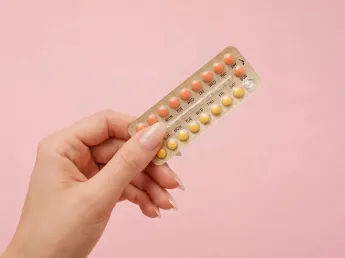
The complete guide to progestogen-only pills — benefits, drawbacks, and how to take them correctly.
What Is the Progestogen-Only Pill?
- An oral contraceptive containing only the hormone progestogen, with no oestrogen
- Suits those who cannot tolerate oestrogen, are breastfeeding, or have a contraindication to the combined pill
- Over 99% effective when taken correctly (about 92% with typical use)
- Must be taken at the same time every day, with no break between packs
- Comes in a 3-hour type (Norethisterone) and a 12-hour type (Desogestrel)
- Once you stop taking it, fertility returns quickly
- Some users find their period pain decreases, or periods stop altogether, which is not harmful

What's on this page?
- What Is the Progestogen-Only Pill?
- How Many Types of Progestogen-Only Pill Are There?
- How Does the Progestogen-Only Pill Work?
- Progestogen-Only Pill vs Combined Pill: What's the Difference?
- Advantages of the Progestogen-Only Pill
- Disadvantages of the Progestogen-Only Pill
- Key Statistics
- Progestogen-Only Pills and Breast Cancer Risk
- Who Should Use the Progestogen-Only Pill?
- Who Should Not Use the Progestogen-Only Pill?
- How to Take the Progestogen-Only Pill
- Frequently Asked Questions
What Is the Progestogen-Only Pill?
Many people wonder about mini pill pros and cons before choosing it. The progestogen-only pill, often called the mini-pill, is an oral contraceptive that contains only the hormone progestogen — it has no oestrogen in it at all.
It was developed as an option for people who cannot use oestrogen, such as those with a history of migraine with aura, those at risk of blood clots, or those who are breastfeeding.
📖 Read more: Not sure yet how each type of birth control pill differs? Read What Is Birth Control? Everything to Know Before You Start first
How Many Types of Progestogen-Only Pill Are There?
Progestogen-only pills currently fall into two main groups, based on their active ingredient:
| Feature | Norethisterone type | Desogestrel type |
|---|---|---|
| Main mechanism | Thickens cervical mucus | Inhibits ovulation in up to 97% of cycles |
| Time window if late | No more than 3 hours from the usual time | No more than 12 hours from the usual time |
| Flexibility | Low — must be taken very much on time | Higher — a wider time window |
| Popularity | Declining | Increasingly popular |
The Desogestrel type is more popular today because, besides its wider time window, it directly inhibits ovulation, giving it higher contraceptive effectiveness.
How Does the Progestogen-Only Pill Work?
The progestogen-only pill prevents pregnancy through three mechanisms:
- Thickening cervical mucus — sperm cannot pass through to fertilise an egg
- Thinning the womb lining — making it less likely a fertilised egg can implant
- Stopping ovulation (Desogestrel type only) — no egg is released from the ovary
Mechanisms 1 and 2 are shared by every type of progestogen-only pill, but mechanism 3 is what sets Desogestrel apart, giving it effectiveness close to that of the combined pill.
Progestogen-Only Pill vs Combined Pill: What's the Difference?
| Feature | Progestogen-Only Pill | Combined Pill |
|---|---|---|
| Hormone | Progestogen only | Oestrogen + progestogen |
| How it's taken | Every day, no break | 21 active days, 7-day break (or placebo pills) |
| Effectiveness (typical use) | ~92% | ~92% |
| Effectiveness (perfect use) | >99% | >99% |
| Breastfeeding | Safe to use ✅ | Not recommended ❌ |
| DVT risk | Very low | Higher |
| Migraine with aura | Safe to use ✅ | Must not use ❌ |
| Keeps periods regular | Not much help | Helps well |
Both types are similarly effective at preventing pregnancy — the main difference lies in which is better suited to your individual health profile.
📖 Read more: Want more detail on the combined pill? Read Who Is the Combined Pill Right For?
Advantages of the Progestogen-Only Pill
Safe to use while breastfeeding
Because it contains no oestrogen, it does not affect the amount or quality of breast milk, so it can be started right after birth.
Suitable for those who cannot use oestrogen
People with a history of blood clots (DVT), migraine with aura, high blood pressure, or who smoke and are over 35, can safely use the progestogen-only pill.
Low risk of blood clots
Unlike the combined pill, which contains oestrogen and raises DVT risk, the progestogen-only pill barely increases this risk at all.
May ease period pain
Some users find their period pain decreases, and some stop having periods altogether, which is not harmful.
Fertility returns quickly after stopping
Once you stop taking the progestogen-only pill, your body returns to fertility quickly.
💡 Did you know: After stopping the progestogen-only pill, ovulation returns very quickly — most people can conceive within 6 months. Read more at How Many Months After Stopping the Pill Can You Get Pregnant?
Disadvantages of the Progestogen-Only Pill
You must take it on time
This matters most for the Norethisterone type, which has a window of only 3 hours. Taking it later than that counts as a missed pill and you will need backup contraception.
Your period may become irregular
The most common side effect is an irregular period — it may come as light spotting, more often than usual, or stop altogether, especially during the first two to three months.
It does not regulate your cycle
Unlike the combined pill, which helps keep periods regular, the progestogen-only pill does not have this effect.
Other possible side effects
- Acne
- Breast tenderness
- Mood swings
- Changes in libido
- Nausea (usually fades after a while of use)
📖 Read more: Want the full picture on side effects across every type of pill? Read What Are the Side Effects of the Contraceptive Pill?
Key Statistics
- The progestogen-only pill is more than 99% effective when taken correctly every day (NHS, 2024)
- With typical use, effectiveness is around 92%, mainly due to missed or late pills (NHS, 2024)
- Desogestrel can inhibit ovulation in up to 97% of cycles (PubMed)
- A 2023 study found a small increase in breast cancer risk with progestogen-only pills (OR 1.26), similar to the combined pill, but the absolute risk remains very low, especially in younger women (The Lancet, 2023)
Progestogen-Only Pills and Breast Cancer Risk
A large study published in The Lancet in 2023 found that:
- Progestogen-only contraceptives slightly increase breast cancer risk (OR 1.26, 95% CI 1.16–1.37)
- This risk is similar to that of the combined pill, which had already been reported previously
- The absolute risk remains very low — among women aged 16–20 who use the pill for 5 years, there are only 0.5 additional breast cancer cases per 100,000 women
- Risk rises with age but stays low relative to the benefits gained
Importantly, this does not mean the progestogen-only pill should be avoided — it means individual risk is worth discussing with a pharmacist or doctor.
Progestogen-Only Pills Available in Thailand
Several brands of progestogen-only pill are available in Thailand, most of them in the Desogestrel group, which is more popular — for example, Cerazette.
A pharmacist can help you choose the brand that best suits your body and lifestyle.
📖 Read more: Still not sure which brand to choose? Read our comparison in Which Contraceptive Pill Brand Is Best in 2026
Who Should Use the Progestogen-Only Pill?
The progestogen-only pill suits:
- Those who are breastfeeding
- Those with a history of migraine with aura
- Those with a risk of, or history of, blood clots (DVT)
- Those who smoke and are over 35
- Those with high blood pressure
- Those who are sensitive to, or have side effects from, oestrogen
- Those who want a contraceptive that does not raise DVT risk
Who Should Not Use the Progestogen-Only Pill?
Although it has fewer contraindications than the combined pill, the progestogen-only pill may not suit:
- Those who have, or have had, breast cancer
- Those with severe liver disease
- Those with unexplained vaginal bleeding that has not been diagnosed
- Those taking certain medicines that may reduce the pill's effectiveness, such as anti-epileptic drugs or anti-tuberculosis drugs
How to Take the Progestogen-Only Pill
Starting your first pack
- Take your first pill on day 1 of your period and you are protected immediately
- Starting on any other day means you need backup contraception (such as condoms) for at least 2 days
Taking it every day
- Take 1 pill every day at the same time, with no break between packs
- When one pack finishes, start the next pack the very next day
If you forget a pill
- Norethisterone type: taking it more than 3 hours late counts as a missed pill
- Desogestrel type: taking it more than 12 hours late counts as a missed pill
- If you miss a pill, take it as soon as you remember and use backup contraception for at least 2 days
📖 Read more: Want the full detail on how to take the pill in every situation? Read How to Take the Contraceptive Pill Correctly, and if you often forget, read Forgot to Take the Pill — What Should You Do?
Frequently Asked Questions
There is no clear scientific evidence that the progestogen-only pill causes weight gain. Some people notice a slight change in weight early on, but it is usually temporary fluid retention.
📖 Read more: Does the Pill Really Cause Weight Gain?
It can in some people, because certain types of progestogen have androgen-like effects — but not everyone experiences this.
📖 Read more: What Causes Acne While Taking the Pill?
No, it is not dangerous. A stopped period is a normal side effect of the progestogen-only pill — the womb lining becomes thin enough that there is no bleeding. It does not mean blood is building up inside you.
Certain medicines can reduce the effectiveness of the progestogen-only pill, including anti-epileptic drugs (Phenytoin, Carbamazepine), the anti-tuberculosis drug Rifampicin, and the herbal supplement St. John's Wort. Always tell your pharmacist or doctor about any other medicine you are taking.
Yes. Your body returns to fertility quickly after stopping — some people can become pregnant within the very first cycle after they stop.
No. No contraceptive pill protects against anything other than pregnancy. If you also want protection against sexually transmitted infections, you need to use condoms as well.
Yes, it is normal, especially in the first two to three months while your body adjusts. If the bleeding has not settled after three months, speak to a pharmacist or doctor.
Yes, it is suitable. The progestogen-only pill can be used from the time periods begin — there is no minimum age limit.
You can take it continuously for as long as you need contraception and have no contraindications — there is no need to take a break from it.
No, they are different. The progestogen-only pill is a daily contraceptive taken in advance to prevent pregnancy, while the emergency contraceptive pill is used after unprotected sex and should not be used as a regular method.
📖 Read more: Contraceptive Pill vs Emergency Pill: What's the Difference?
⚠️ Disclaimer
The information on this page is for general informational purposes only and is not intended to replace professional medical advice, diagnosis, or treatment from a qualified doctor or pharmacist. If you have any questions about your symptoms or medication, always consult a doctor or pharmacist first.