
Allopurinol
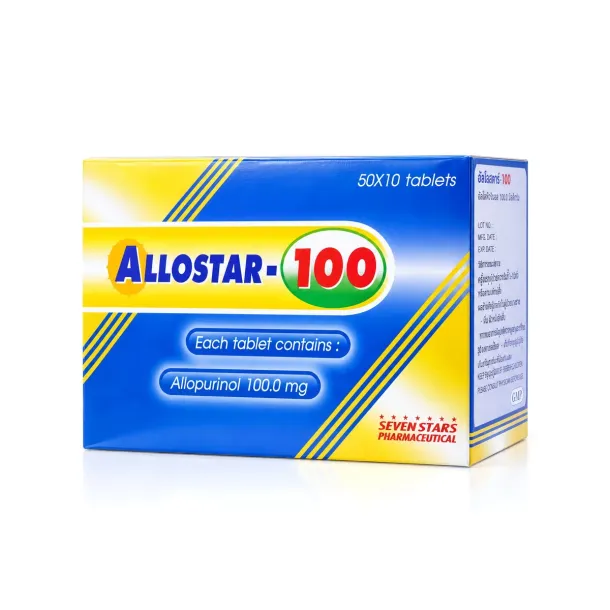
Allostar-100 — Allopurinol tablets that block uric acid production for long-term gout and kidney stone control
💊 Allopurinol
⏱️ Take once daily, continuously, for long-term uric acid control
🍽️ Take with or right after food; drink plenty of water
📦 Pack of 10 tablets/strip
⚡ Targets the root cause of uric acid, not just temporary pain relief
🌡️ Store below 30°C, away from sunlight and moisture
Done — we will alert you on LINE when this item is back.
Remind me to reorder
Remind me every
First reminder 22 Nov 2026 · on LINE
Shipping
Discreet shipping within Thailand — packaging does not identify the product. Customers can review shipping and return conditions per our store policy. Contact our team for any questions.
What is Allopurinol?
Allopurinol is a xanthine oxidase inhibitor that lowers uric acid production in the blood. It is used long-term to prevent recurring gout flares and uric acid kidney stones in patients with chronic hyperuricemia. Unlike fast-acting pain relievers, it does not relieve pain immediately — it treats the underlying cause of gout over time.
🛒 10 tablets/strip · authentic · 24-hour dispatch from Intimo Life — consult a doctor or pharmacist before use.
Product Description
Uric acid–lowering medicine Allostar-100 contains Allopurinol, which inhibits the xanthine oxidase enzyme the body uses to produce uric acid, steadily lowering blood uric acid levels. It suits patients with chronic gout who flare often, or those with uric acid kidney stones. Unlike typical gout pain relievers, Allopurinol does not relieve pain immediately — it controls the underlying cause of the disease long-term.
📊 Key facts about Allopurinol
- Hyperuricemia affects up to 10.6% of Thais nationwide, and as high as 24.4% in some Bangkok-area studies
- People carrying the HLA-B*5801 gene (found in roughly 5.5-15% of Thais) face many times higher risk of severe Allopurinol allergic reactions (SJS/DRESS)
- Severe skin reactions occur in about 0.1-0.4% of new users overall
- For acute gout pain, a faster-acting option is Tolchicine (Colchicine)
🏭 Allostar-100 is manufactured by Seven Stars Pharmaceutical and registered as a modern medicine in Thailand
⚠️ Do not start this medicine during an active gout flare, as it may worsen the pain — consult a pharmacist before beginning treatment

About Allopurinol
What is Allopurinol?
Allopurinol is a xanthine oxidase inhibitor, the active ingredient in Allostar-100. It works by blocking the xanthine oxidase enzyme the body uses to convert purines into uric acid. When this enzyme is inhibited, the body produces less uric acid, so blood uric acid levels steadily fall.
Importantly, Allopurinol is a long-term disease-control medicine, not an acute pain reliever — unlike typical gout painkillers that act quickly but don't lower uric acid at the source. Allostar-100 comes as 100 mg tablets, packed 10 tablets per strip, intended for continuous daily use.
What does Allopurinol treat?
Allopurinol controls conditions caused by high or accumulated uric acid:
- Chronic gout — prevents recurring flares in people with a history of frequent attacks or visible tophi
- Hyperuricemia — keeps blood uric acid within target range long-term
- Uric acid kidney stones — reduces the crystallization that causes certain stone types
- In some cases, doctors prescribe it to prevent high uric acid during certain cancer treatments
Allopurinol is not used to relieve acute joint pain during a gout flare — it is used to prevent flares from recurring long-term.
How to take Allopurinol and dosage
Take Allostar-100 (Allopurinol 100 mg) with food or right after a meal to reduce stomach irritation. Swallow the tablet whole with a full glass of water, and drink enough fluids throughout the day to help the body flush out uric acid.
The dose depends on your uric acid level and your doctor's or pharmacist's judgment — treatment typically starts low and is adjusted based on response.
Important precaution: Do not start Allopurinol for the first time while a joint is actively flaring or inflamed from gout, because a rapid change in uric acid level can temporarily trigger worse pain. Wait until the flare settles, or start only under a pharmacist's or doctor's guidance.
Side effects of Allopurinol
Common, usually mild side effects:
- Nausea, vomiting, bloating, stomach discomfort
- Mild skin rash or slight itching
⚠️ Serious side effects requiring immediate discontinuation: Allopurinol carries a risk of severe drug allergy such as Stevens-Johnson syndrome (SJS) or DRESS syndrome, which typically starts with fever, a spreading red rash, blistering, or mouth sores. If these occur, stop the medicine and see a doctor immediately.
Other warning signs include yellowing of the eyes or skin (liver problems), high fever with sore throat and swollen glands, or unexplained bruising or bleeding.
Contraindications / Precautions
Avoid or consult a doctor before using Allopurinol in these cases:
- Previous allergy to Allopurinol or a history of severe drug rash
- Uncontrolled severe liver or kidney disease
- People of Thai or East Asian descent, who have a relatively high rate of the HLA-B*5801 gene, may be advised to consider genetic testing before starting in certain cases, to reduce the risk of severe allergic reaction
Always tell your pharmacist or doctor about any existing conditions or other medicines you take, so they can assess whether Allopurinol is suitable for you.
Allopurinol vs other oral gout medicines
Oral uric-acid and gout medicines play different roles:
- Allopurinol — lowers uric acid production at the source, used for long-term gout control and flare prevention, not for immediate pain relief
- Tolchicine (Colchicine) — does not lower uric acid, but relieves pain and inflammation faster during an acute gout flare
In short: choose Allopurinol for long-term uric acid control to prevent recurring flares, and Tolchicine for fast relief during an acute gout flare, on a pharmacist's advice.
Can Allopurinol be taken with other medicines?
Allopurinol interacts with a few classes of medicine that need special caution:
- Azathioprine or 6-Mercaptopurine (immunosuppressants) — Allopurinol blocks the breakdown of these drugs, raising their levels to potentially toxic levels for bone marrow; dose adjustment must be supervised by a doctor
- ACE inhibitor blood-pressure medicines and thiazide diuretics — may increase the risk of severe allergic skin reactions when combined with Allopurinol
- Ampicillin/Amoxicillin antibiotics — may increase the chance of skin rash when taken together
Always tell your pharmacist or doctor what medicines you are taking before starting Allopurinol, for safety.
How fast does Allopurinol work?
Allopurinol is not an immediate pain reliever. Lowering blood uric acid happens gradually — it typically takes several weeks to a few months of continuous use before uric acid reaches target levels and gout flares clearly become less frequent.
Because it is a long-term disease-control medicine, patients need to keep taking it as prescribed even when pain-free, to keep uric acid low enough to actually prevent flares from recurring.
Where to buy Allopurinol?
Where to buy Allopurinol?
Order Allostar-100 (Allopurinol) online at Intimo Life with nationwide delivery across Thailand in 1-3 business days, packed discreetly with no product name shown on the parcel.
⚠️ ข้อจำกัดความรับผิดชอบ
เนื้อหาในบทความนี้มีจุดประสงค์เพื่อให้ความรู้ทั่วไปเท่านั้น ไม่ได้มีเจตนาทดแทนคำแนะนำ การวินิจฉัย หรือการรักษาจากแพทย์หรือเภสัชกรผู้เชี่ยวชาญ หากมีข้อสงสัยเกี่ยวกับอาการหรือการใช้ยา ควรปรึกษาแพทย์หรือเภสัชกรก่อนเสมอ
References
- NHS. About allopurinol. NHS. 2024.
- NHS. How and when to take allopurinol. NHS. 2024.
- NHS. Side effects of allopurinol. NHS. 2024.
- Tassaneeyakul W, et al. Strong association between HLA-B*5801 and allopurinol-induced SJS/TEN in a Thai population. PubMed. 2009.
- Puangpetch A, et al. HLA-B*58:01 for allopurinol-induced cutaneous adverse drug reactions in Thailand. PMC. 2016.

Frequently Asked Questions
It can be taken at any time of day — morning or night both work. What matters most is taking it at the same time every day for steady drug levels. If it upsets your stomach, try switching to an evening dose taken with a meal instead.
Take it as soon as you remember on the same day. If it's less than 4 hours until your next dose, skip the missed one and continue with your usual schedule. Never take a double dose to make up for a missed one, as this raises the risk of side effects.
Common NSAID painkillers or paracetamol can generally be taken alongside allopurinol without a major interaction. Still, always tell your pharmacist about all medicines you take regularly, for safety and to catch any unexpected interaction.
It's best to limit or avoid alcohol while on this medicine, since alcohol boosts the body's uric acid production and can trigger gout flares even while taking a uric-acid-lowering drug — beer in particular is high in purines.
There's no food that's strictly forbidden, but it helps to cut back on high-purine foods such as organ meats, certain seafood, and alcoholic drinks, so the medicine can control uric acid more effectively. Drink enough water every day too.
Most people need to take it continuously long-term, and some may need to take it indefinitely to keep uric acid from building up and crystallizing again. Stopping on your own without medical advice can let uric acid rise again and trigger new flares.
Always consult a doctor first, as safety data for this medicine in pregnancy and breastfeeding is limited. A doctor will weigh the necessity of treatment against potential risks and may suggest a more suitable alternative.
When uric acid first starts dropping quickly, urate crystals that have built up in the joints over time break down and shift around, which can temporarily cause more frequent flares in the first month or two before things improve with continued use — it doesn't mean the medicine isn't working.
It can be used in certain cases under a specialist doctor's judgment, such as high uric acid from certain blood disorders or during cancer treatment. It is not a medicine to give children on your own for general symptoms — it always requires a doctor's supervision.
Related Products
Products with the same active ingredient or treating the similar condition.
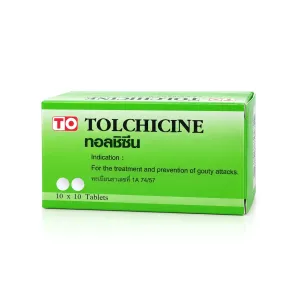 Tolchicine
Fast-acting relief for acute gout flare-ups
✓ In stock250.00 ฿(฿2.5/tablet)