Clustered fluid-filled blisters on the lip or lip border are usually cold sores (herpes simplex) — watch for itching, tingling, or burning beforehand
Sores inside the cheek, gums, or tongue that are not fluid blisters are usually canker sores — not contagious
Cracked, red, peeling skin at both corners of the mouth points to angular cheilitis, usually from B-vitamin deficiency or a fungal infection, not herpes
Small painless white-yellow pimple-like bumps on the lip may simply be Fordyce spots (enlarged oil glands) — not contagious
Fever with several mouth sores appearing at once in a young child may point to hand-foot-and-mouth disease
These conditions look similar and are hard to tell apart by eye — use the comparison table and self-check flow below
If unsure, or symptoms are severe or persistent, consult a pharmacist or doctor for an accurate diagnosis
Medically reviewed by
Supatcheree A., Pharmacist | Sources: NHS, Mayo Clinic, Cleveland Clinic, MedlinePlus
What Can Cause Blisters Around the Mouth? (Full Overview)
Many people wonder what causes blisters on lips — bumps and sores around the mouth can look very similar even though they come from different causes. Telling them apart early helps you care for yourself correctly and know whether it is contagious.
Cold sore (herpes) — clustered fluid-filled blisters on the lip or lip border, with tingling, itching, or burning beforehand. Contagious.
Canker sore — a round ulcer with a white or yellow center and a red border, inside the cheek, gums, or tongue. Not contagious.
Angular cheilitis — cracked, red, peeling skin at both corners of the mouth. Not caused by the herpes virus.
Pimple-like bumps / Fordyce spots — small painless white-yellow bumps on the lips; enlarged oil glands, not contagious.
Less common causes — hand-foot-and-mouth disease or a contact allergy rash.
Read the details of each cause below, starting with the most common.
Cold Sores (Herpes) — Key Signs to Recognize
Cold sores (oral herpes) are caused by the herpes simplex virus (HSV) and are the most common reason for blisters around the mouth. A few clear signs help set it apart from other causes:
Location — on the lip or outer lip border, rarely inside the cheek
Prodrome — tingling, itching, or a burning feeling at the same spot 1-2 days before the blister appears, a signature sign no other cause shares
Appearance — small fluid-filled blisters in a cluster that break open and crust over
Duration — heals in about 7-10 days
Contagious — from the first tingling sensation until the sore fully crusts over; avoid touching or sharing items during this time
Recurs at the same spot — because the virus stays dormant in a nerve and can reactivate when immunity is low
Canker sores differ from cold sores in that they appear inside the mouth, on the inner cheek, gums, or under the tongue, rather than as fluid-filled blisters. They look like a round ulcer with a white or yellow center and a red border, and they have no prodrome (no itching, tingling, or burning beforehand) the way cold sores do. Importantly, canker sores are not contagious, since they are not caused by a virus.
Angular Cheilitis (Cracked Mouth Corners) — How Is It Different From Herpes?
Angular cheilitis causes cracked, red, peeling, and sore skin at both corners of the mouth, a location different from cold sores, which usually appear on the center of the lip or the outer lip border. Common causes include:
Fungal or yeast build-up from trapped moisture at the mouth corners
Saliva pooling at the corners, common in older adults who wear dentures or have sagging skin at the mouth corners
Deficiency in B vitamins, iron, or protein
Misaligned teeth or bite issues that cause friction at the corners
Angular cheilitis is not caused by the herpes virus and is not contagious — treatment is completely different, focusing on the underlying cause (antifungal cream, B-vitamin support) rather than antivirals.
Pimple-Like Bumps on the Lips — Is It Herpes?
If you notice small white or yellow bumps that do not hurt and had no itching or burning beforehand, they are more likely to be Fordyce spots rather than herpes, enlarged sebaceous (oil) glands found in an estimated 70-80% of adults, usually along the lip border or inside the cheeks.
Not contagious and not a sexually transmitted infection
Do not rupture into fluid like herpes blisters; they stay the same and do not resolve on their own
No treatment needed if there are no symptoms, since this is a normal, harmless skin variation
The key giveaway: Fordyce spots have no itching, tingling, or burning prodrome and are not painful, unlike cold sores, which have a prodrome and become sore before the blister breaks.
Other, Less Common Causes
Hand-foot-and-mouth disease — common in young children; presents with fever plus several mouth sores at once, along with a rash on the hands and feet. Caused by coxsackievirus and spreads easily among children.
Contact allergy — from lipstick, toothpaste, or other irritants, causing swollen, red, itchy lips.
Accidental lip-biting injury — usually a single sore, not clustered, and heals quickly once the wound closes.
How to Check Yourself — A Simple Flowchart
Use this simple sequence as a starting point (not a diagnosis; see a pharmacist or doctor if unsure):
Where is the bump or sore?
On the lip or outer lip border → go to step 2
Inside the cheek, gums, or tongue → likely a canker sore
Both corners of the mouth → likely angular cheilitis
Was there tingling, itching, or burning before it appeared?
Yes, plus clustered fluid-filled blisters → likely a cold sore
No, plus small painless white-yellow bumps → likely Fordyce spots
Any fever or whole-body symptoms?
Fever plus several mouth sores at once (especially in young children) → consider hand-foot-and-mouth disease
If you are still unsure, or the symptoms do not clearly match any pattern, consult a pharmacist or doctor for an accurate diagnosis.
When to See a Pharmacist or Doctor
Most mouth sores resolve on their own, but some signs should not wait. See a pharmacist or doctor:
❗ High fever together with mouth sores or blisters
❗ Sores spreading quickly across the mouth in a short time
❗ Pain severe enough to prevent eating or drinking
❗ Very frequent recurrence or unusually large sores
❗ Weakened immunity or pregnancy
❗ No improvement within 2 weeks despite self-care
If any of these apply, consult a pharmacist or doctor for an accurate diagnosis and appropriate care.
If It's Herpes — How to Start Treating It
If your symptoms match the herpes pattern described above, here is how to start managing it:
Apply antiviral cream as early as possible, ideally right when the prodrome (itching, tingling, burning) starts, before the blister appears. Earlier treatment tends to shorten severity and duration.
Get enough rest, since weakened immunity is a common trigger for flare-ups.
Avoid touching the sore directly, and wash your hands after applying cream to reduce the risk of spreading it.
Do not share items like cups or lip balm while the sore is present.
For the complete herpes treatment approach, see the article below.
💊 If your symptoms match herpes and you would like to start with an acyclovir topical treatment, see Vilerm product information
Summary: Comparison Table of 4 Types of Mouth Blisters/Sores
Here is a single table summarizing the differences across all 4 types, comparing location, appearance, prodrome, duration, treatment, and contagiousness to make the distinction clearer:
Category
Cold Sore (Herpes)
Canker Sore
Angular Cheilitis
Fordyce Spots
Location
Lip / outer lip border
Inner cheek / gums / tongue
Both mouth corners
Outer lip
Appearance
Clustered fluid blisters, crust over
Round ulcer, red border, white/yellow center
Cracked, red, peeling skin
Small white-yellow bumps, do not rupture
Prodrome
Itch/tingle/burn before blister
None
Soreness when opening mouth
None
Duration
7-10 days
7-14 days
Recurs until cause is fixed
Permanent, does not resolve
Treatment
Antiviral (acyclovir)
Soothing gel, avoid irritants
Moisturize + treat cause
No treatment needed if asymptomatic
Contagious
Yes
No
No*
No
*Fungal-related angular cheilitis may spread through close contact in some cases, but the condition itself is not considered contagious like herpes.
Frequently Asked Questions
Not always. Check the location and whether there was a prodrome first. Cold sores usually appear on the lip or lip border with itching, tingling, or burning beforehand — see the comparison table above to tell them apart from canker sores and angular cheilitis.
Painless bumps with no prodrome may simply be Fordyce spots (enlarged oil glands under the skin) — not contagious and not dangerous. If you are unsure, consult a pharmacist or doctor.
They are usually canker sores, since cold sores tend to appear on the outer lip rather than inside the cheek. Canker sores look like a round white-centered ulcer with a red border and are not contagious.
Generally no. It is usually angular cheilitis from a B-vitamin or iron deficiency, or from fungal/yeast build-up at the mouth corners — not caused by the herpes virus.
Watch for a prodrome — itching, tingling, or burning at the same spot that flared up before, usually 1-2 days before the blister appears. This is a signature sign that other causes do not share.
If there is fever, the sore spreads quickly, pain prevents eating, it recurs very often, or it does not heal within 2 weeks, consult a pharmacist or doctor.
If there is no pain or inflammation, treatment is usually not needed, since these are often harmless Fordyce spots. If unsure, consult a pharmacist or doctor to rule out herpes.
Start antiviral cream as early as possible from the first prodrome symptoms, get enough rest, and avoid touching the sore. See the linked articles above for the complete herpes treatment approach and cream options.
⚠️ Disclaimer
The information on this page is for general informational purposes only and is not intended to replace professional medical advice, diagnosis, or treatment from a qualified doctor or pharmacist. If you have any questions about your symptoms or medication, always consult a doctor or pharmacist first.



 Metronidazole
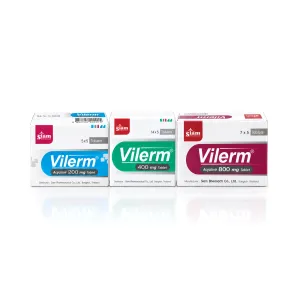 Vilerm
 Firide
 Gofen
Gofen Annylyn
 Sumigran
 Preme
Preme Tofago
 B-Ciprofloxacin
 Tansy One
 Enaril
 Nasonex