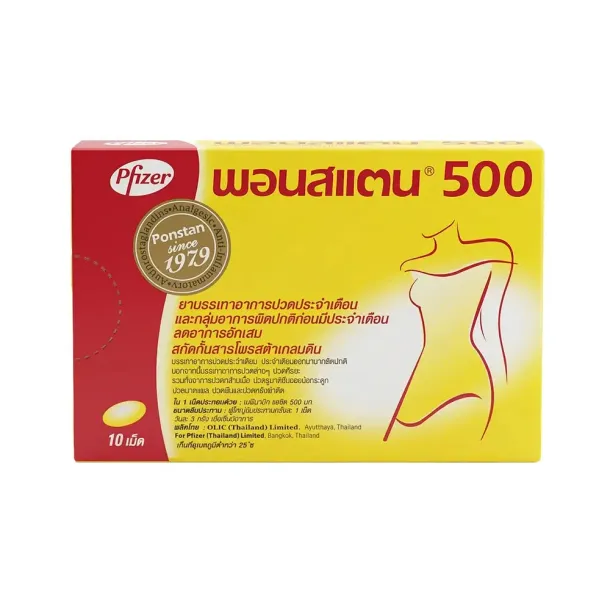
Ponstan — A trusted period pain reliever that women have relied on for years, effectively easing menstrual cramps and discomfort.
💊 Mefenamic Acid 500 mg — An NSAID that works to reduce inflammation and relieve pain effectively
🩸 Ideal for menstrual pain — Targets period cramps and lower abdominal discomfort directly
⏱️ Fast-acting relief — Start feeling better within 30-60 minutes after taking
📦 1 box contains 10 tablets — 500 mg per tablet, easy to carry
✅ A familiar choice — A widely used period pain medication trusted by women for years
Done — we will alert you on LINE when this item is back.
Remind me to reorder
Remind me every
First reminder 20 Oct 2026 · on LINE
Shipping
Discreet shipping within Thailand — packaging does not identify the product. Customers can review shipping and return conditions per our store policy. Contact our team for any questions.
What is Ponstan?
Ponstan is an NSAID pain reliever containing Mefenamic Acid 500 mg, used to ease menstrual cramps and lower abdominal pain by reducing inflammation at the source. Its key benefit is starting to work within 30-60 minutes of taking it. Follow the dosage instructions from a doctor or pharmacist; each box contains 10 easy-to-carry tablets.
🛒 10 tablets/box · Authentic · Fast delivery 24 hrs. Intimo Life — Consult a doctor or pharmacist before use
Product Description
Menstrual pain medication is widely used by women to relieve period cramps. Ponstan is an NSAID (Fenamate) painkiller containing Mefenamic Acid 250 mg / 500 mg, which reduces pain and inflammation. It is the most popular menstrual pain medication in Thailand, manufactured by Pfizer.
📊 Key Statistics
Dysmenorrhoea (menstrual pain) affects more than 50–80% of women, especially teenagers and women of reproductive age
Mefenamic Acid inhibits COX-1 and COX-2 enzymes, reducing Prostaglandin production — the primary cause of menstrual pain
Ponstan is one of the earliest and most well-known menstrual pain brands in Thailand, used for decades
See other pain relievers in the Pain Relief collection
🏭 Ponstan is manufactured by Pfizer, a global pharmaceutical company. It is the originator brand of Mefenamic Acid, Thai FDA approved, with a long track record of reliability.
⚠️ Always take this medication after or with food to reduce stomach irritation. Do not use for more than 7 consecutive days.
Medically reviewed by
Supatcheree A., Pharmacist | Sources: NHS, StatPearls, Drugs.com
Last reviewed: 2026-02-17
About Ponstan
What is Ponstan?
Ponstan is a Non-Steroidal Anti-Inflammatory Drug (NSAID) of the Fenamate class, containing Mefenamic Acid as its active ingredient, available in 250 mg and 500 mg strengths. Manufactured by Pfizer.
Mefenamic Acid works by inhibiting Cyclooxygenase (COX-1 and COX-2) enzymes, reducing Prostaglandin production — the substance responsible for pain, inflammation, and uterine contractions — effectively relieving menstrual pain.
Beyond COX inhibition, Mefenamic Acid also acts as a direct Prostaglandin Antagonist — a unique property of the Fenamate class not found in typical NSAIDs — making it particularly effective for menstrual pain.
Ponstan is the originator brand of Mefenamic Acid by Pfizer, used worldwide for decades.
What is Ponstan used for?
Dysmenorrhoea (menstrual pain): Ponstan is a first-line treatment for menstrual pain. Mefenamic Acid reduces both Prostaglandin (the cause of uterine contractions) and excessive menstrual bleeding.
Other indications:
Headache, toothache (mild to moderate pain)
Muscle pain, joint pain
Post-operative and post-procedural pain
General inflammatory pain
Menorrhagia (heavy menstrual bleeding)
Not for: Long-term chronic pain such as rheumatoid arthritis (other NSAIDs may be more appropriate). Do not use for more than 7 consecutive days.
How to Take Ponstan / Dosage
Dosage for menstrual pain:
Initial dose: Mefenamic Acid 500 mg (one 500 mg tablet or two 250 mg tablets)
Then: 250 mg every 6 hours or 500 mg every 8 hours as needed
Maximum dose: 1,500 mg/day
Important:
Always take after or with food to reduce stomach irritation
Swallow whole with water
Do not use for more than 7 consecutive days
Tip: For menstrual pain, start taking it from the first day of pain or the first day of your period for best results — don't wait until pain becomes severe.
Kidney problems, especially in those with pre-existing kidney disease
Severe allergic reaction (Anaphylaxis) — rash, swelling, difficulty breathing
Haemolytic Anaemia (very rare)
When to stop and see a doctor:
Black or bloody stools
Vomiting blood
Allergic reactions such as rash, facial swelling, or difficulty breathing
Abnormally reduced urination
Contraindications & Precautions
Do not use:
Allergy to Mefenamic Acid, Aspirin, or other NSAIDs
Active stomach ulcers or gastrointestinal bleeding
Severe kidney disease
Severe liver disease
Third trimester of pregnancy (may cause premature closure of Ductus Arteriosus)
Children under 14 years (for 500 mg strength)
Use with caution:
Always take after food — never on an empty stomach
Do not use for more than 7 consecutive days
Elderly patients have higher risk of gastrointestinal and kidney side effects
Watch for interactions with Warfarin, Lithium, Methotrexate, ACE Inhibitors
Avoid alcohol — increases risk of stomach bleeding
How Does Ponstan Compare to Other Pain Relievers?
Ponstan with Nexium (combined use): If using Ponstan regularly, doctors may recommend taking Nexium (Esomeprazole) or another acid reducer to prevent stomach ulcers from NSAID use.
Ponstan vs. Ibuprofen: Both are NSAIDs, but Ponstan has additional direct Prostaglandin antagonist properties, making it more effective for menstrual pain. Ibuprofen is more widely available, cheaper, and more versatile.
Ponstan vs. Paracetamol: Paracetamol relieves pain but does not reduce inflammation or Prostaglandin. Ponstan is significantly more effective for menstrual pain as it targets the root cause. However, Paracetamol is gentler on the stomach.
How Long Does Ponstan Take to Work?
Ponstan starts working within 30–60 minutes of taking it. Mefenamic Acid is well absorbed from the gastrointestinal tract.
Duration of action:
Onset: 30–60 minutes
Peak blood levels: 2–4 hours
Pain relief duration: Approximately 6 hours
Half-life: Approximately 2 hours
Tips for menstrual pain:
Start taking it from the first day of pain or the first day of your period
Take regularly every 6–8 hours — don't wait until pain becomes severe
Usually only 2–3 days of use is sufficient for the most painful days
Where Can I Buy Ponstan?
Ponstan is a pharmacist-dispensed medication. You can order online from Intimo Life.
Can I buy Ponstan online?
Yes. Order through Intimo Life — select the product, consult with a licensed pharmacist online, and receive your medication at home.
Should I speak to a pharmacist before ordering?
Yes. This medicine should be used under the guidance of a pharmacist or doctor. Read the label and get advice before use, especially if you have an existing condition, take other medicines, or are pregnant or breastfeeding. The Intimo Life team will ask about your symptoms and health history before shipping. If symptoms do not improve or get worse, see a doctor.
How does Intimo Life ship orders?
We deliver nationwide in Thailand with discreet packaging — no product names on the outside.
⚠️ Disclaimer
The information on this page is for general informational purposes only and is not intended to replace professional medical advice, diagnosis, or treatment from a qualified doctor or pharmacist. If you have any questions about your symptoms or medication, always consult a doctor or pharmacist first.
No. Never take Ponstan on an empty stomach. Mefenamic Acid is highly irritating to the stomach lining and may cause stomach pain, nausea, or ulcers. Always take it after or with food.
For menstrual pain specifically, Ponstan (Mefenamic Acid) is often more effective because it has both COX inhibition and direct Prostaglandin antagonist properties — the main cause of menstrual cramps. Ibuprofen is a good general painkiller and more widely available, but Ponstan typically works better for period pain.
Do not use Ponstan for more than 7 consecutive days, as it increases the risk of stomach and kidney side effects. For menstrual pain, 2–3 days is usually sufficient. If you need pain relief frequently, consult your doctor.
Ponstan is strictly contraindicated in the third trimester of pregnancy as it may cause premature closure of the foetal Ductus Arteriosus. It should also be avoided in the first and second trimesters unless prescribed by a doctor. Paracetamol is a safer alternative for pain during pregnancy.
Diarrhoea is a more common side effect with Mefenamic Acid than other NSAIDs. It occurs due to Prostaglandin inhibition in the intestines, altering bowel movement. If diarrhoea is severe or persistent, stop the medication and consult a pharmacist about switching to a different painkiller.
Yes. Ponstan (Mefenamic Acid) and Paracetamol work through different mechanisms and can be safely combined for enhanced pain relief. However, do not combine Ponstan with other NSAIDs such as Ibuprofen, Diclofenac, or Naproxen, as this increases the risk of stomach side effects.
Related Products
Products with the same active ingredient or treating the similar condition.


 Gofen
Gofen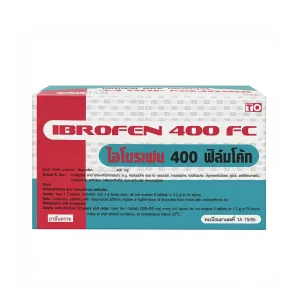 Ibrofen 400 FC
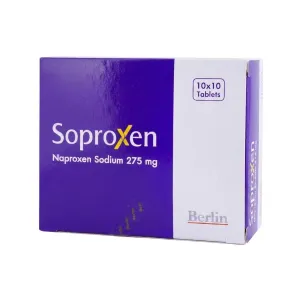 Soproxen
 Metronidazole
 Vilerm