What Are Condoms — and Why Still Essential in 2026
A condom is a sheath worn over the penis during sex, made from latex (natural rubber) or synthetic materials (polyisoprene/polyurethane). It serves two functions simultaneously:
Contraception — prevents pregnancy with 98% efficacy under perfect use, and 87% under typical use (including minor errors)
STI prevention — covers HIV, syphilis, gonorrhea, chlamydia, hepatitis B, and most HPV strains
While other contraceptive methods exist (pills, implants, IUDs), condoms remain the only method that prevents STIs and suits couples not committed to long-term hormonal options. In 2026, WHO continues to position condoms as the first-line tool for sexual health.
What Do Condoms Protect Against — HIV, STIs, Pregnancy
Latex and synthetic condoms have varying efficacy against different conditions — the table below summarizes protection levels per CDC and WHO data:
Disease/Risk
Protection Level
Note
HIV
Very high (>90%)
With correct use every time
Syphilis, Gonorrhea, Chlamydia
High (~70-80%)
Blocks bodily fluid exchange
Herpes (HSV), HPV, Syphilis (external lesions)
Moderate (~30-50%)
Only protects covered area
Hepatitis B
High
Blocks blood-borne transmission
Pregnancy
98% (perfect) / 87% (typical)
Higher efficacy when paired with lube
Condom Sizes 49/52/54/56 — How to Choose the Right Fit
Thai condom sizes use the numerical labels 49 / 52 / 54 / 56 mm, indicating "nominal width" (the width when folded flat). Choose based on the girth (circumference) of the erect penis, not length.
49 mm (Closer Fit) — circumference ~9-10 cm — for those finding 52 too loose
52 mm (Standard) — circumference ~10-11 cm — fits ~70% of Thai men
54 mm (Comfort) — circumference ~11-12 cm — for above-average sizes
56 mm (Kingtex/XL) — circumference ~12-13 cm — larger sizes
Wrong size → slips off (too big) or breaks (too small) — both reduce protection.
Single use only — never reuse after ejaculation or removal, due to potential micro-tears and bacterial contamination. Use a new condom for each act of intercourse.
❌ No — friction between layers causes them to break more easily. Using a single condom of the appropriate size and type is safer, per CDC and WHO recommendations.
Correct use every time reduces HIV transmission by more than 90% — very high but not 100% due to potential user errors (wrong-side application, slippage, breakage). For high-risk groups, consider adding PrEP.
❌ No — expired latex degrades, becoming brittle and prone to breakage, reducing protection. Always use new ones and check the expiry date every time.
Discard and use a new one — the outer side may have pre-cum with small amounts of sperm and possibly HIV/STIs. Never flip and reuse.
Not recommended — saliva dries quickly, increases friction, and may transfer bacteria/viruses. Use a water-based lubricant like Durex Play for safer comfort.
52 mm = Standard fit (girth ~10-11 cm) — closer to skin sensation / 54 mm = Comfort fit (~11-12 cm) — more breathing room for extended use. Choose by erect circumference.
Models like Featherlite Ultima or Airy are designed ultra-thin (~0.04mm), closest to skin-on-skin. Much of pleasure depends on the peace of mind from being protected — choosing the right size and model for you is key.
⚠️ Disclaimer
The information on this page is for general informational purposes only and is not intended to replace professional medical advice, diagnosis, or treatment from a qualified doctor or pharmacist. If you have any questions about your symptoms or medication, always consult a doctor or pharmacist first.


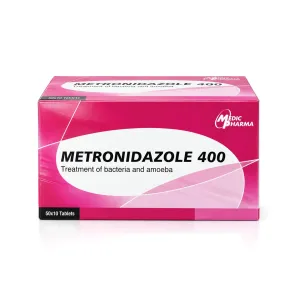 Metronidazole
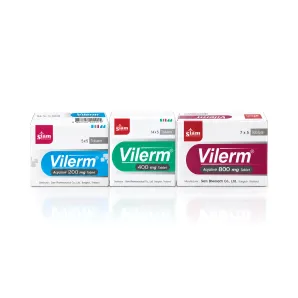 Vilerm
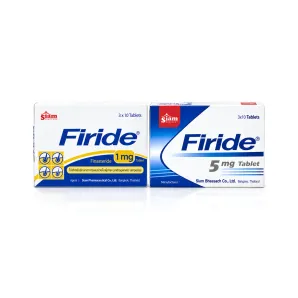 Firide
 Gofen
 Annylyn
 Sumigran
 Preme
 Tofago
 B-Ciprofloxacin
 Tansy One
 Enaril
 Nasonex