

Loperamide
Fast-Acting Antidiarrheal — Always Pair with ORS
Sudden loose stools or traveler's diarrhea disrupt your day. Loperamide slows gut motility, reducing stool frequency. Always take ORS alongside to replace lost fluids.
💊 Loperamide 2 mg capsules or tablets for adults and children 6+. Onset within 1 hour. Ask a pharmacist for the right dose.
👨⚕️ Consult a pharmacist online instantly — no travel, no queues, completely private and convenient.
🚚 Fast, confidential delivery — plain packaging with no product names on the outside, delivered safely to your door.
What is Loperamide?
Loperamide relieves diarrhea by slowing bowel movement and reducing fluid secretion in the intestines. It suits general acute diarrhea or travel-related diarrhea without high fever or blood in the stool, working within about an hour and lasting several hours. Avoid it if there is blood, mucus, or high fever, since it may trap infection inside, and consult a pharmacist first.
🛒 Shop the range above · 24-hour dispatch from Intimo Life — consult a pharmacist if unsure.
Loperamide is an opioid-receptor agonist antidiarrheal acting locally on μ-opioid receptors in the gut wall — slowing motility, reducing fluid secretion, and increasing water reabsorption. It does not cross the blood-brain barrier at normal doses; no sedation or dependency risk.
📊 Key clinical statistics:
- Most acute diarrhea resolves safely with prompt ORS combined with antimotility therapy
- Loperamide reduces stool frequency by more than 40% vs placebo in acute diarrhea per WHO review data
- Onset within 1 hour; duration 10–14 hours per dose
💊 At Intimo Life, Loperamide covers 3 main diarrhea categories:
- Acute non-specific diarrhea — 3+ loose stools/day, no fever, no blood or mucus
- Traveler's diarrhea — after contaminated food or water, without fever or bloody stool
- Chronic diarrhea (medical guidance only) — stool-control after a doctor's diagnosis
⚠️ Do not use if stools are bloody or mucousy, if fever is high, or if bacterial dysentery or C. difficile is suspected — slowing the bowel traps pathogens. Consult a pharmacist or doctor immediately.

Loperamide
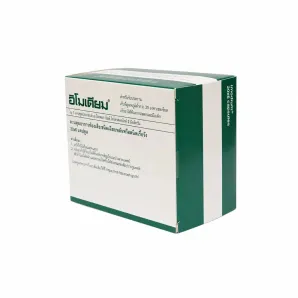 Imodium (Loperamide) Anti-Diarrhoeal Capsules 6s
Relieves acute diarrhoea, fewer bowel movements fast
✓ In stock55.00 ฿(฿9.17/capsule)
About Loperamide
What is Loperamide? How does it work in the gut?
Loperamide is an opioid-receptor agonist antidiarrheal acting locally on gut μ-opioid receptors — no blood-brain barrier crossing, no sedation or addiction at recommended doses.
- Slows peristalsis — reduces intestinal transit, decreasing stool frequency
- Reduces secretion — less fluid secretion into gut lumen; more reabsorption for firmer stools
- No CNS effect — stays in the gut unlike analgesic opioids
Available as 2 mg capsules, tablets, or liquid. Onset within 1 hour; 10–14 hours duration per dose. Consult a pharmacist for the right formulation.
Which types of diarrhea can Loperamide treat? When should it NOT be used?
Loperamide suits only certain diarrhea types — check symptoms carefully before use.
- OK — Acute non-specific diarrhea — 3+ loose stools/day, no fever, no blood or mucus
- OK — Traveler's diarrhea — after contaminated food or water, no high fever or bloody stool
- NOT OK — Bloody or mucousy stool — signals bacterial infection; trapping pathogens worsens outcomes
- NOT OK — Fever above 38 °C — requires antimicrobial treatment, not motility suppression
- NOT OK — Suspected C. difficile — toxin accumulation risk, potentially life-threatening
Rule: bloody stool, mucus, or fever — see a pharmacist or doctor. Do not self-treat.
How to take Loperamide correctly? How many tablets and how often?
Follow label or pharmacist instructions exactly for both self-care and medically-supervised use.
- Initial adult dose — 4 mg (2 capsules) first; then 2 mg (1 capsule) after each loose stool
- Maximum for self-medication — 8 mg/day (4 capsules)
- Duration — no more than 2 days without pharmacist advice; see a doctor if no improvement in 48 hours
- Pair with ORS — Loperamide reduces frequency but does not replace lost fluids
Never exceed the stated dose — high-dose misuse risks serious cardiac arrhythmia. Consult a pharmacist before purchase.
What are the side effects of Loperamide?
Loperamide is well tolerated at recommended doses — know these effects before use.
- Constipation (most common) — direct result of slowed motility; resolves after stopping; drink fluids
- Abdominal discomfort — mild cramping or fullness; usually temporary
- Nausea, dry mouth — occasionally, especially on first use
- Dizziness — uncommon; avoid driving if affected
- Cardiac arrhythmia (overdose only) — serious; occurs only with significant dose excess; never exceed stated dose
Stop and consult a pharmacist immediately for severe bloating, intense cramping, or allergy signs: rash, swelling, difficulty breathing.
Can Loperamide be used in children and during pregnancy? What are the special cautions?
Loperamide has key restrictions in vulnerable groups — always consult a pharmacist first.
- Children under 6 — absolute contraindication; ages 6–12 need pharmacist or doctor guidance
- Pregnancy — avoid if possible; human safety data limited; discuss with a doctor
- Breastfeeding — passes into milk in small amounts; consult a pharmacist or doctor
- Ulcerative colitis — toxic megacolon risk; do not use without medical supervision
- Hepatic impairment — reduced clearance may raise drug levels; use with caution
When in doubt, consult a pharmacist before starting Loperamide — always the safest first step.
How does Loperamide differ from activated charcoal, ORS, and antibiotics? Which should I use?
Treating diarrhea well means choosing the right product for the cause.
- Loperamide — slows motility for non-specific or traveler's diarrhea without fever or blood; not for bacterial infection
- ORS — replaces lost water and electrolytes; suitable for all diarrhea; use alongside Loperamide, not instead
- Activated charcoal — adsorbs some toxins; limited evidence in acute diarrhea; not first-line
- Antibiotics — confirmed bacterial infection only (dysentery, typhoid); requires a doctor's diagnosis
ORS always + Loperamide when no fever or blood + antibiotics by prescription only. Consult a pharmacist for the right plan.
Loperamide generic vs brand — what is the difference? What are IMODIUM and MANTIL?
All Loperamide products contain the same active ingredient: Loperamide Hydrochloride 2 mg.
- Generic Loperamide — Thai FDA-approved; typically more affordable; must pass bioequivalence
- IMODIUM — Johnson & Johnson's branded Loperamide; the most recognised antidiarrheal brand globally
- MANTIL — another branded Loperamide HCl 2 mg product in the Thai market
- Bioequivalence — generics prove equivalent absorption and blood levels vs originator before approval
Generic or branded — same active ingredient, same dose. Choose by availability and budget. Consult a pharmacist for guidance.
⚠️ ข้อจำกัดความรับผิดชอบ
เนื้อหาในบทความนี้มีจุดประสงค์เพื่อให้ความรู้ทั่วไปเท่านั้น ไม่ได้มีเจตนาทดแทนคำแนะนำ การวินิจฉัย หรือการรักษาจากแพทย์หรือเภสัชกรผู้เชี่ยวชาญ หากมีข้อสงสัยเกี่ยวกับอาการหรือการใช้ยา ควรปรึกษาแพทย์หรือเภสัชกรก่อนเสมอ
- Loperamide (Imodium) — Patient Information — NHS
- Loperamide — Drug Information — MedlinePlus (NIH)
- Diarrhea — StatPearls — NCBI Bookshelf
- Loperamide — Drug Label Database — DailyMed (NIH)
- Diarrhoea and Vomiting — Treatment Guide — NHS
Frequently Asked Questions about Loperamide
No — do not use Loperamide if stool is bloody or contains mucus. These symptoms point to bacterial gut infection such as dysentery or Salmonella. Slowing bowel motility traps pathogens and their toxins, worsening the infection. See a doctor or pharmacist immediately for assessment, stool testing, and appropriate treatment.
Constipation is Loperamide's most common side effect — the same bowel-slowing that treats diarrhea. Stop taking it as soon as diarrhea improves; do not push to the maximum dose. Drink more fluids and eat high-fibre foods. Constipation usually resolves within 1–2 days. If it persists or severe abdominal pain develops, consult a pharmacist.
For self-treating acute diarrhea, do not use Loperamide for more than 2 days without pharmacist advice. If no improvement in 48 hours, fever develops, or blood appears in stool — stop and see a doctor immediately. Long-term use for chronic diarrhea requires medical diagnosis and supervision; it is not suitable for self-medication.
Loperamide is contraindicated in children under 6 years. For ages 6–12, pharmacist or doctor guidance is required and dosing is weight-based. The most critical intervention for childhood diarrhea is ORS to prevent dehydration — especially dangerous in young children. Always consult a pharmacist for age- and weight-appropriate advice.
Pregnant women should avoid Loperamide where possible — human safety data is limited. If treatment is essential, consult a doctor first. For breastfeeding, Loperamide passes into breast milk in small amounts; seek pharmacist or doctor advice. In all cases, ORS for rehydration is the safest first step before any medication.
Yes — ORS must always be taken alongside Loperamide. Loperamide reduces stool frequency only; it cannot replace the water, sodium, potassium, and glucose lost during diarrhea. Dehydration can be life-threatening, especially in young children and the elderly. Prepare ORS as directed and sip frequently. Consult a pharmacist if unsure how to use ORS correctly.
It depends on symptoms. Mild food poisoning diarrhea without high fever or bloody stool — Loperamide may temporarily reduce frequency, always alongside ORS. But if fever is high, stool is bloody, vomiting is severe, or symptoms worsen within 24 hours — do not take Loperamide; see a doctor immediately. When unsure, consult a pharmacist before self-treating.
Loperamide is available online at Intimo Life — consult our pharmacist via LINE before ordering for a personalised symptom assessment and the right formulation. Generic Loperamide is typically more affordable than branded options; pricing depends on form and pack size. Orders ship promptly in plain packaging with no product names visible.
Become a member of our store to receive news and exclusive discounts.
Recently viewed products