

How many months after stopping birth control pills can you conceive? Complete answers for every pill type.
How long after stopping the pill can you get pregnant?
- The pill (combined or progestin-only): the body adjusts over 1-3 months, and about 50% of women conceive within the first 3 months after stopping
- The contraceptive injection (Depo-Provera): it can take longer for fertility to return, up to 6-18 months in some cases
- IUD / implant: fertility returns quickly, usually within 1-2 menstrual cycles after removal
- Patch or ring: a similar timeline, about 1-3 months
- A large study found 83.1% of women conceive within 12 months after stopping any method of contraception

What's on this page?
- How Long After Stopping the Pill Can You Get Pregnant? The Real Answer With Data
- What Happens to Your Body After Stopping the Pill?
- Pregnancy Timeline After Stopping Each Type of Contraceptive
- What the Research Says: How Fast Can You Conceive After Stopping the Pill?
- Does Age Affect Pregnancy After Stopping the Pill?
- How to Prepare Before Stopping the Pill to Get Pregnant
How Long After Stopping the Pill Can You Get Pregnant? The Real Answer With Data
Many women ask about getting pregnant after birth control. For women who have been on the pill for a while and are starting to think about having a baby, the first question that comes to mind is usually "how long after stopping the pill can I get pregnant?" — the short answer is: it depends on the type of contraceptive used and each woman's own body. The good news is that birth control does not cause infertility or reduce your long-term ability to have children.
This article walks through the pregnancy timeline for each contraceptive type, backed by research statistics, plus practical tips to prepare your body before trying to conceive.
📖 Read more: If you're not sure how the different contraceptive types compare, start with What is the contraceptive pill? Everything to know before choosing one
What Happens to Your Body After Stopping the Pill?
Once you stop taking the pill, your body starts producing its own oestrogen and progesterone naturally again. That means:
- Your ovaries switch back on — ovulation starts again
- The womb lining thickens again — ready to support an embryo implanting
- Periods come back — usually within 2-4 weeks after stopping the combined pill
One thing worth knowing: the first bleed after stopping the pill is called a "withdrawal bleed" — it happens because the hormones stop suddenly, not because it is a natural cycle. Your true period returns the following month.
💡 Tip: If your period doesn't return within 3 months of stopping the pill, see a doctor — other factors such as PCOS or a thyroid disorder could be involved.
📖 Read more about contraceptive pill side effects
Pregnancy Timeline After Stopping Each Type of Contraceptive
Not every method behaves the same way once you stop. Here is how long each one typically takes:
The combined pill (oestrogen + progestin)
The combined oral contraceptive pill, containing both oestrogen and progestin, is the most widely used type. After stopping, ovulation usually returns within 1-2 cycles, and about 50% of women conceive within the first 3 months.
The progestin-only pill (mini-pill)
The mini-pill does not suppress ovulation in everyone (roughly 40% of users still ovulate while taking it), so ovulation returns very quickly after stopping — most women conceive within 6 months.
The contraceptive injection (Depo-Provera)
The injection takes the longest to wear off, because medroxyprogesterone acetate is cleared from the body gradually — it can take 6-18 months for periods to return to normal.
The IUD (intrauterine device)
With both copper and hormonal IUDs, ovulation returns within one cycle after removal, so pregnancy can happen very quickly.
The contraceptive implant
After the implant is removed, ovulation returns within 1-3 months.
The patch and the vaginal ring
Similar to the combined pill — ovulation returns within 1-2 cycles.
| Contraceptive type | Ovulation returns | Average time to pregnancy |
|---|---|---|
| Combined pill | 1-2 cycles | 1-3 months |
| Mini-pill | Very fast (a few weeks) | Within 6 months |
| Injection (Depo-Provera) | 6-12 months | 6-18 months |
| IUD | 1 cycle | 1-3 months |
| Implant | 1-3 months | 1-6 months |
| Patch / ring | 1-2 cycles | 1-3 months |
What the Research Says: How Fast Can You Conceive After Stopping the Pill?
A large study published in Contraception and Reproductive Medicine (2018) — a systematic review and meta-analysis of 22 studies covering 14,884 women — found that:
- 83.1% conceived within 12 months of stopping contraception
- There was no significant difference between women who had used hormonal contraceptives and those who had used an IUD
- How long you used the pill did not reduce your chance of conceiving — women who had used the pill for longer were just as likely to get pregnant
| Time since stopping | Cumulative pregnancy rate |
|---|---|
| First 3 months | ~50% |
| 6 months | ~70% |
| 12 months | ~83% |
📊 Quick facts:
- Chance of conceiving per cycle: ~20-25% (for a healthy woman)
- About 15% of couples worldwide experience difficulty conceiving (unrelated to contraceptive use)
Does Age Affect Pregnancy After Stopping the Pill?
The answer is yes, significantly. Age is the single biggest factor in fertility, regardless of whether you have ever used contraception.
| Age range | Chance of conceiving per cycle | Chance of conceiving within 12 months |
|---|---|---|
| Under 30 | ~25% | ~85% |
| 30-34 | ~20% | ~80% |
| 35-39 | ~15% | ~70% |
| 40 and over | ~10% | ~50% |
When should you see a doctor?
- Under 35 — if you have been trying for 12 months without conceiving
- 35 and over — if you have been trying for 6 months without conceiving
- 40 and over — see a doctor as soon as you start planning
Other Factors That Affect Pregnancy After Stopping the Pill
Besides the type of contraceptive and your age, several other factors affect your chances of conceiving:
Underlying health conditions
- PCOS (polycystic ovary syndrome) — causes irregular ovulation
- Endometriosis — can make conceiving harder
- Thyroid disorders — affect the hormones that control your cycle
Body weight
- A healthy BMI (18.5-24.9) supports a regular cycle
- Being significantly over or underweight can disrupt ovulation
Lifestyle
- Smoking — reduces egg quality and lowers the chance of conceiving
- Heavy alcohol use — affects hormones and ovulation
- Stress — high cortisol levels can disrupt ovulation
Male fertility
Remember that conceiving takes two — sperm count and quality issues account for about one in three cases of difficulty conceiving.
How to Prepare Before Stopping the Pill to Get Pregnant
1. See a doctor before stopping
A doctor can assess your overall health, check for any risk factors and give you personalised advice.
2. Start taking folic acid
Start taking at least 400 micrograms of folic acid a day, 1-3 months before trying to conceive, to reduce the risk of neural tube defects in the baby.
3. Track your cycle and ovulation
After stopping the pill, start keeping a record of your cycle and watch for signs of ovulation, such as:
- Clear, stretchy cervical mucus (like raw egg white) — a sign you are in your fertile window
- A slight rise in resting body temperature (0.5-1°C)
- Increased sex drive
4. Look after your overall health
- Eat a nutritious diet rich in folate, iron and omega-3
- Exercise regularly
- Get enough sleep
- Reduce stress
5. Stop smoking and cut back on alcohol
Both harm egg and sperm quality.
Myths About the Pill and Pregnancy
❌ "Taking the pill for a long time makes you infertile"
Not true — research clearly confirms that the pill does not affect your long-term fertility, no matter how long you have taken it.
❌ "You need to detox your hormones before getting pregnant"
Not necessary — your body naturally clears synthetic hormones on its own; no special detox is needed.
❌ "Getting pregnant right after stopping the pill causes miscarriage"
Not true — conceiving immediately after stopping the pill does not increase the risk of miscarriage or birth defects.
📖 Read more: Want to know more about each contraceptive type? See How to take the pill correctly and Regular vs emergency contraception — what's the difference?
Summary: How Long After Stopping the Pill Can You Get Pregnant?
- Pill / patch / ring → 1-3 months
- IUD / implant → very fast, within 1-2 cycles
- Injection (Depo-Provera) → 6-18 months
- 83.1% conceive within 1 year, regardless of which method was used
- Birth control does not cause infertility and does not reduce your long-term chance of conceiving
If you are planning to conceive, start taking folic acid 1-3 months in advance, track your cycle, and see a doctor if you have not conceived within the recommended timeframe of trying.
Frequently Asked Questions
Yes. Some women conceive in their very first cycle after stopping the pill, patch or ring, because these methods don't build up hormones in the body long-term — ovulation typically returns within 1-2 cycles of stopping. That means there is no automatic "safe" gap afterwards, so start another method of contraception right away if you are not ready to conceive.
The contraceptive injection (Depo-Provera) delays pregnancy the longest, because it is designed to be released from the body gradually — it can take 6-18 months for periods and ovulation to return to normal. This is different from the pill, patch, or IUD, where ovulation usually comes back within a few weeks to 1-2 months.
No, that's not true. Research clearly shows that birth control pills do not cause infertility or reduce long-term fertility, no matter how many years they were used. Women who used the pill for a long time have the same chances of conceiving as those who used it for a short time. Any delay some women notice after stopping is the body temporarily readjusting, not permanent infertility.
There's no mandatory waiting period, but it's advisable to stop birth control and start taking folic acid at least 1-3 months before trying to conceive, giving your cycle time to settle and your body time to prepare. This window is also useful for tracking your cycle and watching for ovulation. If you have an underlying health condition, talk to a doctor before stopping.
Periods usually return within 2-4 weeks after stopping the combined pill. If three months pass with no period at all, see a doctor — there could be an underlying cause such as PCOS, a thyroid disorder, a significant weight change, or ongoing stress, and a doctor can help identify the cause and recommend the right care.
For women under 35, trying for 12 months without conceiving meets the threshold for seeing a doctor about fertility. For women 35 and over, that threshold shortens to 6 months, and for those 40 and over, it's recommended to see a doctor as soon as you start planning — because the chance of conceiving per cycle declines with age.
Yes. After an IUD or implant is removed, ovulation typically returns very quickly, often within one cycle, because these methods work locally rather than suppressing hormones throughout the whole body the way the combined pill does. By comparison, the pill can take 1-3 months for ovulation to become regular again.
It's worth seeing a doctor for a general health check and screening for factors that could affect ovulation, such as PCOS, thyroid disorders, or body weight, while starting folic acid at at least 400 micrograms a day. If you have an underlying condition or take other medication, always tell your doctor or pharmacist before stopping birth control — and remember that male fertility matters too, so both partners' health is worth looking after.
⚠️ Disclaimer
The information on this page is for general informational purposes only and is not intended to replace professional medical advice, diagnosis, or treatment from a qualified doctor or pharmacist. If you have any questions about your symptoms or medication, always consult a doctor or pharmacist first.
References
- Girum T, Wasie A. Return of fertility after discontinuation of contraception: a systematic review and meta-analysis. Contracept Reprod Med. 2018
- NHS — When will my periods come back after I stop taking the pill?
- Mayo Clinic — Getting pregnant after birth control
- ACOG — Fertility Awareness-Based Methods of Family Planning
- WHO — Family Planning/Contraception Methods
- Mikkelsen EM et al. Pre-gravid oral contraceptive use and time to pregnancy. Human Reproduction. 2013
- NICHD — What are some causes of infertility?
สินค้าที่เกี่ยวข้อง
ยาคุมกำเนิดในร้าน
Metronidazole
Treats bacterial vaginosis & abnormal vaginal discharge
✓ In stock
40.00 ฿(฿4/tablet)

Vilerm
Oral herpes treatment reduces recurrence
✓ In stock
From 55.00 ฿(฿11/tablet)
Firide
Finasteride for hair growth – quality & value
Out of stock
From 345.00 ฿(฿11.50/tablet)
Gofen
Gofen for period pain, headache & muscle ache
✓ In stock
120.00 ฿(฿12/tablet)
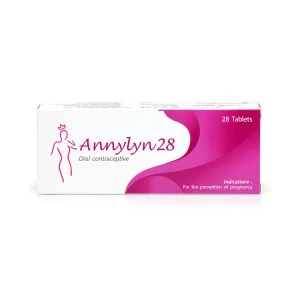
Annylyn
Annylyn birth control pill, simple & easy-to-use
✓ In stock
118.00 ฿(฿4.21/tablet)
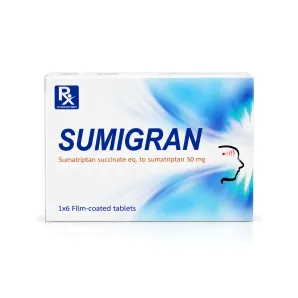
Sumigran
Targeted migraine relief, gentle on stomach
✓ In stock
98.00 ฿(฿16.33/tablet)
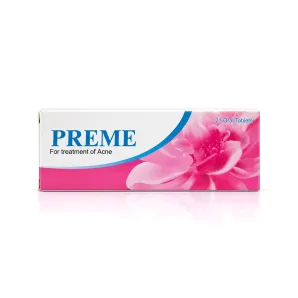
Preme
Gentle formula for skin care & less water retention
✓ In stock
105.00 ฿(฿4.11/tablet)
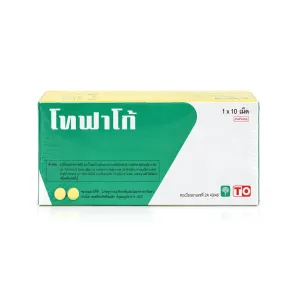
Tofago
Targeted migraine & severe headache relief
✓ In stock
40.00 ฿(฿4/tablet)
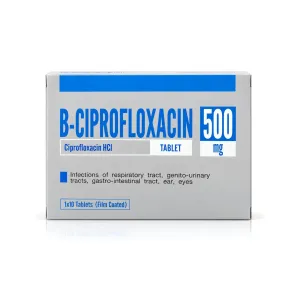
B-Ciprofloxacin
Ciprofloxacin antibiotic, effective for UTI
✓ In stock
49.00 ฿(฿4.9/tablet)
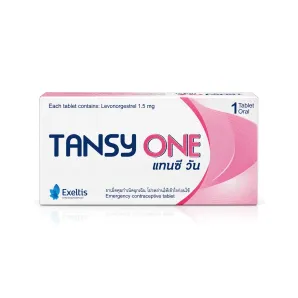
Tansy One
Single-dose emergency contraceptive pill
✓ In stock
80.00 ฿(฿80/tablet)
Enaril
ACE inhibitor for blood pressure & heart care
✓ In stock
From 150.00 ฿(฿1.5/tablet)

Nasonex
Daily nasal spray for allergy relief without drowsiness
✓ In stock
From 549.00 ฿